 Skip to content

How to Choose the Best Solar Panel for Mobile LED Billboards in 2025?
Advertising is shifting towards sustainability. Mobile LED billboards powered by solar energy are becoming more popular due to their cost-effectiveness and ability to operate off-grid. But how do you choose the best solar panel for this application?
The best solar panel for mobile LED billboards in 2025 should offer high efficiency, durability, and reliability, ensuring uninterrupted advertising even in off-grid locations.

Let’s explore the factors that determine the best solar panels for mobile LED billboards and how to maximize their efficiency.
What Factors Determine the Best Solar Panel for Mobile LED Billboards?
Choosing the right solar panel is crucial to ensure a mobile LED billboard runs efficiently and reliably.
The best solar panels for LED billboards must provide high power output1, work efficiently in all weather conditions, and have a long lifespan to reduce operational costs.
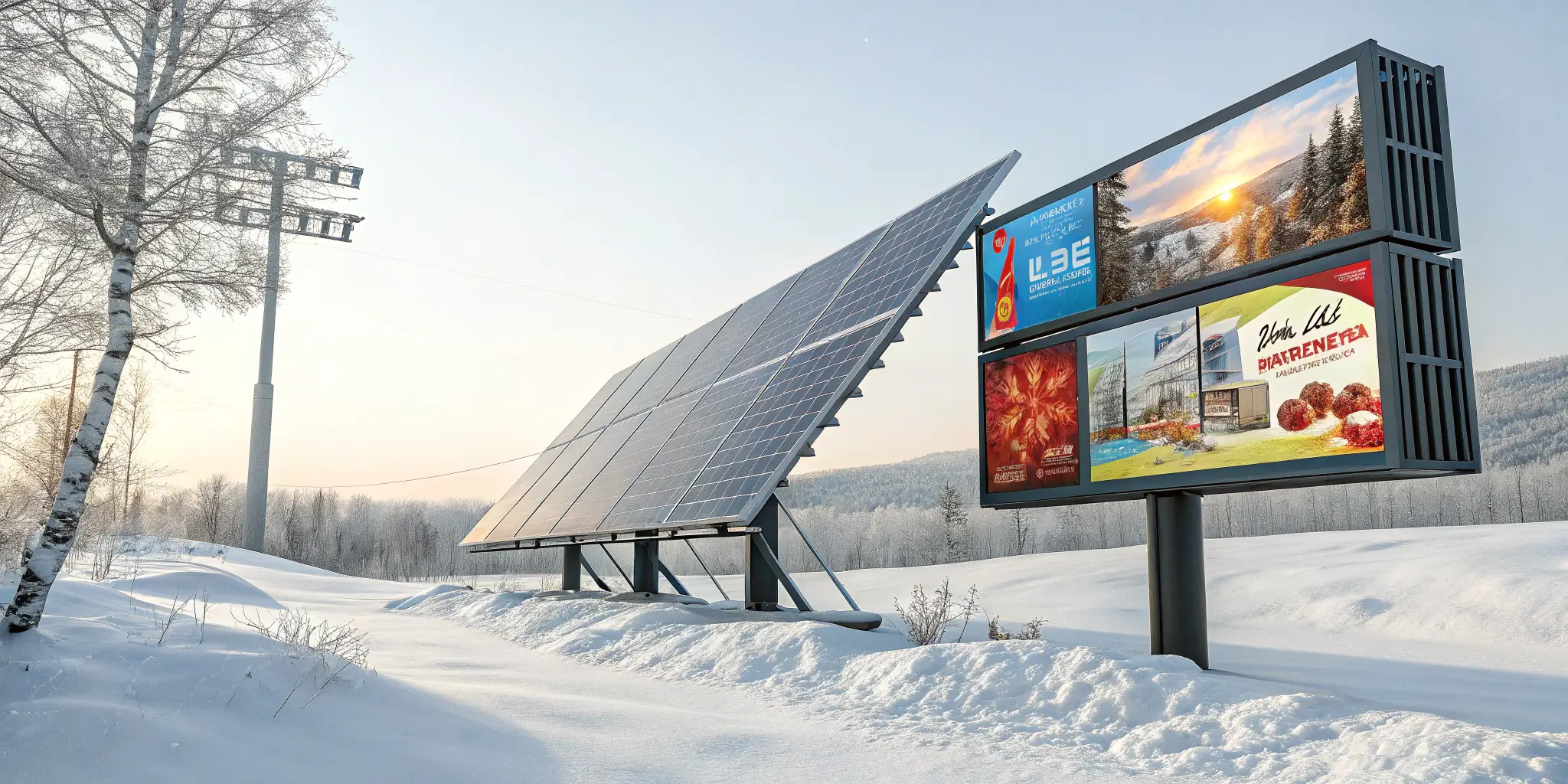
Key Considerations for Selecting a Solar Panel
| Factor | Why It Matters |
|---|---|
| Efficiency | Higher efficiency means more power generation per square meter |
| Durability2 | Must withstand harsh weather conditions and vibrations from movement |
| Weight | Lighter panels reduce structural load on mobile setups |
| Low-Light Performance3 | Essential for consistent energy production in cloudy weather |
| Temperature Coefficient | Panels should maintain performance in extreme temperatures |
Considering these factors ensures a solar-powered LED billboard remains operational in various conditions.
Which Solar Panel Type Is Best for Off-Grid LED Billboards: Monocrystalline vs. Polycrystalline?
When choosing a solar panel, the type of photovoltaic cell plays a key role in determining efficiency and longevity.
Monocrystalline solar panels4 are the best choice for mobile LED billboards due to their high efficiency, longer lifespan, and better low-light performance compared to polycrystalline panels5.
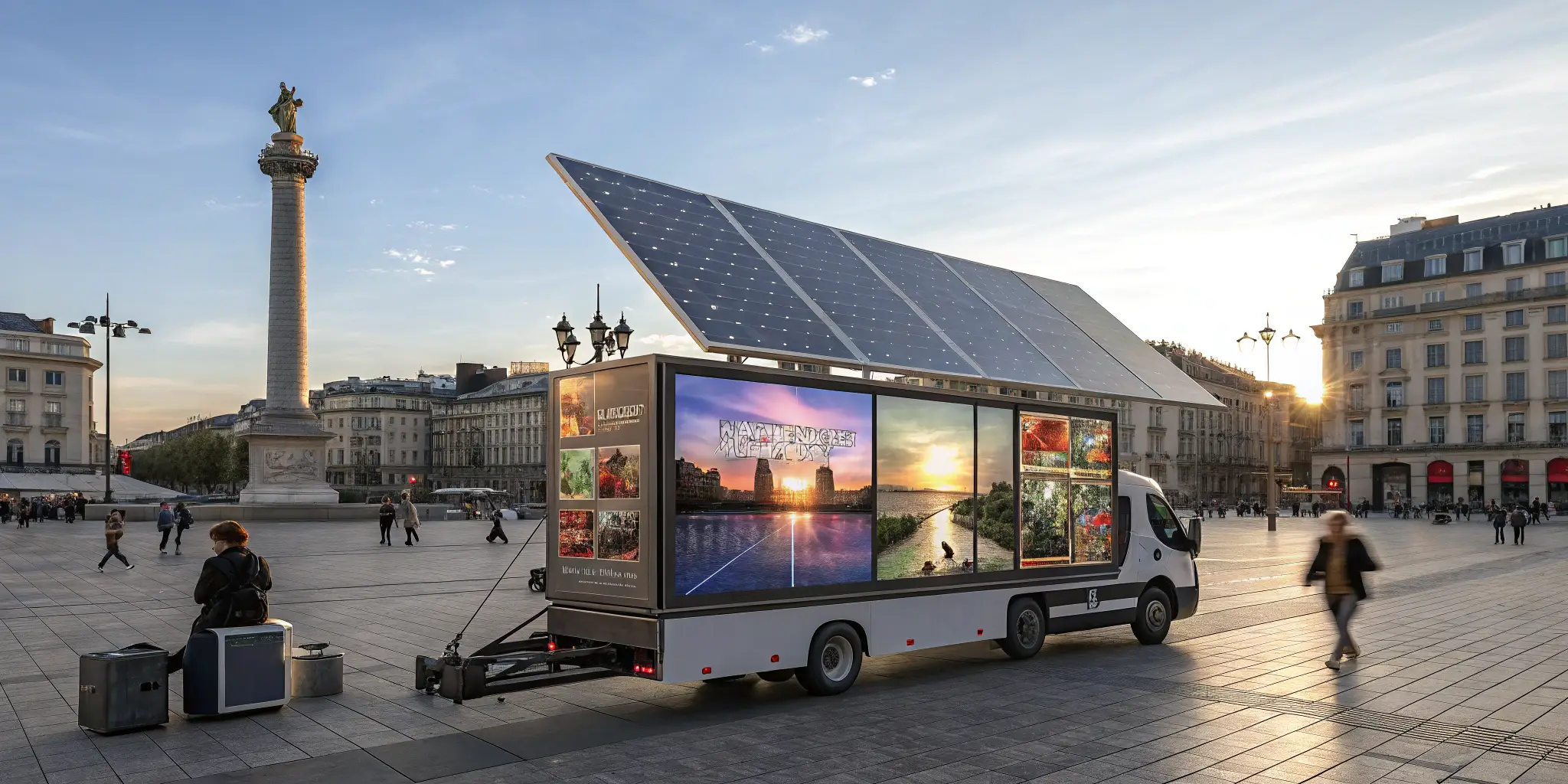
Monocrystalline vs. Polycrystalline: Which One is Better?
| Feature | Monocrystalline | Polycrystalline |
|---|---|---|
| Efficiency | 20-24% | 16-18% |
| Performance in Low Light | Excellent | Moderate |
| Lifespan | 25+ years | 20-25 years |
| Space Requirement | Requires less space for the same power output | Requires more space |
| Cost | Higher | Lower |
For mobile LED billboards where space and power efficiency are crucial, monocrystalline panels are the best choice.
How Much Solar Power Does a Mobile LED Billboard Need in 2025?
To ensure uninterrupted operation, a solar-powered LED billboard must generate enough electricity to power the LED screen, cooling systems, and electronic components.
A typical mobile LED billboard6 in 2025 requires between 600W and 1500W of solar power7, depending on screen size and brightness settings.
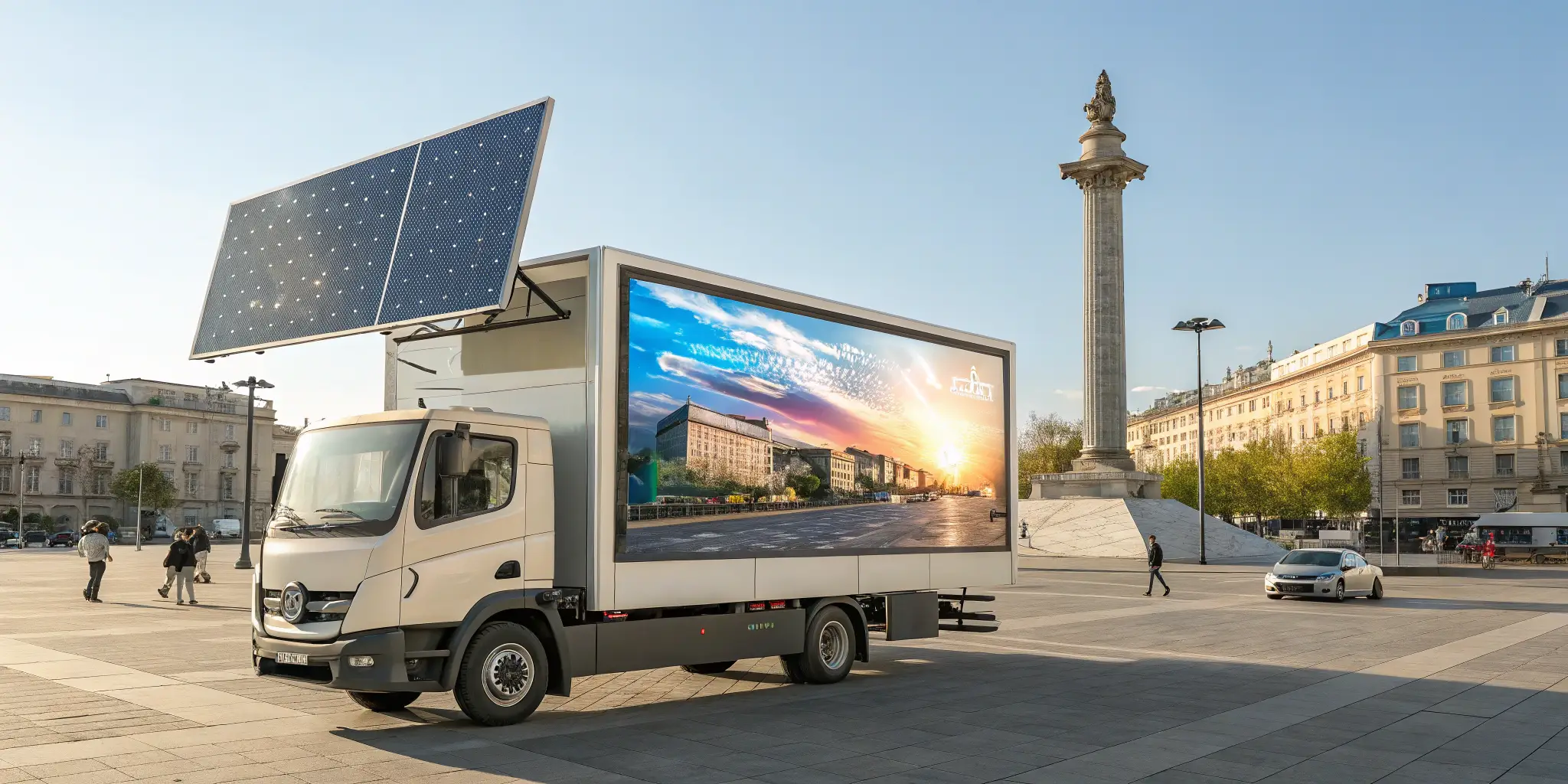
How to Calculate Solar Power Needs
-
Determine Energy Consumption:
- A 3m² LED screen consumes ~500W per hour.
- Add power for controllers, batteries, and cooling (~200W).
- Total = ~700W per hour.
-
Daily Power Requirement:
- If running for 8 hours: 700W × 8h = 5,600Wh (5.6kWh)
-
Required Solar Panel Capacity:
- Assuming 5 peak sunlight hours:
- 5,600Wh ÷ 5h = 1,120W of solar panels needed
For larger billboards or extended hours, a bigger solar array is required.
What’s the Cost Difference Between Grid-Powered and Solar LED Billboards in 2025?
Cost is a major factor when deciding between grid-powered and solar-powered mobile LED billboards.
Solar-powered LED billboards8 have a higher upfront cost but save money long-term due to zero electricity expenses and lower maintenance.
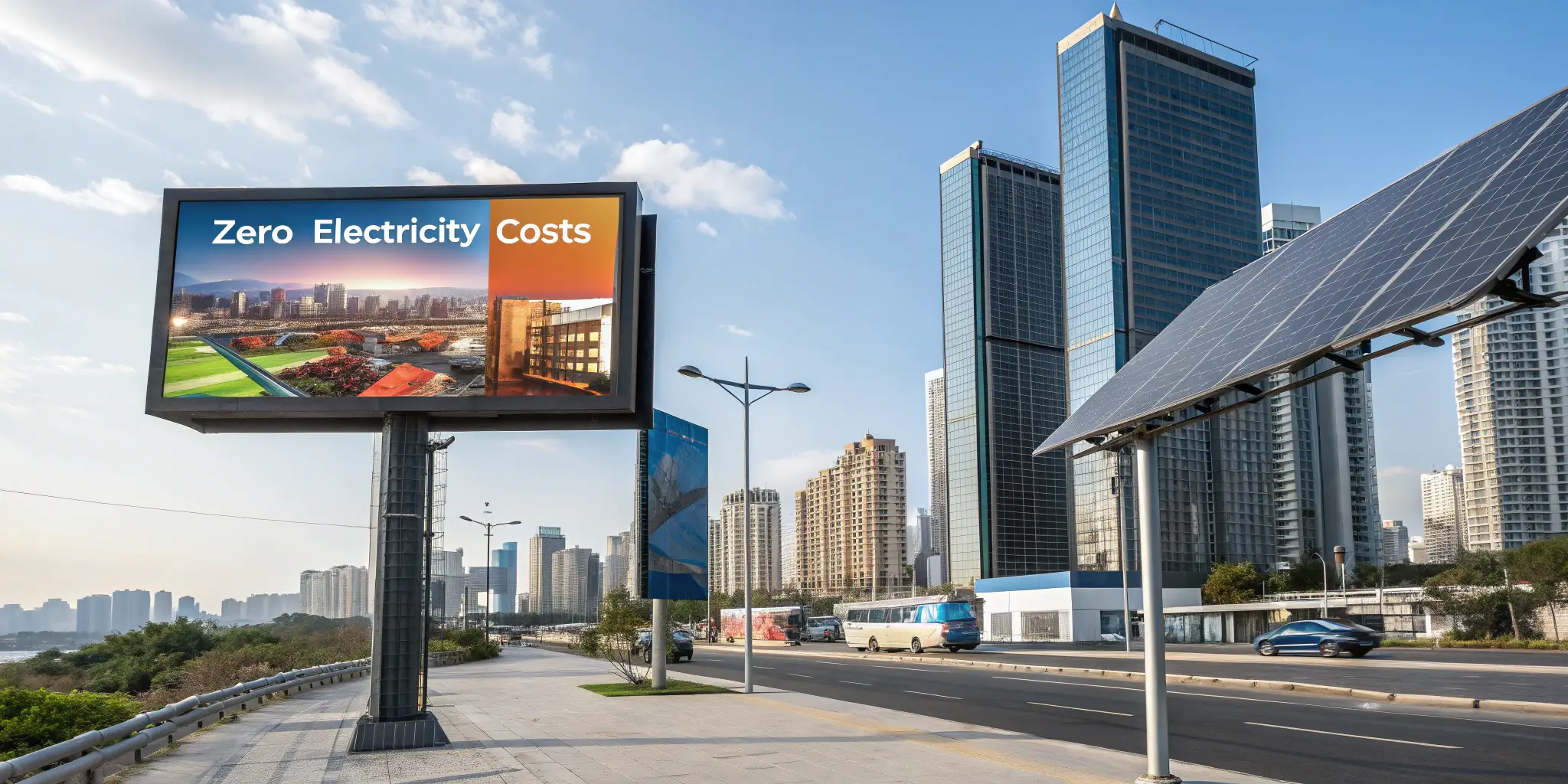
Cost Breakdown
| Cost Factor | Solar-Powered LED Billboard | Grid-Powered LED Billboard |
|---|---|---|
| Initial Setup | $8,000 - $15,000 | $5,000 - $10,000 |
| Energy Costs | $0 (uses solar power) | $500 - $2,000 per year |
| Maintenance Costs | Low (panel cleaning, battery checks) | Higher (wiring issues, energy supply failures) |
| Total 5-Year Cost | ~$10,000 - $18,000 | ~$10,000 - $20,000+ |
Over time, solar-powered billboards become the more cost-effective option9 due to the elimination of electricity bills.
How Do You Size a Solar Battery System for Mobile LED Billboards?
A reliable battery system is essential to store solar energy for nighttime and cloudy-day operation.
To size a solar battery system correctly, calculate the total energy required and choose a battery capacity10 that provides sufficient backup.
Steps to Calculate Battery Size
-
Determine Daily Energy Consumption:
- If a billboard consumes 5.6kWh/day, a battery must store at least this much energy.
-
Consider Depth of Discharge (DoD)11:
- Lithium batteries have 80% DoD.
- Required storage = 5.6kWh ÷ 0.8 = 7kWh battery capacity.
-
Choose the Right Battery Type:
| Battery Type | Best Features | Downsides |
|---|---|---|
| Lithium-Ion (LiFePO4) | Lightweight, long lifespan, high efficiency | Higher cost |
| Lead-Acid (AGM/Gel) | Lower cost, reliable | Heavy, shorter lifespan |
For long-term efficiency, lithium-ion batteries12 are the best choice for mobile LED billboards.
Conclusion
Choosing the best solar panel for a mobile LED billboard in 2025 requires careful consideration of efficiency, battery capacity, and cost savings. With the right system, businesses can enjoy sustainable, cost-effective advertising anywhere.
-
Understanding high power output can help you choose the most efficient solar panels for your mobile LED billboard, ensuring optimal performance. ↩
-
Learning about durability can help you select solar panels that withstand harsh conditions, ensuring long-term reliability and cost savings. ↩
-
Exploring low-light performance will guide you in selecting solar panels that maintain energy production even in cloudy conditions. ↩
-
Explore the benefits of Monocrystalline solar panels, especially for off-grid setups like mobile LED billboards, to maximize efficiency and longevity. ↩
-
Understanding the differences between polycrystalline and Monocrystalline panels can help you make informed decisions for solar energy solutions. ↩
-
This link will help you understand the operational dynamics and benefits of using solar power in mobile LED billboards. ↩
-
Exploring this resource will provide insights into how solar power enhances the efficiency and sustainability of mobile LED billboards. ↩
-
Explore the advantages of solar-powered LED billboards, including cost savings and environmental benefits, to make an informed decision. ↩
-
Learn how to evaluate the cost-effectiveness of different LED billboard options to maximize your investment and savings. ↩
-
Understanding battery capacity is crucial for optimizing solar energy storage and ensuring reliable power supply. ↩
-
Exploring DoD helps in maximizing battery lifespan and efficiency, essential for solar applications. ↩
-
Discover the benefits of lithium-ion batteries, which are key for efficient solar energy management in mobile applications. ↩
