 Skip to content

What are the most common quality issues when importing PV connectors from China?
Many buyers believe PV connectors are simple components, yet hidden defects can destroy an entire solar system if ignored.
The most common quality issues when importing PV connectors from China include counterfeit materials, poor crimping, bad sealing, incompatible terminals, and shipping damage that affects electrical safety and long-term reliability.
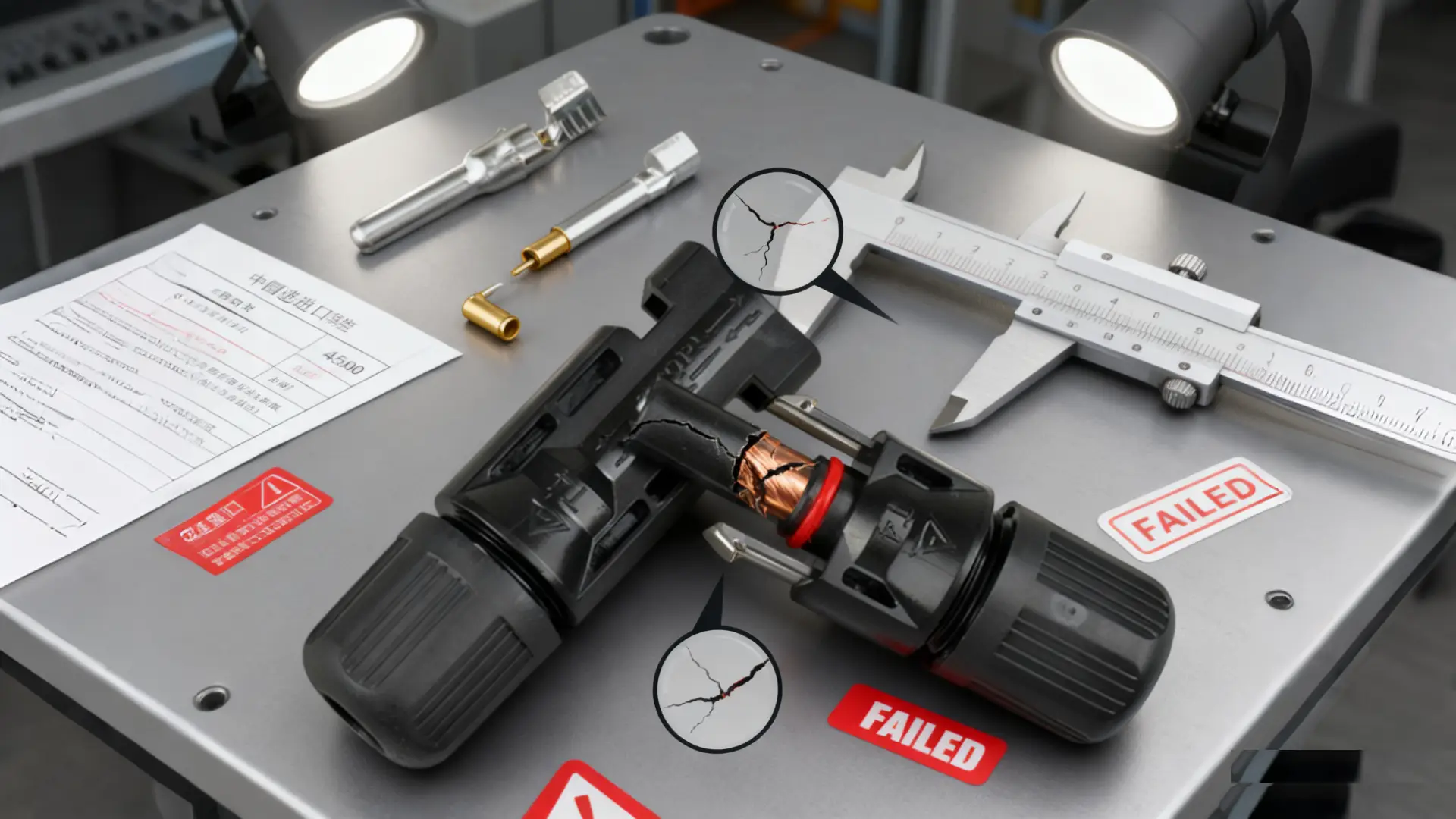
I want to show real risks from my own sourcing experience. I have seen solar farms shut down because of one faulty connector. I will explain what problems really happen and how they develop in real installations, not only on paper tests.
What happens if copper content is insufficient?
Many projects fail because buyers focus only on price and ignore the copper purity1 inside the terminals.
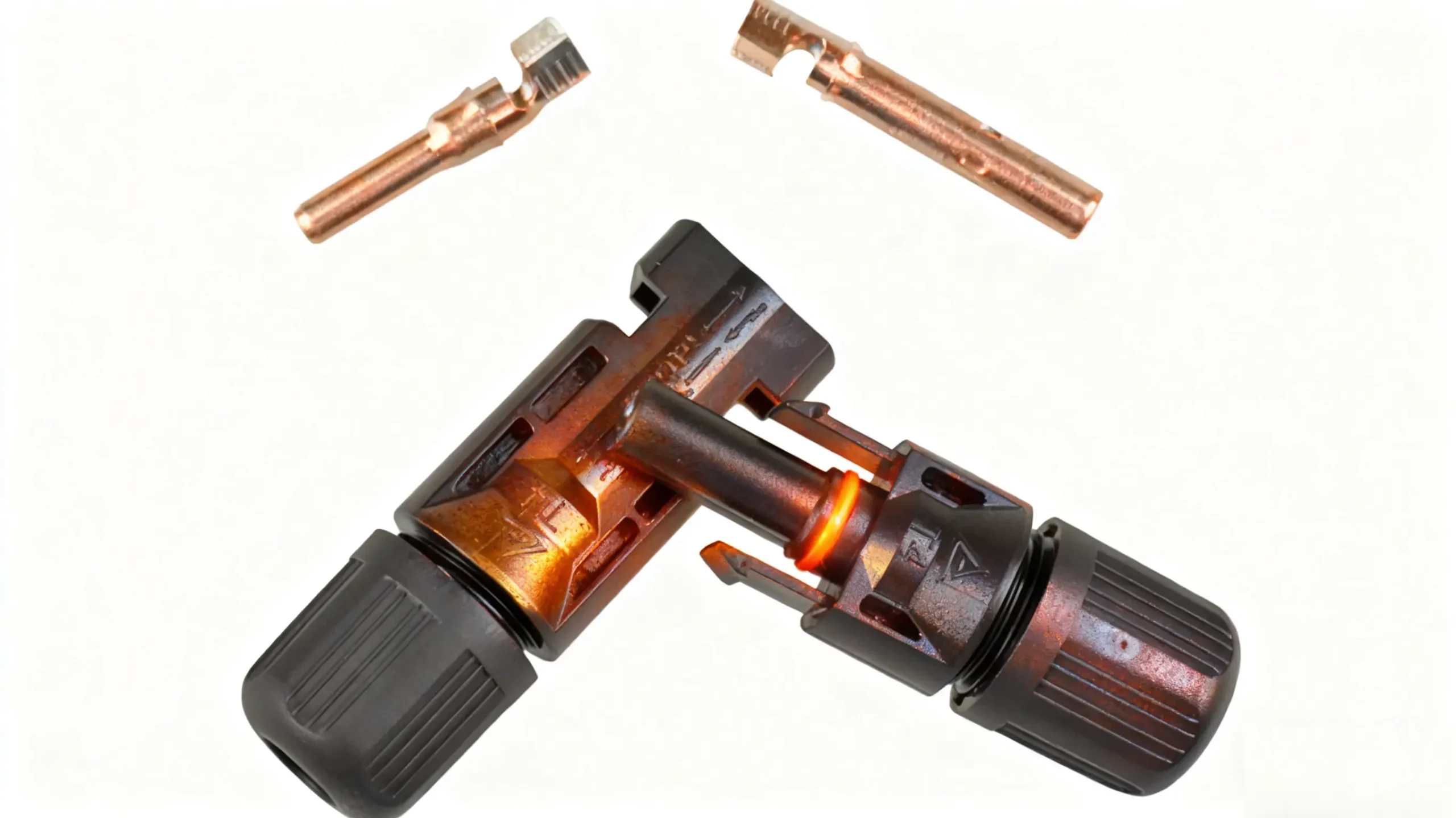
Insufficient copper content reduces conductivity and increases resistance, which causes heat, power loss, and early connector failure2 in solar installations.
Why impurities inside copper matter more than expected
When copper purity drops, the connector still looks normal to human eyes. Installers cannot detect the problem from the outside. The damage grows slowly and only becomes visible after the system is exposed to high current, UV radiation, fluctuating temperature, or humidity.
Factors that amplify the failure
| Factor | Result |
|---|---|
| Higher resistance | Heat build-up below load |
| Heat build-up | Softens plastic housing, weakens crimping |
| Weak crimping | Unstable output, arcing risks |
| Arcing | Permanent connector damage and fire risk |
| Power loss | Lower energy yield and low system ROI |
My direct experience with low-copper terminals
I once inspected a batch of connectors that passed visual checks and insulation tests. However, thermal imaging3 during load testing exposed a sharp temperature increase around the pins. Later, metal component analysis proved copper purity was only 62%, way below international standards. The supplier blamed rising metal prices and modified material without disclosure. That incident taught me to always require technical data sheets with metallurgical test reports4.
Low-copper connectors can stay functional during early use, which misleads installers. The real danger appears after months or years. Once heat damage starts, failure spreads rapidly through the string, not only the weak connector. That is why copper content is one of the most underestimated quality problems in PV connectors imported from China.
How does seal ring aging affect system safety?
Many buyers ignore seal ring materials5 because they look identical across brands and suppliers.
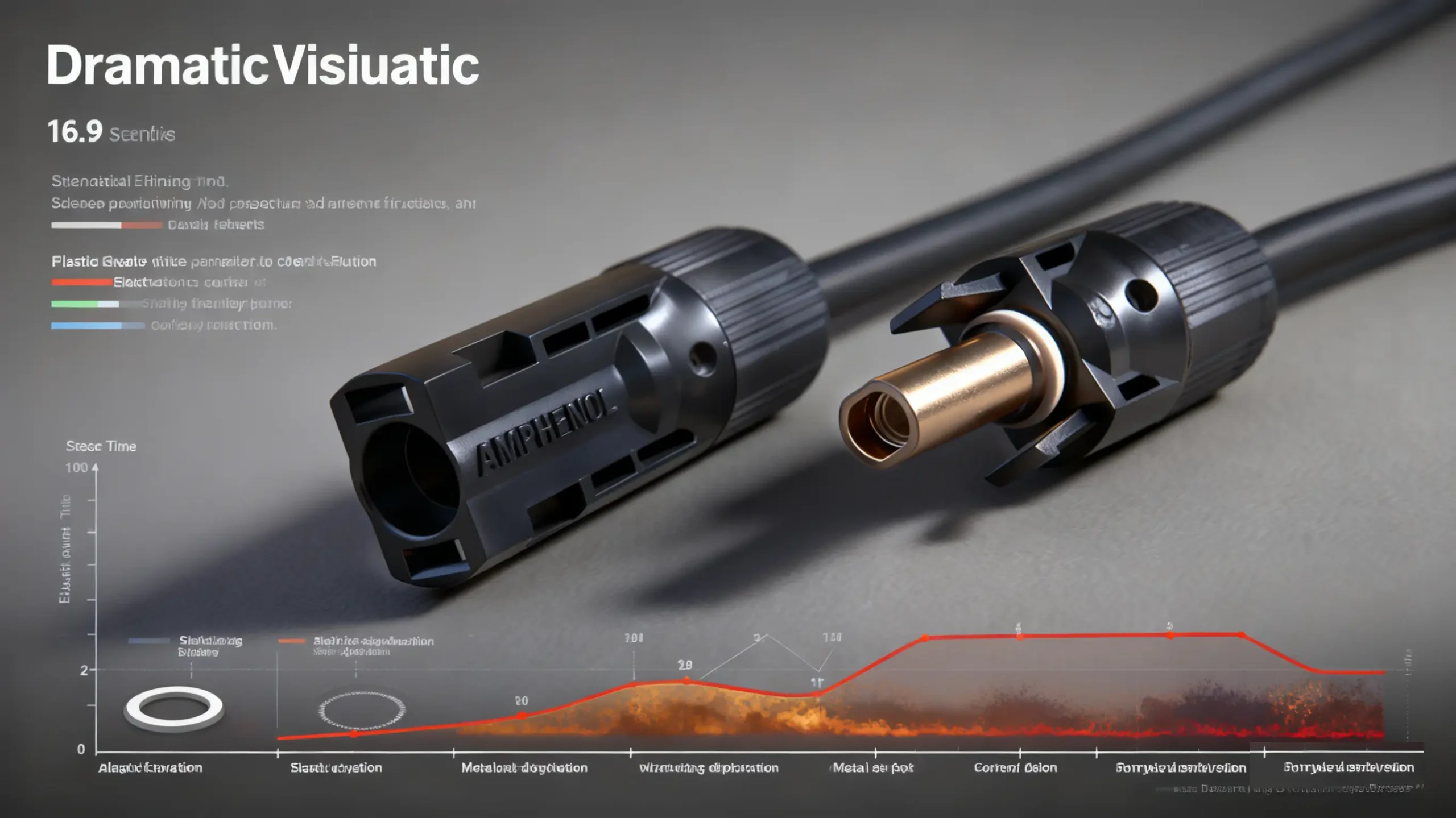
Aged or low-grade seal rings allow humidity, dust, or salt spray to enter the connector, compromising insulation and increasing corrosion and short-circuit risk.
Why seal rings degrade faster than expected
Seal rings are constantly exposed to sunlight, heat, rain, vibrations, and thermal cycling. Substandard rubber compounds lose elasticity and become brittle. Even micro-cracks can destroy the IP rating of the connector.
How seal degradation escalates into failure
| Aging Effect | Field Consequence |
|---|---|
| Loss of elasticity | Water penetration |
| Micro-cracks | Dust accumulation near contact area |
| Shrinkage at low temperatures | Air gaps inside connector |
| Swelling at high temperatures | Pressure on terminals |
| Corrosion | Increased contact resistance and heat |
Real-life example from a coastal solar site
I once supported a PV installation near the sea. The connectors were marketed as “UV-resistant,” but the supplier used standard rubber instead of certified seal materials. After nine months, salt spray entered the housing and caused green corrosion on the terminals. Output decreased slowly at first, then multiple shutdowns occurred due to ground faults. Seal ring testing could have prevented this failure.
A connector is only as reliable as its sealing. Once moisture enters, the connector will fail sooner or later. That is why seal material audit is critical when importing PV connectors from China.
Will incompatible terminals6 cause overheating?
Mixed terminals from different brands can look like a perfect fit, but internal tolerances rarely match.
Incompatible terminals lead to poor contact alignment and increased resistance, which causes overheating and arc marks at the mating area during real operation.
%5B%5E7%5D-4-scaled.webp)
Why cross-mating is more dangerous than expected
Even if the male and female housings fit together, the metal contact interface may not align. The spring force of the terminal also differs between designs. A weak contact pressure increases resistance. A tight contact pressure causes mechanical wear.
Cross-mating risks across installation stages
| Stage | Risk |
|---|---|
| After installation | Slight power loss but no visual sign |
| After months | Heat build-up + discoloration |
| Later | Arcing + melted plastic |
| Final outcome | Full connector blowout and string failure |
My observation from an EPC client
One EPC company assumed “MC4-type” implied compatibility across all brands. They mixed three different connector brands during a fast deployment. At first everything looked stable. After 11 months, thermal scans detected hotspots in 22% of connectors. The worst connectors showed black arc spots. Replacement consumed huge labor, and the compensation claim failed because the supplier blamed “cross-mating misuse.”
Incompatible terminals are one of the biggest reasons behind overheating complaints. It is a hidden risk because physical fit tricks installers into believing the connection is safe.
Can shipping damage7 affect connector performance?
Many importers skip incoming inspection because connectors appear undamaged inside cartons.
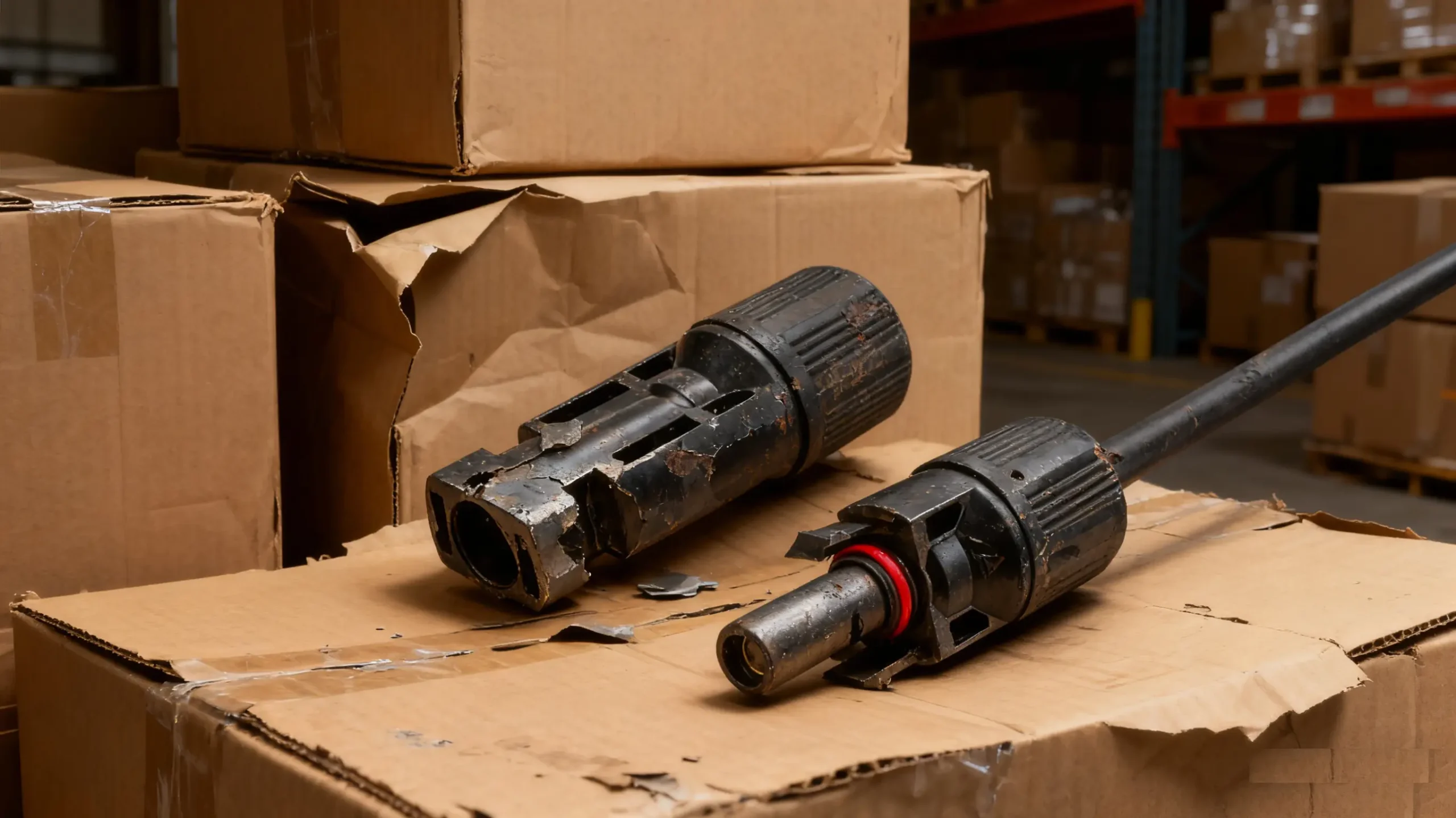
Shipping shock, stacking pressure, and rough packing can cause micro-cracks8 in plastic housings and deformation of metal contacts, leading to unpredictable failures in the field.
Why transport damage is not always visible
PV connectors are made from hard plastics and precision metal parts. When dropped or crushed, the exterior may not show cracks immediately. However, stress fractures weaken the material and grow under heat, vibration, and UV exposure during outdoor usage.
Common shipping damage patterns
| Issue | Root Cause | Installation Risk |
|---|---|---|
| Micro-cracks | Compression or impact | Water ingress |
| Deformed terminals | Vibration or fall | Weak connection |
| Dust contamination | Poor sealing in packaging | Corrosion |
| Bent latch | Stacking force | Loose mating and disconnection |
| Scratched plating | Abrasion inside carton | Higher resistance |
Real case during container unpacking
I once checked a container of connectors that looked fine externally. But when I performed a pull-test on 20 random units, 7 connectors failed because locking latches were weakened. The pallets had not been strapped. During ocean transport, the weight shifted and caused compression on multiple layers of cartons. The supplier initially denied responsibility, but photos of the container loading helped secure compensation.
Shipping damage matters because PV connectors are precision electrical components. They cannot endure compression like normal plastic goods. That is why professional packaging and post-delivery testing are essential.
Conclusion
PV connector quality problems often stay invisible in the early stage but grow into overheating, corrosion, shutdown, and fire risks later, so strict sourcing and testing are essential.
-
Understanding copper purity is crucial for ensuring optimal conductivity and preventing connector failures. ↩
-
Explore the causes of connector failure to enhance the reliability and longevity of solar systems. ↩
-
Learn how thermal imaging can reveal hidden problems in electrical systems before they lead to failures. ↩
-
Discover the significance of metallurgical test reports in ensuring the quality and safety of electrical components. ↩
-
Understanding the best materials can help ensure connector reliability and prevent failures due to aging. ↩
-
Understanding the risks of incompatible terminals can help prevent overheating and ensure safe electrical connections. ↩
-
Understanding the impact of shipping damage on connectors can help ensure better quality control and prevent future failures. ↩
-
Exploring the effects of micro-cracks can provide insights into connector reliability and the importance of thorough inspections. ↩
