 Skip to content

How can I import custom solar panels from China and manage currency fluctuation risks?
Many buyers ignore exchange rates. Then profits disappear even when panel prices stay the same.
Currency fluctuations directly affect total cost. I manage risk by fixing currency terms, timing payments, and using simple hedging strategies.

I do not treat exchange rate as a small factor. I treat it as a core cost driver in every order.
How do exchange rates1 affect cost?
Many buyers only check panel price. They forget that currency changes can erase profit.
Exchange rates affect final cost through payment currency, timing, and conversion fees. Even a 3–5% change can impact margins.
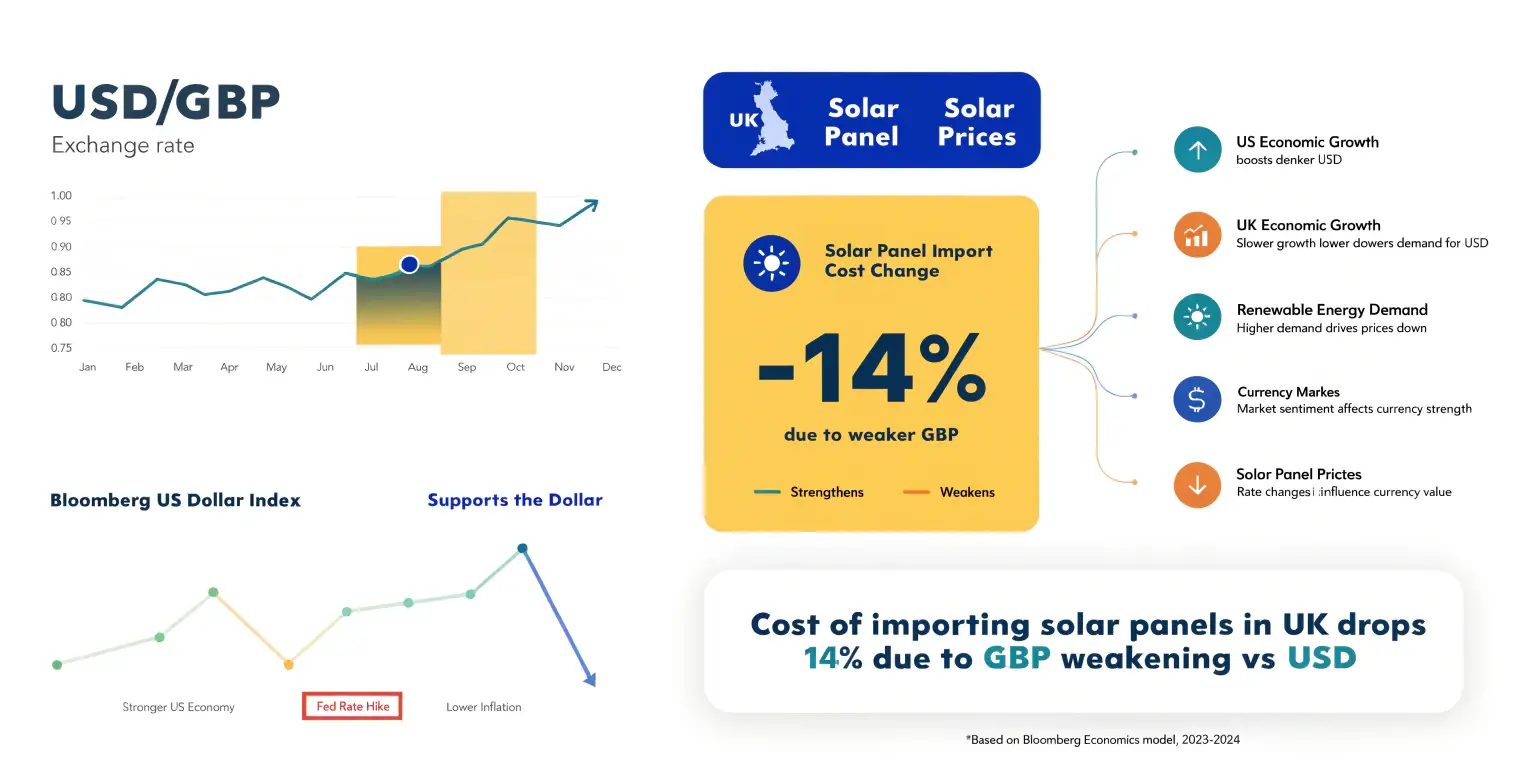
I always calculate total landed cost2, not just supplier price.
Where exchange rate impacts happen
| Area | Example | Impact |
|---|---|---|
| Invoice currency | USD vs CNY | Price difference |
| Payment timing | Rate change before payment | Cost increase |
| Bank conversion | USD to local currency | Hidden fees |
| Freight payment | Different currency | Extra exposure |
Real example
I once received a quote in USD. I delayed payment by two weeks. My local currency weakened. My total cost increased by 4%.
The panel price did not change. The exchange rate did.
Key currencies in solar trade
Most solar panel imports use:
- USD (most common)
- CNY (China domestic pricing)
- EUR or AUD (depending on market)
My rule
I always confirm:
- Invoice currency
- Payment currency
- Exchange method
If these are not clear, cost becomes unpredictable.
What most buyers miss
Many buyers focus on unit price per watt.
I also check:
- Exchange rate trend
- Payment date
- Conversion fees
These small things create big cost differences.
Should I use hedging strategies?
Many buyers think hedging is only for large companies. I use simple hedging even for small orders.
Hedging helps stabilize cost.3 I use simple tools like forward contracts and multi-currency accounts.

I do not use complex financial products. I keep it simple and practical.
Common hedging methods I use
| Method | How It Works | When I Use |
|---|---|---|
| Forward contract4 | Lock exchange rate | Large orders |
| Multi-currency account | Hold USD balance | Frequent orders |
| Natural hedge | Match income and cost currency | Ongoing business |
| Split payments | Pay in stages | Volatile markets |
Forward contracts
I sometimes lock the exchange rate 30–90 days in advance.
Benefits:
- Predictable cost
- Protection from sudden changes
Limit:
- No benefit if rate improves
Multi-currency account
I keep some USD balance.
Benefits:
- Flexible timing
- Avoid repeated conversions
Natural hedging
If I receive USD from customers, I use it to pay suppliers.
This reduces exchange exposure.
My approach
I do not hedge everything.
I hedge when:
- Order value is large
- Market is unstable
- Payment is delayed
What I learned
I once ignored hedging during a volatile period. The exchange rate moved quickly. I lost margin.
After that, I started using simple hedging tools.
How do I plan payment timing1?
Many buyers pay when invoice arrives. I plan payment based on currency trends2.
Payment timing is a powerful tool. I choose when to pay based on exchange rate movement and market conditions.
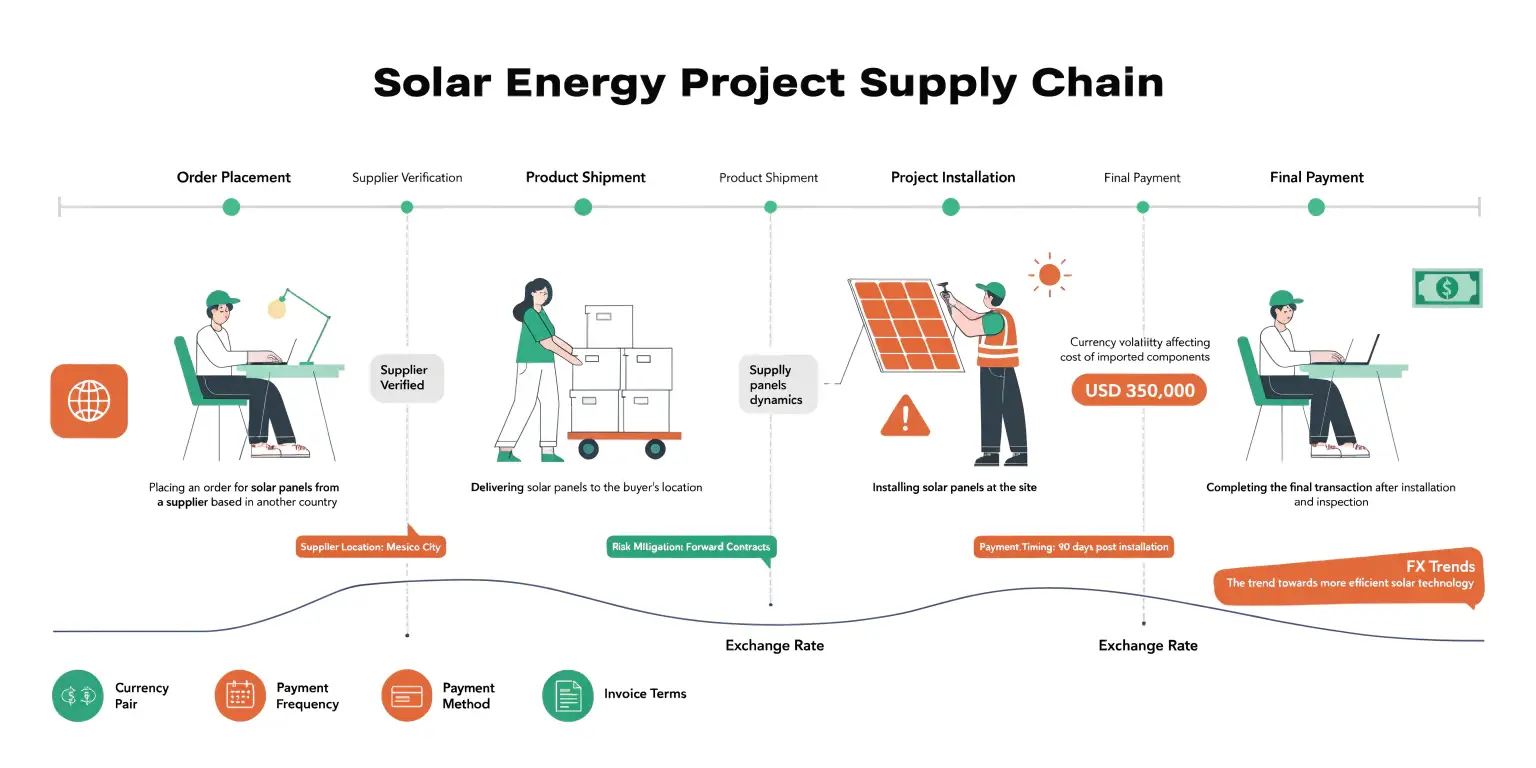
I treat timing as a decision, not a routine step.
Timing strategies I use
| Market Condition | My Action |
|---|---|
| Currency weakening | Pay early |
| Currency strengthening | Delay payment |
| High volatility | Split payments |
| Stable market | Follow schedule |
Splitting payments
Instead of one payment, I divide it.
Example:
- 30% deposit
- 40% mid-production
- 30% before shipment
This spreads risk across time.
Order planning
I align:
- Payment schedule
- Production timeline
- Currency trend
This reduces exposure.
Real example
I had one order during a volatile period. Instead of paying full balance at once, I split it into two payments.
This reduced my average exchange rate risk.
What most buyers do wrong
They focus only on:
- Production schedule
They ignore:
- Currency timing
My rule
I never rush payment without checking exchange rate.
Even one week can change cost.
How do I communicate risks with suppliers?
Many buyers ignore communication. Then suppliers adjust prices unexpectedly.
Clear communication helps control currency risk5. I define currency terms and adjustment rules early.

I treat currency as part of contract discussion.
What I always confirm
| Item | My Requirement |
|---|---|
| Currency | USD or agreed currency |
| Price validity | 30–60 days |
| Exchange clause | Adjustment rules |
| Payment currency | Same as invoice |
| Conversion responsibility | Clearly defined |
Currency clauses I use
I often include:
- Price validity period
- Exchange fluctuation cap (±3–5%)
- No change within validity period
This prevents sudden price changes.
Supplier coordination
I keep regular communication with suppliers.
I ask:
- Material price trend
- Currency exposure
- Best timing for order
This helps me decide when to place orders.
Real experience
I once placed an order without confirming currency clause. Supplier adjusted price before shipment due to exchange change.
After that, I always fix currency terms in advance.
Relationship advantage
With long-term suppliers:
- They may hold price longer
- They may absorb small currency changes
This improves stability.
My rule
I never assume currency is fixed.
I always define it clearly in writing.
Conclusion
Currency risk cannot be avoided, but I control it through timing, simple hedging, clear contracts, and strong supplier communication.
-
Understanding exchange rates is crucial for managing costs effectively in international trade, ensuring better profit margins. ↩ ↩
-
Exploring total landed cost helps buyers grasp all expenses involved, leading to more informed purchasing decisions. ↩ ↩
-
Understanding how hedging stabilizes costs can enhance your financial strategies and risk management. ↩
-
Exploring forward contracts can provide insights into effective hedging strategies for managing currency risk. ↩
-
Understanding how to manage currency risk can help you negotiate better terms and avoid unexpected costs. ↩
