 Skip to content

How can I import custom solar panels from China and ensure packaging suits long-distance shipping?
Solar panels travel thousands of kilometers before reaching project sites. Weak packaging can cause cracked glass, frame deformation, or connector damage during transport.
Proper solar panel packaging uses reinforced cartons, protective corner materials, palletized stacking, and moisture control to protect modules during long-distance ocean shipping.
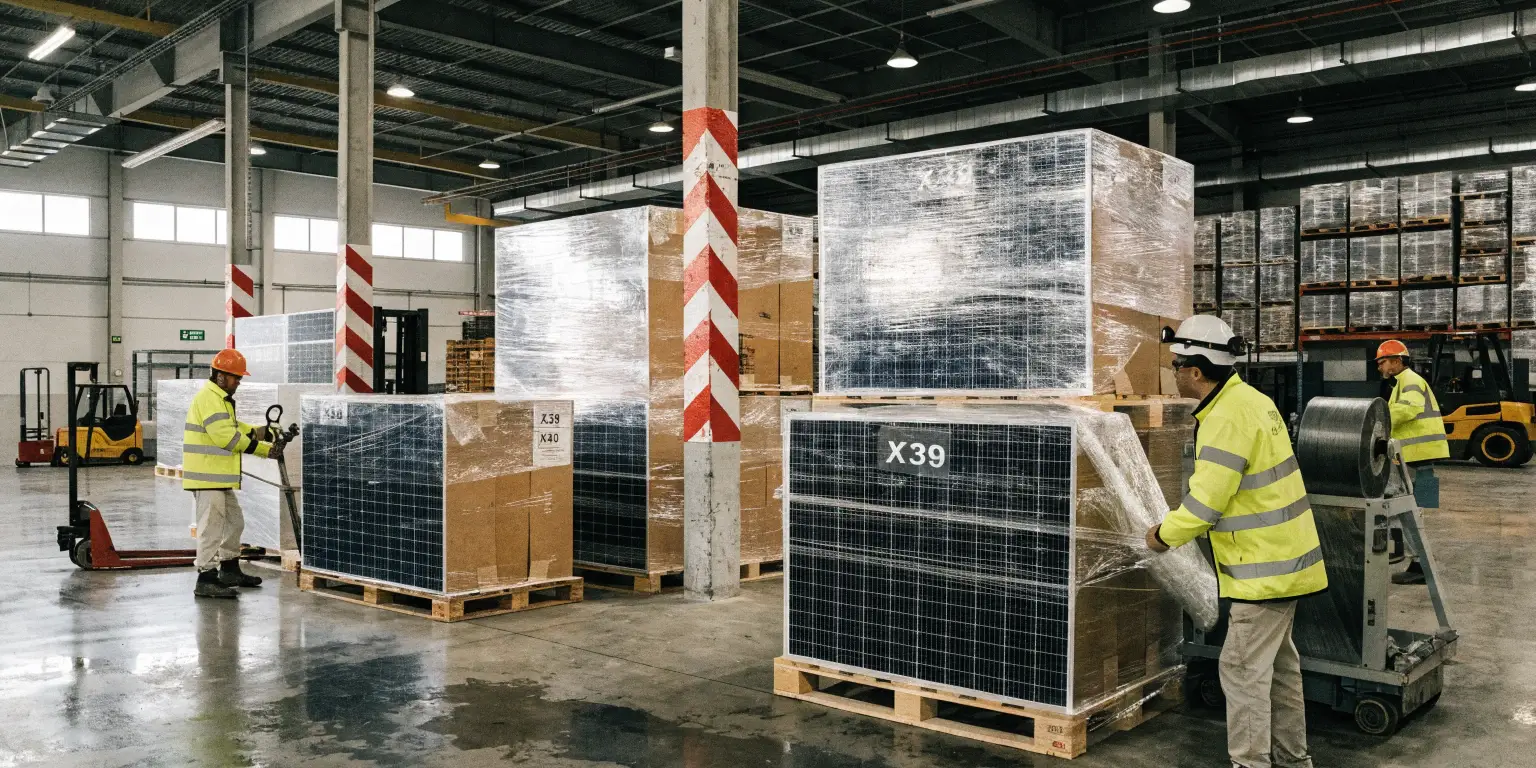
In my experience importing solar panels, packaging design is just as important as product quality. Good modules can still arrive damaged if packaging is poorly designed.
What packing methods protect solar panels during international shipping?
Solar modules contain fragile glass and sensitive electrical parts. Without proper packing, small vibrations during transport can cause damage.
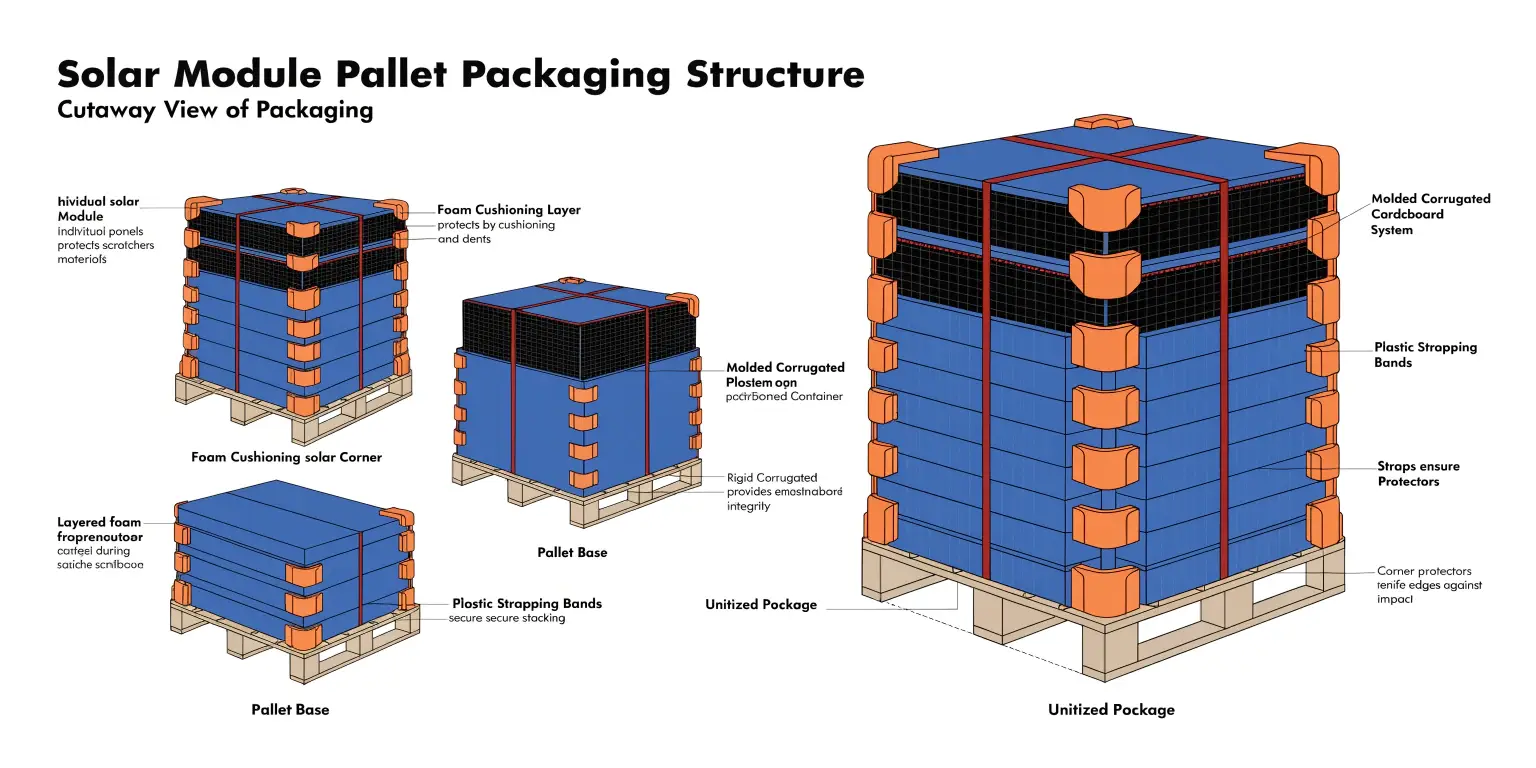
Effective solar panel packaging1 combines reinforced cartons, foam protection2, palletized stacking, and secure strapping to prevent movement and absorb shocks during shipping.
Reinforced carton packaging
Most solar modules for export use heavy-duty corrugated cartons.
These cartons protect panels from impact during handling.
Typical carton protection elements include:
| Protection component | Function |
|---|---|
| Double-wall cardboard | Increases carton strength |
| Paper corner protectors | Protect glass edges |
| Internal separators | Prevent panel contact |
Cartons also help organize modules into manageable stacks.
Edge protection and foam padding
Solar panels must be separated to prevent glass-to-glass contact.
Common protective materials include:
| Material | Purpose |
|---|---|
| EPE foam | Absorbs vibration |
| Cardboard strips | Maintain spacing |
| Corner protectors | Protect module edges |
These materials reduce stress during transportation.
Palletized packaging
Pallet packaging helps stabilize modules during loading and unloading.
Typical pallet structures include:
| Pallet component | Role |
|---|---|
| Wooden pallet base | Supports weight |
| Carton stack | Holds panel group |
| Strapping bands | Secure stack |
Pallets also allow forklifts to move cargo safely.
Stretch wrapping and strapping
After stacking cartons, factories usually apply stretch wrap and strapping.
Benefits include:
| Packaging method | Advantage |
|---|---|
| Stretch film | Prevents moisture entry |
| Plastic strapping | Stabilizes cartons |
| Corner boards | Protect carton edges |
These steps prevent cartons from shifting during transport.
How do I reduce breakage risk during long-distance transport?
Solar panels travel through many handling stages including factory loading, port transport, ocean shipping, and final delivery.
Reducing breakage risk requires strong packaging design3, careful stacking, vibration protection4, and proper container loading procedures5.
Proper pallet stacking
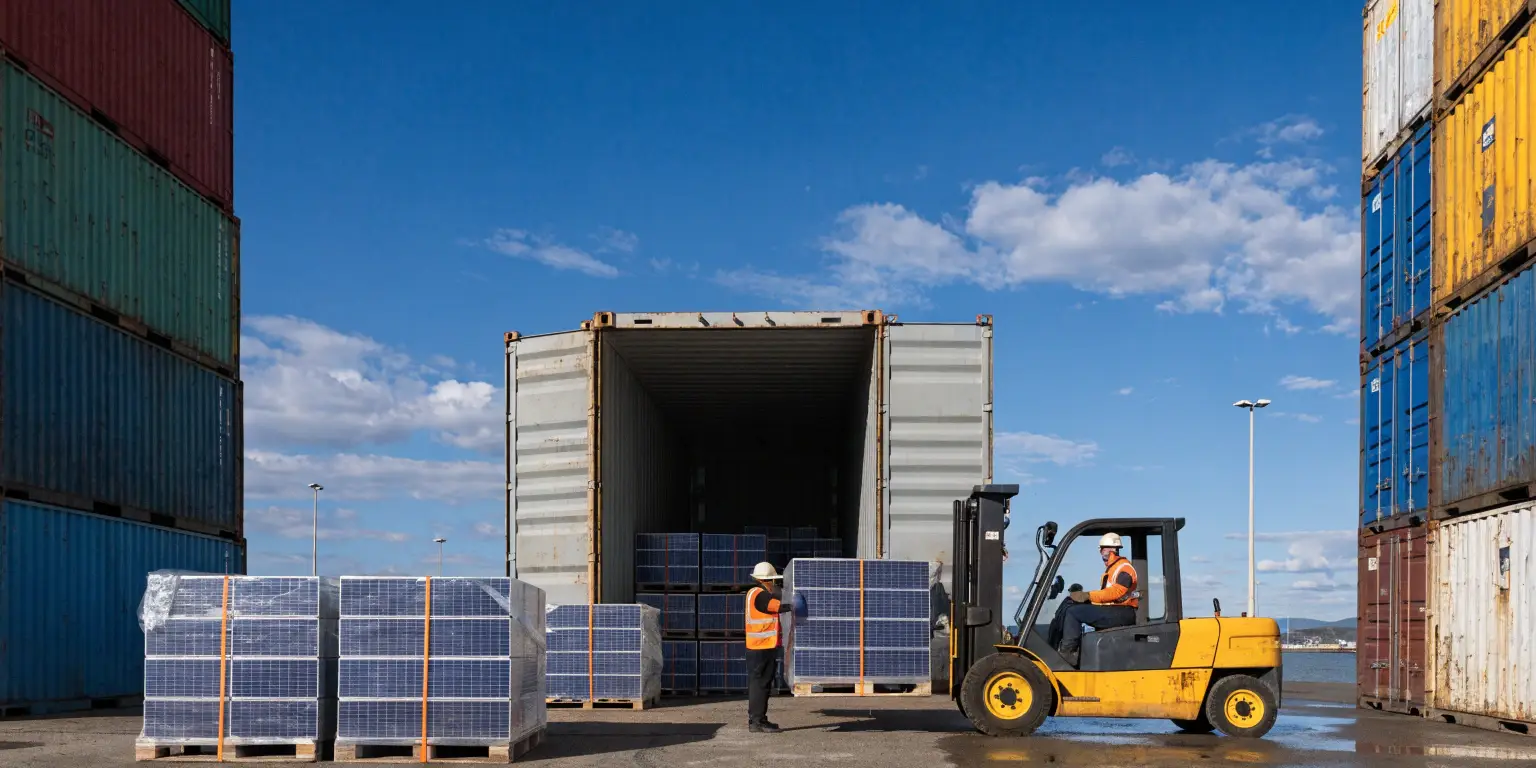
Factories usually stack around 26–30 panels per pallet depending on module size.
Correct stacking prevents pressure damage.
| Stacking rule | Purpose |
|---|---|
| Vertical panel stacking | Reduces glass stress |
| Even weight distribution | Prevents frame bending |
| Stable pallet base | Maintains balance |
Incorrect stacking can lead to cracked panels.
Avoid overloading pallets
Some factories try to maximize container space by increasing pallet height.
However excessive stacking increases pressure on lower panels.
Safe packaging normally keeps weight within pallet limits.
| Packaging limit | Reason |
|---|---|
| Maximum pallet height | Prevent tipping |
| Balanced stacking | Maintain stability |
| Safe weight limit | Protect lower modules |
Controlled stacking improves transport safety.
Protect against vibration
Ocean shipping causes constant vibration for several weeks.
Protection methods include:
| Protection measure | Purpose |
|---|---|
| Foam padding | Absorb vibration |
| Tight strapping | Prevent movement |
| Corner reinforcement | Protect edges |
These measures reduce mechanical stress.
Control humidity during shipping
Long sea journeys create humidity changes inside containers.
Moisture control solutions include:
| Method | Function |
|---|---|
| Desiccant bags | Absorb moisture |
| Container ventilation | Reduce condensation |
| Moisture barriers | Protect packaging |
Moisture protection prevents corrosion and electrical damage.
How do I label solar panel packages correctly for customs and logistics?
Clear labeling is essential for both logistics handling and customs clearance.
Solar panel packaging labels6 should identify product details, shipment information, and handling instructions to reduce errors during transportation.
Essential shipping labels
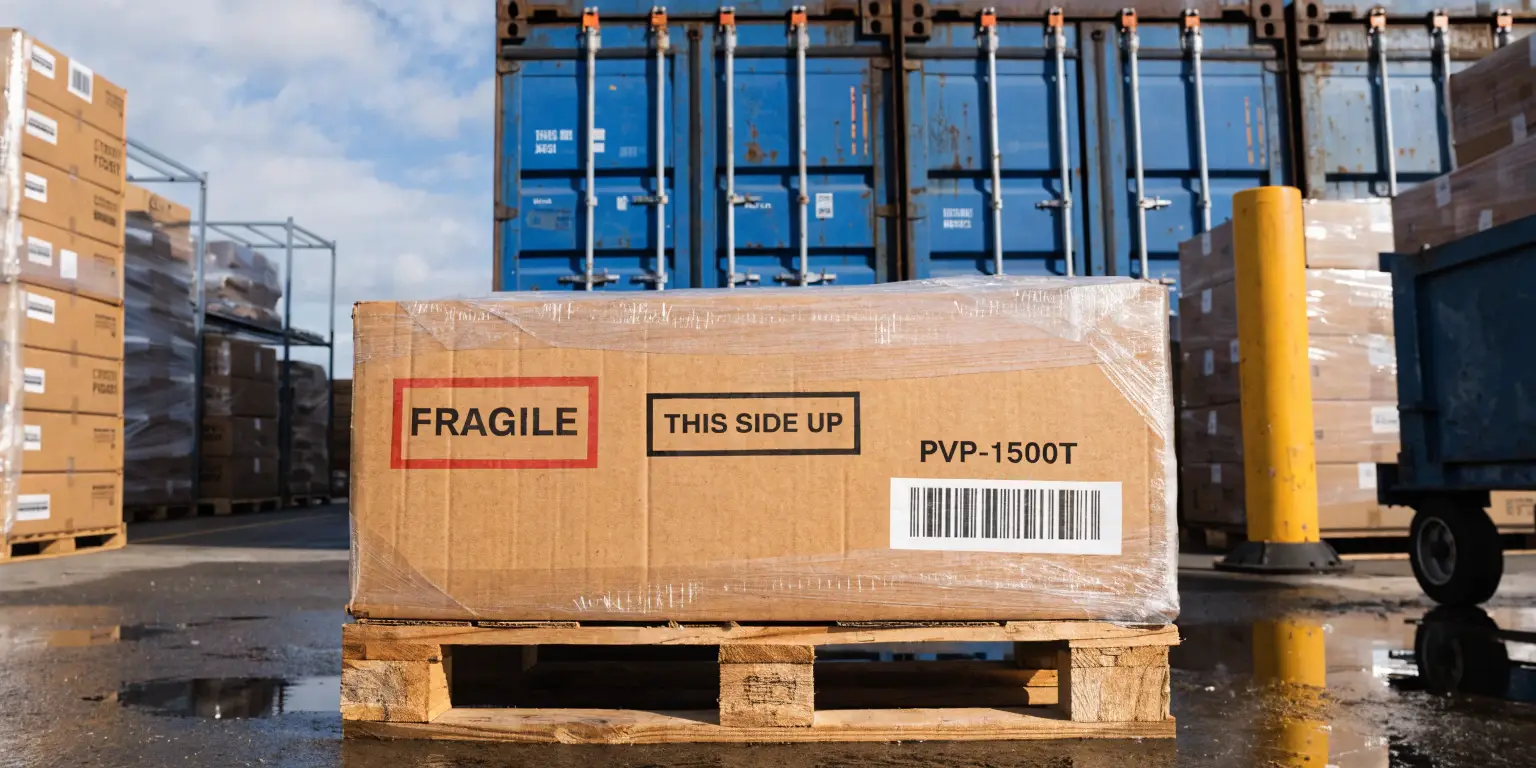
Export cartons normally include several types of labels.
| Label type | Purpose |
|---|---|
| Product label | Identify module model |
| Quantity label | Indicate panel count |
| Shipment mark | Match shipping documents |
These labels help logistics companies identify cargo quickly.
Handling instructions7
Solar modules are fragile products.
Handling labels help reduce careless handling.
Common markings include:
| Label | Meaning |
|---|---|
| Fragile | Handle carefully |
| This side up | Maintain orientation |
| Do not stack | Avoid pressure damage |
Clear instructions reduce damage risk.
Customs and export information
Customs authorities require accurate shipment information.
Typical export labeling includes:
| Information | Purpose |
|---|---|
| Manufacturer name | Identify exporter |
| Country of origin | Meet customs rules |
| Package number | Track shipment units |
These markings help customs officers inspect cargo efficiently.
Pallet identification
Each pallet should have a unique identifier.
Benefits include:
| Advantage | Explanation |
|---|---|
| Inventory control | Track pallets easily |
| Damage tracing | Identify affected shipments |
| Warehouse management | Simplify storage |
Clear pallet identification improves logistics efficiency.
How do I verify solar panel packaging before dispatch?
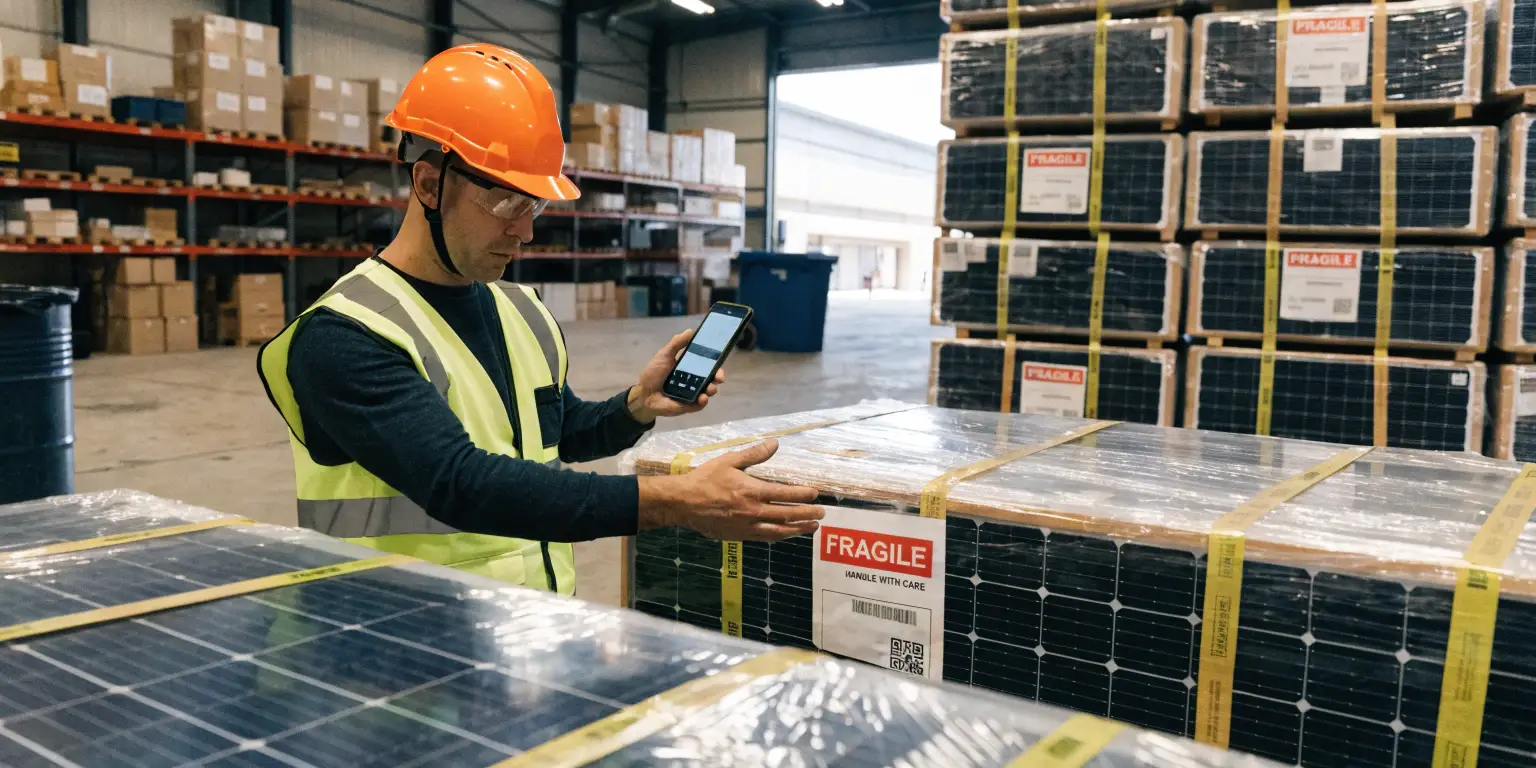
Many buyers focus only on product testing. However packaging verification8 is equally important before shipment.
Packaging verification ensures that modules are protected, correctly stacked, and properly labeled before containers leave the factory.
Request packaging photos
Factories usually provide packaging photos before shipment.
Photos should show:
- carton structure
- pallet stacking
- strapping and wrapping
- container loading
These images help confirm packaging quality.
Perform pre-shipment inspection9
Third-party inspectors can also check packaging conditions.
Typical packaging inspection items include:
| Inspection item | Purpose |
|---|---|
| Carton strength | Confirm protection |
| Pallet stability | Prevent collapse |
| Label accuracy | Avoid shipping errors |
Inspection reports provide independent verification.
Check container loading method
Container loading affects packaging safety.
Correct loading practices include:
| Loading practice | Purpose |
|---|---|
| Even pallet spacing | Prevent movement |
| Secure container walls | Stabilize cargo |
| Avoid stacking heavy goods | Protect panels |
Solar panels should not have heavy cargo placed on top.
Test packaging with trial shipments
For new products, a trial shipment can verify packaging design.
Benefits include:
| Test objective | Explanation |
|---|---|
| Transport simulation | Evaluate packaging strength |
| Damage risk assessment | Identify weak points |
| Packaging improvement | Optimize design |
Testing helps improve packaging reliability for future orders.
Conclusion
Strong packaging design, proper labeling, and pre-shipment verification help ensure solar panels arrive safely after long-distance shipping from China.
-
Explore this link to learn about effective packaging methods that ensure solar panels arrive safely. ↩
-
Discover how foam protection absorbs vibrations and prevents damage during transport. ↩
-
Explore this link to learn how effective packaging design can significantly reduce breakage risk during transport. ↩
-
Discover the importance of vibration protection methods to ensure the safe transport of solar panels. ↩
-
Understanding proper loading procedures is crucial for minimizing breakage risk during shipping. ↩
-
Explore this resource to learn effective labeling techniques that ensure smooth logistics and customs clearance. ↩
-
Discover essential handling instructions to minimize damage and ensure safe transportation of solar panels. ↩
-
Understanding packaging verification is crucial for ensuring solar panels are shipped safely and efficiently. ↩
-
Exploring pre-shipment inspection can help you ensure quality control and avoid costly shipping errors. ↩
