 Skip to content

How can I import custom solar panels from China and arrange split shipments if needed?
Many solar projects do not require all panels at once. However, importing everything in a single shipment can create inventory pressure, storage costs, and cash flow challenges.
Split shipments allow buyers to divide solar panel deliveries into multiple batches, making logistics easier while aligning shipments with installation schedules and project timelines.

When importing custom solar panels, planning split shipments properly helps reduce risk. It also improves inventory control and keeps project schedules stable.
How do I schedule multiple solar panel deliveries?
Many buyers decide to split shipments1 only after production begins. This can create confusion in manufacturing schedules and logistics arrangements.
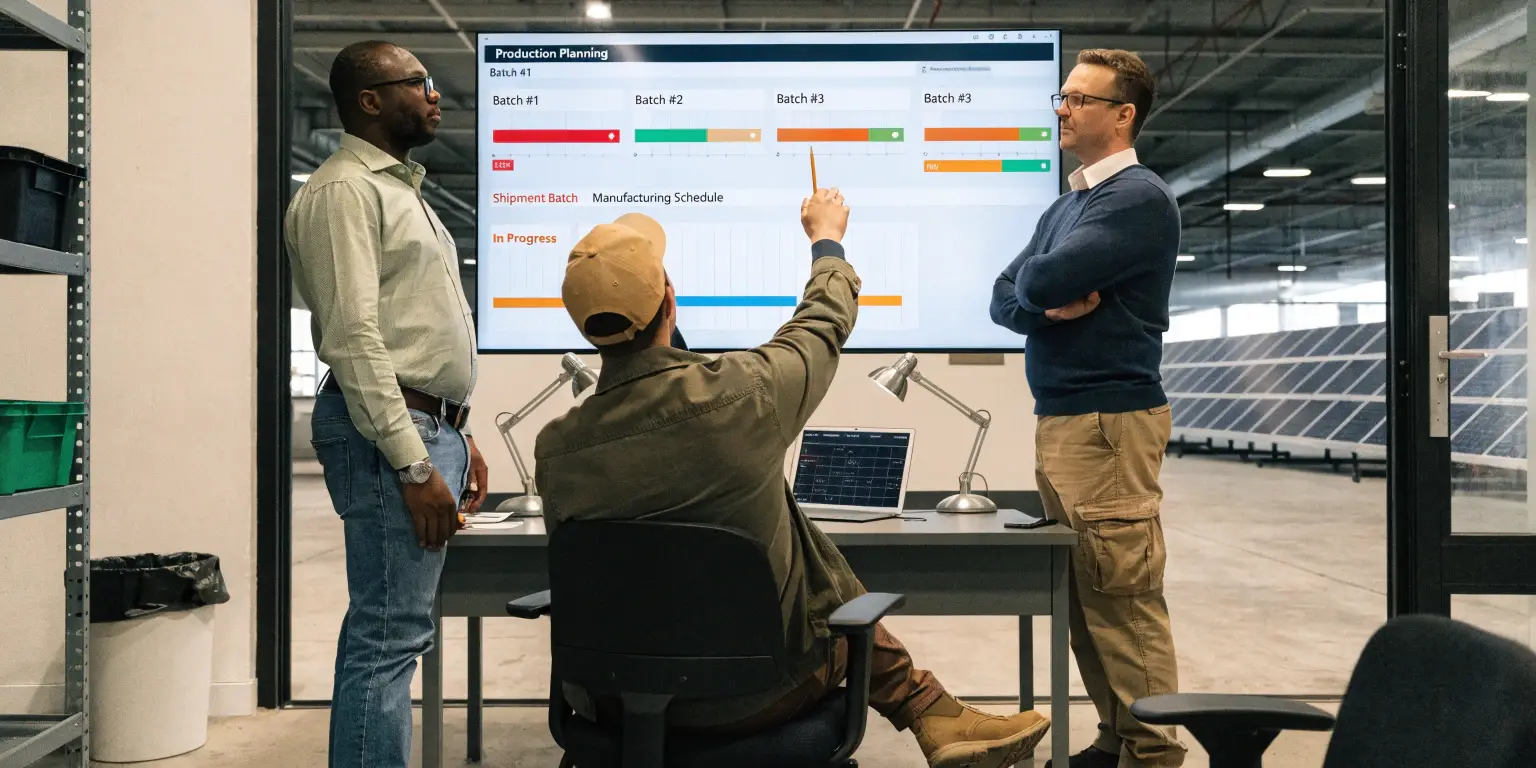
The best approach is to plan split deliveries during the order negotiation stage and clearly define shipment timelines in the contract.
Define shipment batches early
Split shipments should be included in the purchase agreement.
| Contract element | Purpose |
|---|---|
| Batch quantity | Defines each shipment size |
| Delivery schedule | Sets shipment dates |
| Inspection requirements | Ensures quality control |
Clear agreements prevent misunderstandings later.
Align shipments with production milestones2
Solar panel factories typically manufacture modules in production batches.
Typical milestones may include:
| Production stage | Description |
|---|---|
| Cell preparation | Solar cells sorted and prepared |
| Module assembly | Lamination and framing |
| Final testing | Flash testing and inspection |
| Packaging | Panels prepared for shipment |
Once a batch is complete, that portion of the order can be shipped.
Coordinate with freight forwarders3
Freight forwarders help organize multiple shipments efficiently.
Responsibilities may include:
| Logistics task | Description |
|---|---|
| Container booking | Reserve vessel space |
| Export documentation | Prepare shipping papers |
| Customs coordination | Ensure clearance compliance |
Experienced forwarders can manage staggered shipments smoothly.
Match deliveries with installation plans
Many solar projects install panels gradually.
Split shipments help match material arrival with installation progress.
Benefits include:
- reduced warehouse storage
- easier site management
- smoother construction workflow
This approach keeps projects moving without excess inventory.
How do I ensure each partial shipment meets specifications?
One concern with split shipments is maintaining consistent quality across multiple batches.
Each shipment should follow the same specifications, inspection standards, and documentation requirements as the original order.
Lock specifications before production
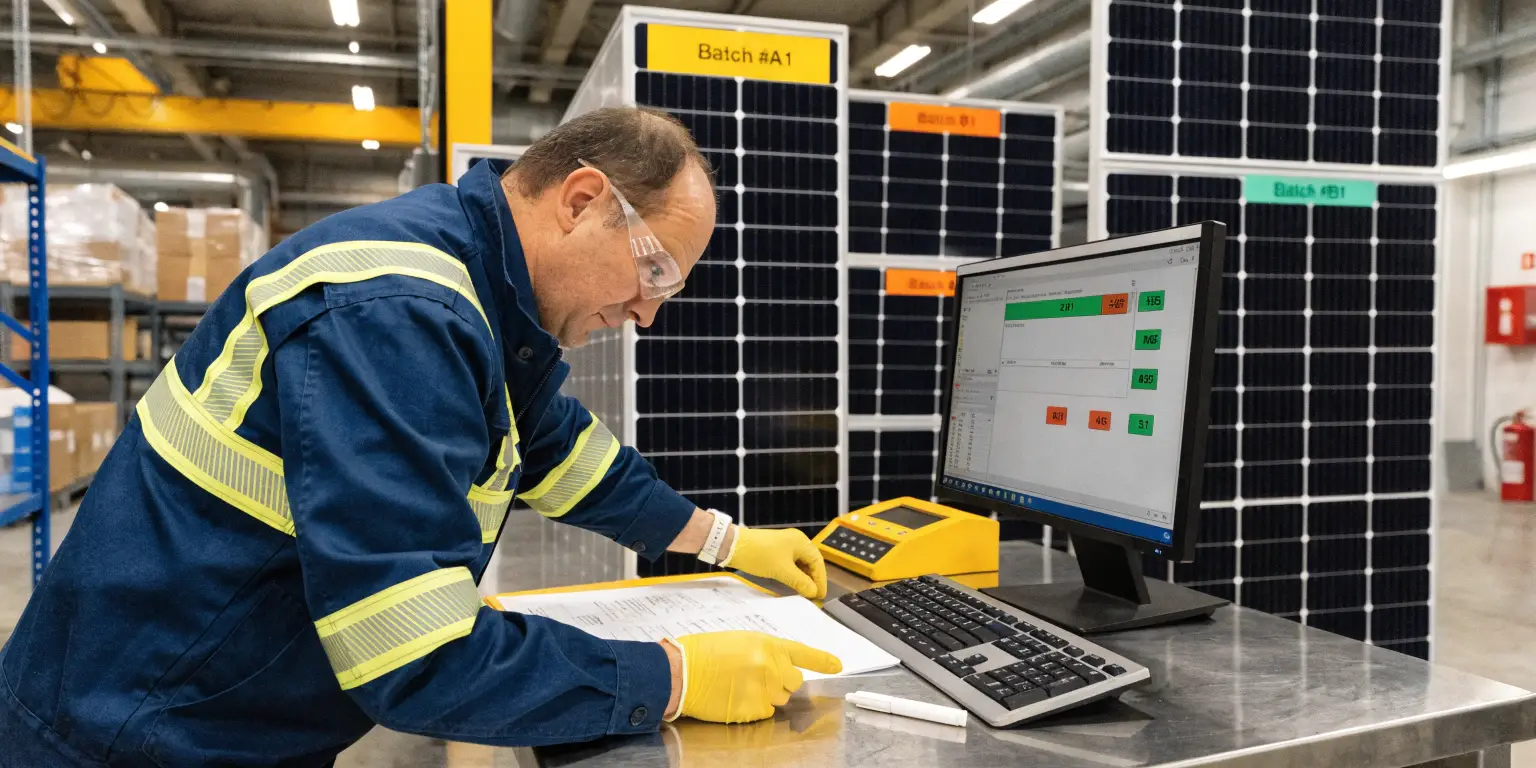
Before production begins, buyers should confirm all technical specifications4.
Important parameters include:
| Specification | Example |
|---|---|
| Cell type | Mono PERC or TOPCon |
| Rated power | 550W ± tolerance |
| Module dimensions | Frame size and thickness |
| Connector type | MC4 or compatible |
Locking specifications prevents unexpected changes between batches.
Inspect every shipment batch
Each shipment should pass quality inspection.
Typical inspection items include:
| Inspection item | Purpose |
|---|---|
| Visual inspection | Detect damage or defects |
| Power verification | Confirm electrical performance |
| Label verification | Ensure correct model |
Independent inspections maintain consistent quality.
Use serial number traceability5
Serial numbers help track modules across shipments.
Benefits include:
| Advantage | Explanation |
|---|---|
| Batch identification | Identify production lot |
| Warranty tracking | Manage claims easily |
| Installation records | Track system performance |
Clear serial number records reduce confusion across multiple deliveries.
Maintain consistent packaging6
Standard packaging ensures panels are protected and easy to handle.
Packaging should include:
| Packaging feature | Purpose |
|---|---|
| Reinforced cartons | Protect glass panels |
| Corner protectors | Prevent edge damage |
| Pallet stacking | Safe container loading |
Uniform packaging simplifies logistics across shipments.
How does splitting solar panel shipments affect costs?
While split shipments offer flexibility, they may also affect logistics expenses7.
Costs may increase slightly because multiple shipments require repeated documentation, freight bookings, and customs processing.
Freight costs
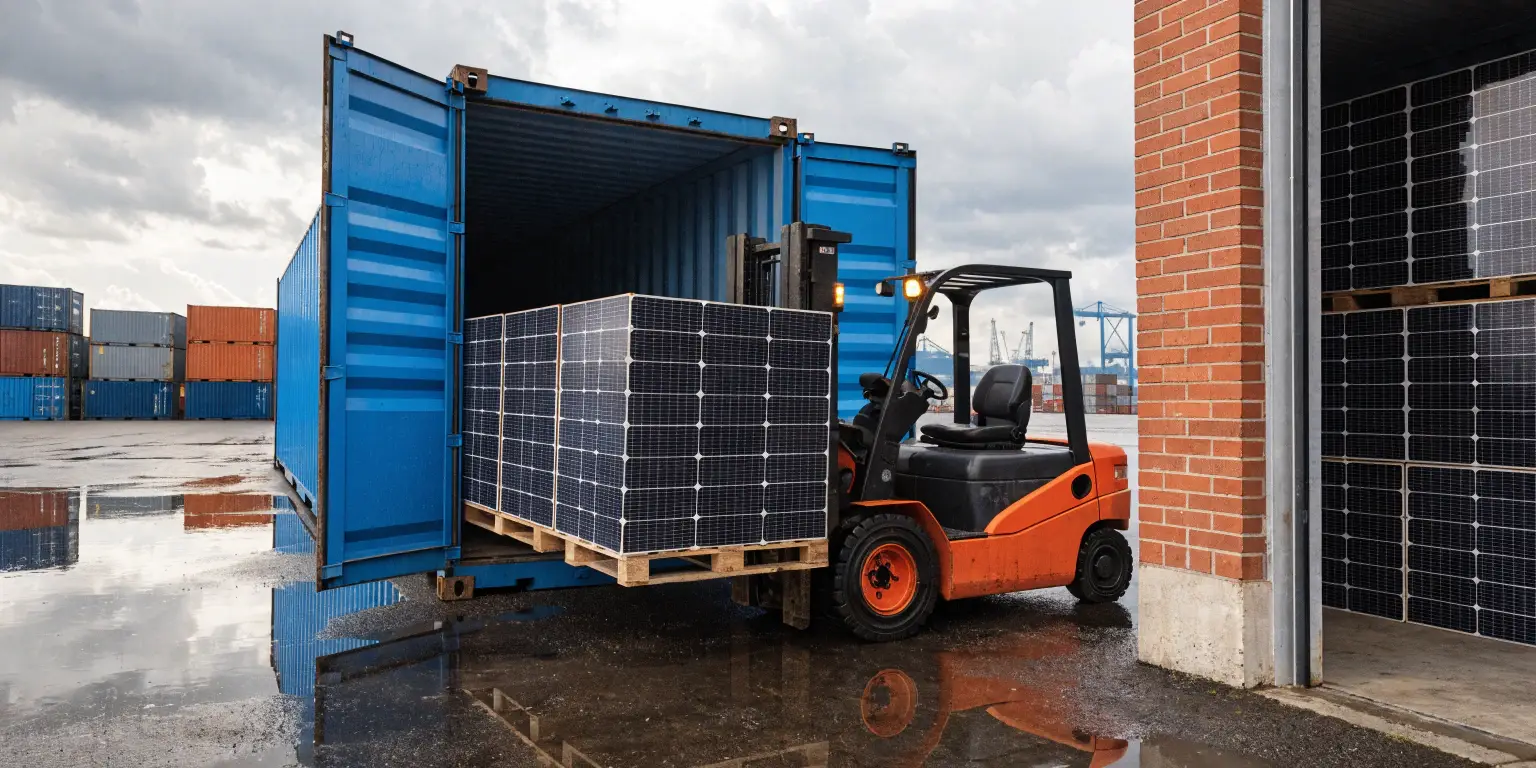
Shipping costs depend on container size and frequency.
| Shipping method | Cost consideration |
|---|---|
| Full container load | Lower cost per unit |
| Partial shipments | Slightly higher freight cost |
However, smaller shipments may reduce storage costs.
Documentation expenses
Each shipment requires export documents.
Typical documents include:
| Document | Purpose |
|---|---|
| Commercial invoice | Declare product value |
| Packing list | Identify cargo details |
| Bill of lading | Transport contract |
Multiple shipments mean multiple document sets.
Insurance considerations
Marine cargo insurance should cover each shipment separately.
Important points include:
| Insurance factor | Explanation |
|---|---|
| Coverage value | Matches shipment value |
| Transport route | Protects during transit |
| Damage claims | Supports compensation |
Insurance protects against shipping risks.
Inventory and cash flow benefits
Despite slightly higher logistics costs, split shipments offer financial advantages.
Benefits include:
- lower upfront payment requirements
- reduced warehouse space
- easier project budgeting
These advantages often outweigh the additional logistics cost.
How do I track multiple solar panel shipments efficiently?
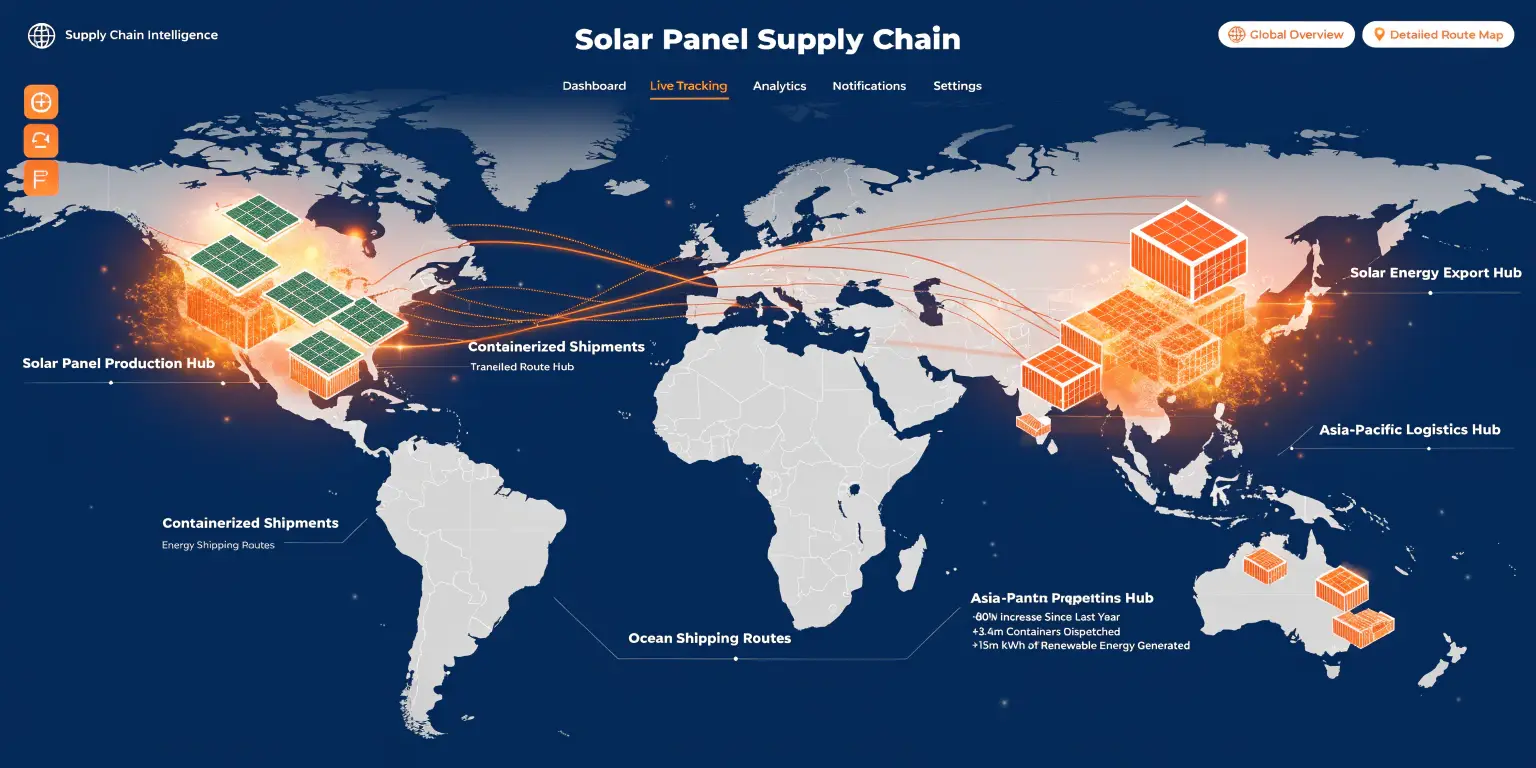
Managing several shipments requires good tracking systems.
Tracking each shipment separately ensures visibility, helps prevent delays, and allows buyers to plan installation schedules accurately.
Track containers individually
Each shipment normally uses separate containers.
Important tracking details include:
| Tracking item | Purpose |
|---|---|
| Container number | Identify cargo |
| Vessel name | Track ship movement |
| Estimated arrival time | Plan logistics |
Forwarders usually provide tracking updates.
Use digital logistics tools8
Modern logistics platforms allow buyers to monitor shipments.
Useful features include:
- shipment status updates
- document storage
- arrival notifications
Digital tracking improves coordination.
Maintain shipment records9
Keeping organized records helps manage split shipments.
Recommended records include:
| Record type | Purpose |
|---|---|
| Shipment schedule | Track delivery timeline |
| Serial number ranges | Identify module batches |
| Inspection reports | Verify quality |
Clear records simplify project management.
Coordinate warehouse and installation teams
Once shipments arrive, coordination becomes important.
Teams should know:
- expected arrival dates
- shipment quantities
- installation schedule
This ensures panels are installed efficiently without delays.
Conclusion
Split shipments allow buyers to manage inventory, coordinate installation schedules, and maintain better control over logistics when importing custom solar panels from China.
-
Understanding best practices for split shipments can streamline your delivery process and enhance project efficiency. ↩
-
Knowing production milestones helps you align deliveries with manufacturing, ensuring timely project execution. ↩
-
Exploring how freight forwarders operate can help you optimize your logistics and ensure timely deliveries. ↩
-
Learning about the importance of technical specifications can prevent issues during production and ensure quality. ↩
-
Exploring serial number traceability can enhance your ability to track and manage shipments effectively. ↩
-
Discovering the benefits of consistent packaging can streamline your shipping process and protect your products. ↩
-
Understanding logistics expenses can help you optimize shipping strategies and reduce overall costs. ↩
-
Explore this link to discover top digital logistics tools that enhance shipment tracking and improve overall efficiency. ↩
-
Learn about best practices for maintaining shipment records to streamline logistics and ensure timely deliveries. ↩
