

How to Choose the Most Efficient Solar Panels for Traffic Lights: A Complete Guide
Traffic lights are essential for road safety. But when placed in remote locations, power access can be a challenge. Portable solar traffic lights offer a reliable solution.
Portable solar traffic lights rely on efficient solar panels to maintain uninterrupted operation. Choosing the right solar modules ensures long-lasting performance, durability, and cost savings.
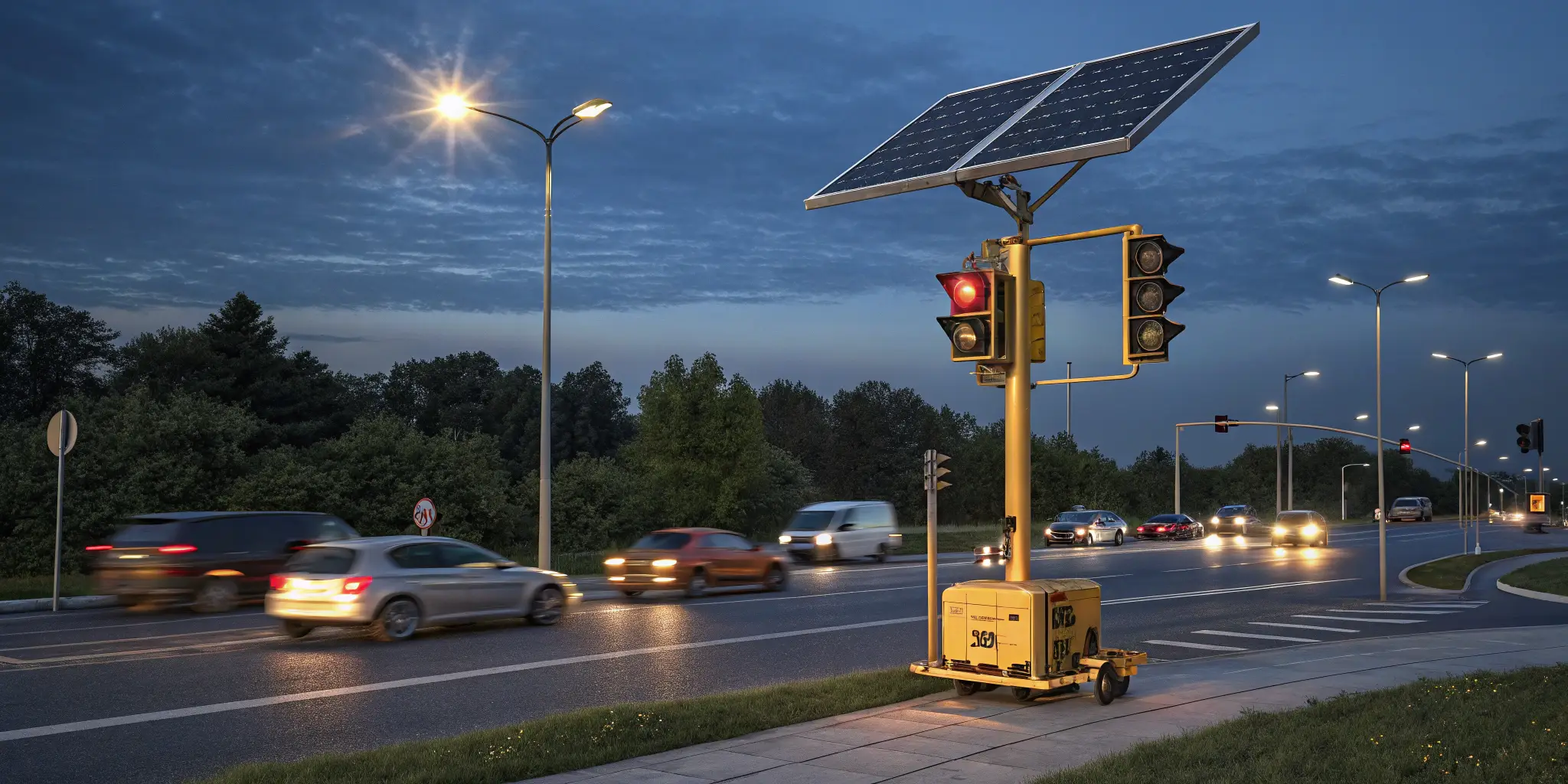
A well-chosen solar panel system can maximize efficiency and reliability. Let’s explore the key factors that affect performance and durability.
What Are Portable Solar Traffic Lights and How Do They Work?
Cities and remote areas need reliable traffic management. Traditional wired traffic lights require infrastructure and maintenance. Portable solar traffic lights1 provide a flexible alternative.
Portable solar traffic lights use photovoltaic panels2 to generate energy, charge batteries, and power LED signals. They work independently from the grid, making them ideal for temporary or off-grid applications.
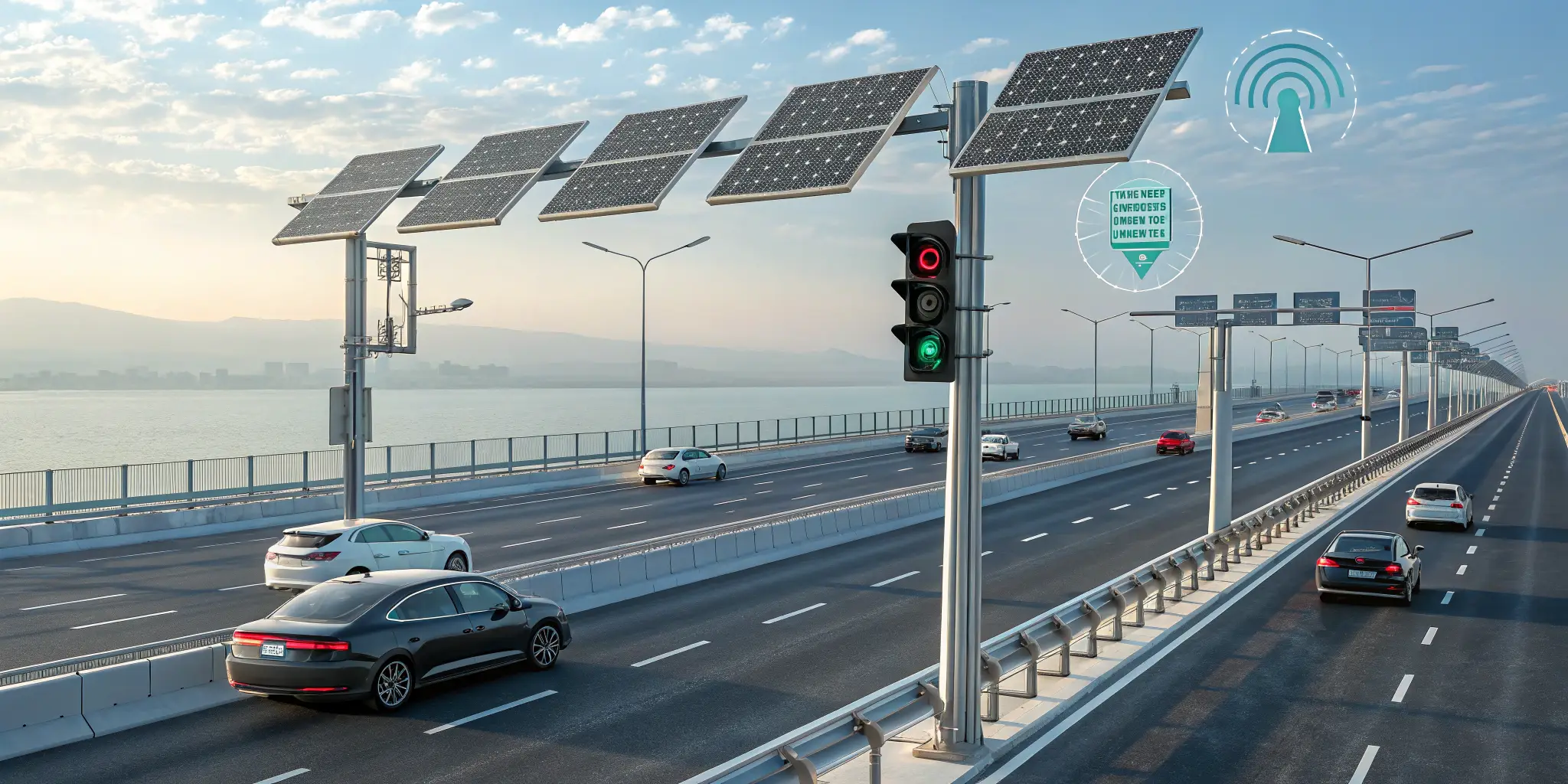
Key Components of Portable Solar Traffic Lights
Portable solar traffic lights consist of:
- Solar panels – Convert sunlight into electricity
- Rechargeable battery – Stores energy for nighttime operation
- LED traffic signals3 – Low-energy lights for high visibility
- Charge controller – Regulates power flow to prevent overcharging
- Mounting frame – Holds the system securely in place
These systems are used in construction zones, rural roads, and emergency situations. They provide an eco-friendly alternative to diesel-powered or wired traffic signals.
What Factors Should You Consider When Choosing Solar Modules for Traffic Lights?
Choosing the right solar panel is critical for reliable performance. Several factors determine efficiency and durability.
The key factors include power output4, efficiency, panel type, durability, and compatibility with the battery system.
1. Power Output
Solar panels must generate enough electricity to charge batteries fully each day. Look for panels with at least 50W to 150W output, depending on traffic light energy needs.
2. Efficiency
High-efficiency panels convert more sunlight into electricity. Monocrystalline panels5 typically offer the highest efficiency, making them ideal for areas with limited sunlight.
3. Panel Type
There are three main types of solar panels:
| Panel Type | Efficiency | Durability | Best Use Case |
|---|---|---|---|
| Monocrystalline | High (~20%) | Long-lasting | High-performance applications |
| Polycrystalline | Medium (~16-18%) | Durable | Cost-effective solutions |
| Thin-film | Low (~10-12%) | Flexible, lightweight | Temporary or mobile applications |
4. Weather Resistance
Solar panels for traffic lights must withstand extreme conditions. Look for IP65-rated6 panels for protection against dust and water.
5. Battery Compatibility
Ensure the solar panel voltage matches the battery system. Common configurations include 12V, 24V, and 48V systems.
How Much Power Do Portable Solar Traffic Lights Require?
Insufficient power can cause traffic lights to fail, leading to safety hazards. It's important to determine the right solar panel size.
Most solar-powered traffic lights require 50W to 150W7 of solar panel power to operate continuously, depending on LED wattage and battery capacity.
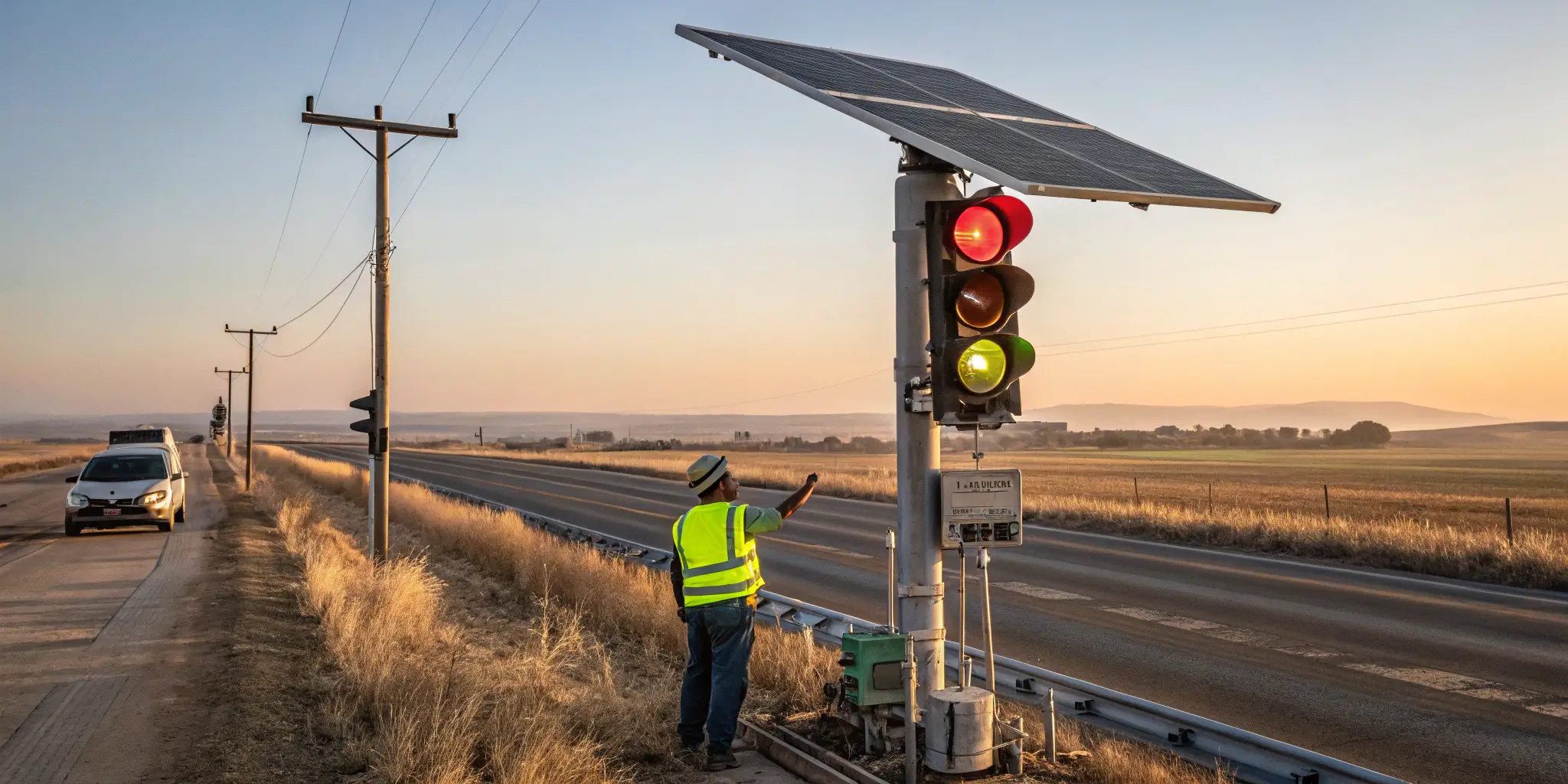
Calculating Power Requirements
To estimate the required power:
- Determine LED power consumption – Most traffic signals use 5W to 15W per LED color8.
- Calculate daily energy needs – Multiply power consumption by operating hours.
- Consider solar charging efficiency – Account for sunlight hours and battery storage.
| Component | Power Consumption | Estimated Daily Usage | Total Energy Need |
|---|---|---|---|
| Red Light LED | 10W | 8 hours | 80Wh |
| Green Light LED | 10W | 8 hours | 80Wh |
| Battery System | 50W | 24 hours | 1200Wh |
Total daily energy need = 1360Wh. A 100W solar panel receiving 5 peak sun hours9 per day can generate 500Wh. At least three 100W panels would be required.
What Are the Most Durable Solar Modules for Outdoor Traffic Lights?
Outdoor traffic lights face harsh weather conditions. The wrong solar panel choice can lead to early failure.
The most durable solar panels for traffic lights are monocrystalline modules with a tempered glass surface and IP65-rated waterproof protection10.
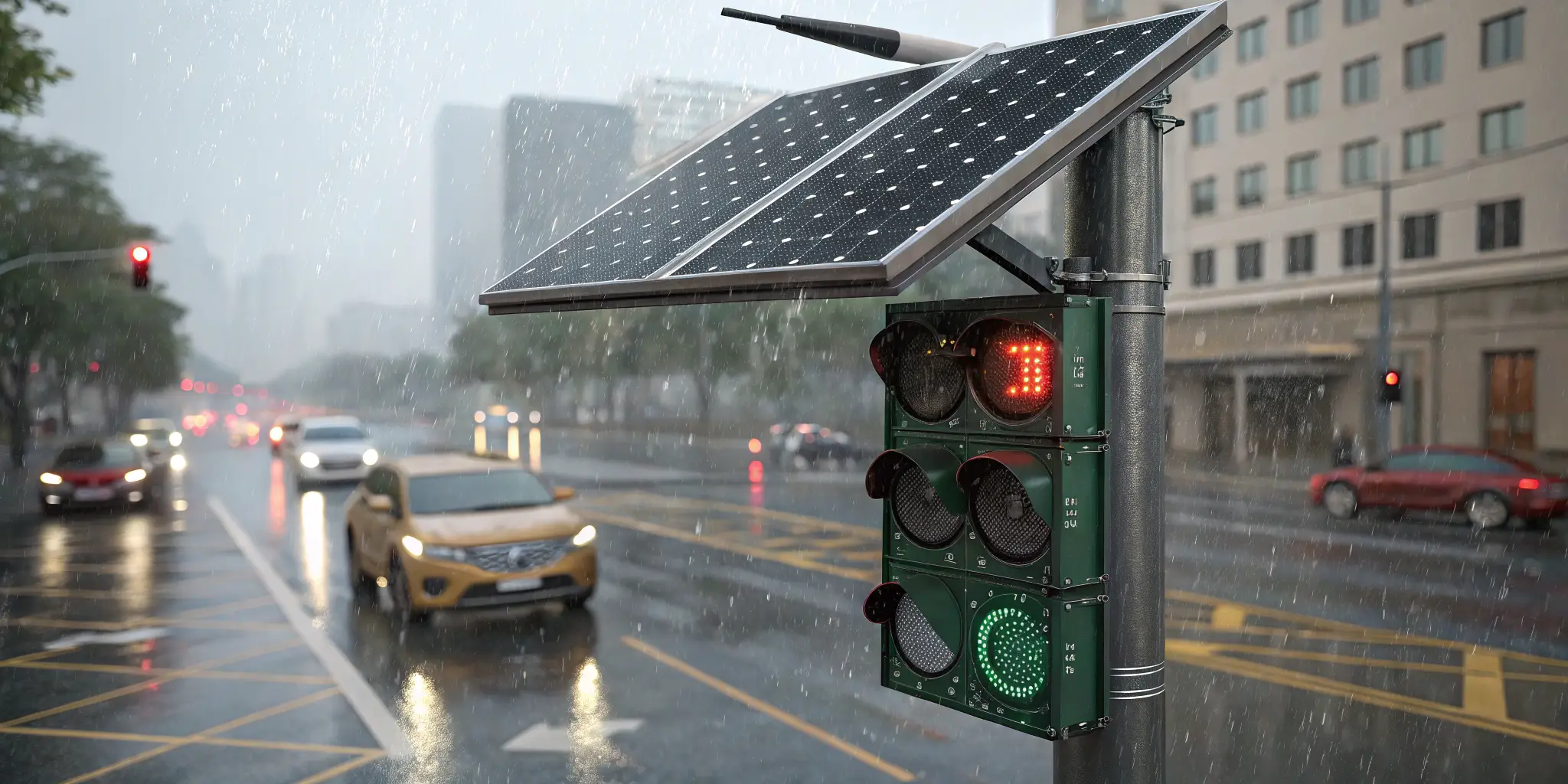
Features of Durable Solar Panels
- High-quality tempered glass – Protects against impact and UV degradation
- Aluminum frame – Ensures structural integrity
- Weatherproof junction box – Seals electrical components from moisture
- Corrosion-resistant materials – Suitable for coastal and high-humidity areas
| Feature | Benefit |
|---|---|
| Tempered glass surface | Protects against hail and debris |
| Corrosion-resistant frame | Withstands coastal environments |
| IP65 or IP67 rating | Waterproof and dustproof |
| Bypass diodes | Prevents power loss due to shading |
For long-term reliability, choose Tier 1 solar panels11 with a warranty of at least 10 years.
How Can You Ensure Maximum Durability and Weather Resistance in Solar Modules?
Solar panels must withstand extreme temperatures, storms, and dust accumulation. Proper installation and maintenance are crucial.
To maximize durability, use high-quality panels12, ensure secure mounting13, and clean the surface regularly to remove dirt and debris.
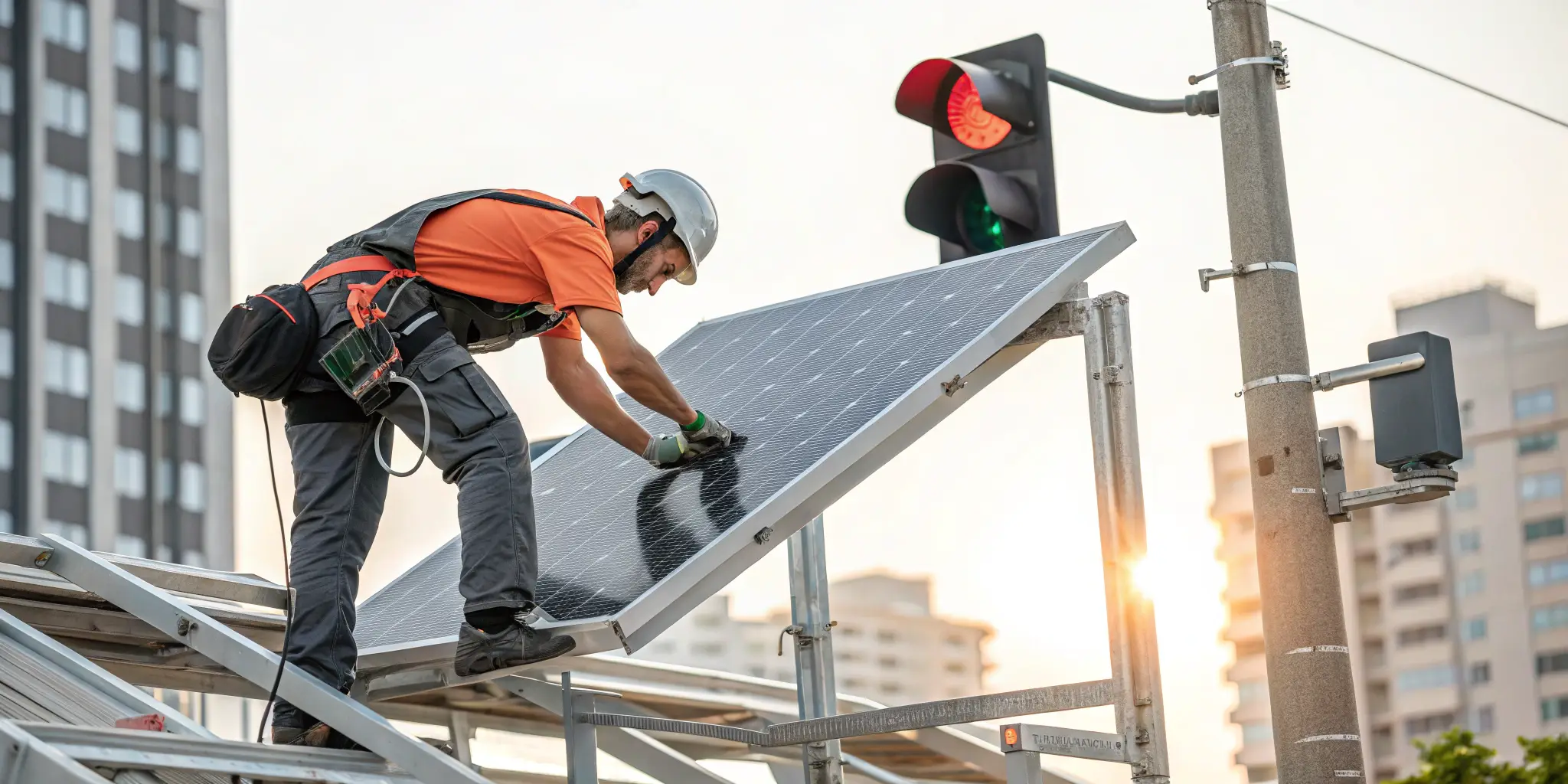
Installation Best Practices
- Secure mounting – Use strong brackets to prevent wind damage.
- Optimal tilt angle – Position panels for maximum sun exposure.
- Use protective coatings14 – Apply anti-reflective coatings for UV resistance.
Maintenance Tips
- Clean every 2-3 months – Prevents dust buildup and maintains efficiency.
- Inspect wiring and connectors – Ensure no loose or corroded connections.
- Monitor battery performance – Replace aging batteries before failure.
By selecting durable panels and following maintenance practices, portable solar traffic lights can operate efficiently for years.
Conclusion
Choosing the right solar panels for traffic lights ensures reliable operation in all conditions. High-efficiency, durable, and weatherproof panels provide the best performance for long-term use.
-
Explore the advantages of portable solar traffic lights for sustainable and flexible traffic management solutions. ↩
-
Learn how photovoltaic panels power solar traffic lights, enhancing energy efficiency and sustainability. ↩
-
Discover the benefits of LED traffic signals for visibility and energy savings in traffic systems. ↩
-
Understanding power output is crucial for ensuring traffic lights receive adequate energy, enhancing safety and reliability. ↩
-
Monocrystalline panels offer superior efficiency, making them ideal for maximizing energy production in limited sunlight areas. ↩
-
IP65 rating ensures solar panels are protected from dust and water, crucial for their longevity and performance in harsh conditions. ↩
-
Understanding the power requirements is crucial for ensuring the safety and efficiency of solar traffic lights. Explore this link for detailed insights. ↩
-
Learn about the specific power consumption of LED colors to optimize energy use in traffic lights. This knowledge can enhance your project planning. ↩
-
Discover how solar panel efficiency impacts energy generation, which is vital for planning solar traffic light systems. This resource can provide valuable calculations. ↩
-
Understanding IP ratings helps ensure you choose solar panels that can withstand harsh weather, ensuring longevity and reliability. ↩
-
Learn why Tier 1 solar panels are recommended for their quality and reliability, ensuring a solid investment for outdoor applications. ↩
-
Exploring this resource will help you understand the importance of investing in high-quality solar panels for durability and efficiency. ↩
-
This link will provide insights into how proper mounting techniques can enhance the longevity and performance of solar panels. ↩
-
Discovering the best protective coatings can significantly improve your solar panels' resistance to weather and UV damage. ↩