

Many buyers assume that modern photovoltaic modules come standard with identical MC4 connectors, but discovering field mismatches after shipping creates costly job-site headaches. Installing mismatched plugs can lead to safety hazards, voided module warranties, and failed electrical inspections1. In this guide, I break down how connector standards actually work so you can source the right components with confidence.
No, not all solar panels use genuine MC4 connectors, even though many look remarkably similar. While "MC4" has become a loose trade nickname, different module manufacturers install proprietary plugs from brands like Staubli, Tonglin, Amphenol, or QC Solar. You must verify the exact make, series, and model before mating or ordering connectors.
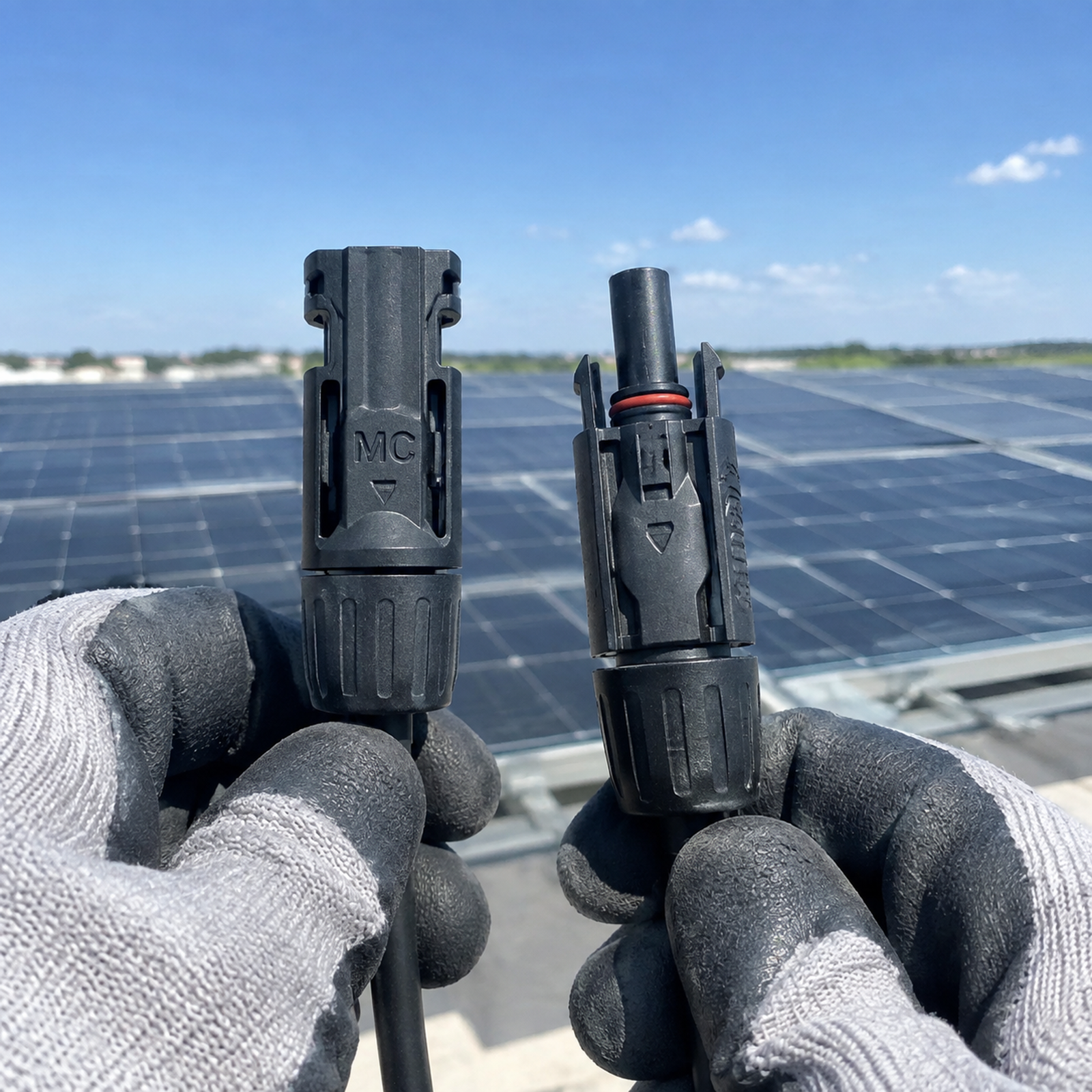
Understanding connector identity is critical for solar procurement and field installation. Below, I explore why visual appearance is deceiving, what risks emerge from cross-mating, and how our team verifies exact connector specifications to prevent project delays.
Why do people assume all solar panels use MC4 connectors?
Procurement managers often specify "MC4" on purchase orders without checking the manufacturer data sheet, only to receive modules with non-interchangeable components. This loose terminology confuses field crews, scrambles inventory counts, and creates disputes over warranty compliance. I frequently see buyers surprised to learn that their panels feature an entirely different brand.
People assume all modules use MC4 connectors because the original Staubli design set the standard for modern photovoltaic installations. Over two decades, the term evolved into an informal trade shorthand for snap-lock solar plugs, causing buyers to overlook critical engineering differences across competing connector manufacturers.
The Origin of the MC4 Standard
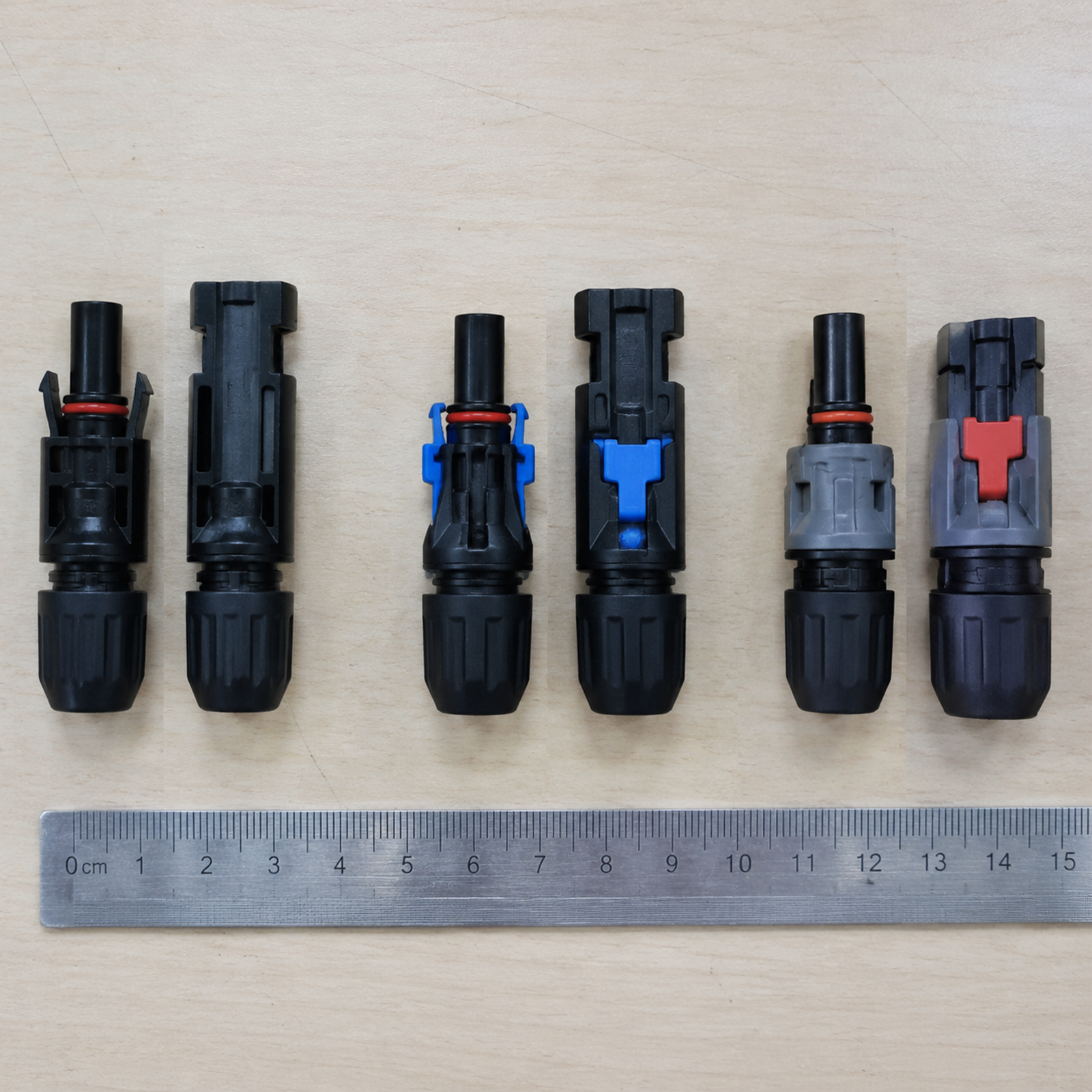
The MC4 connector was developed by Multi-Contact (now Staubli Electrical Connectors) in the early 2000s as a successor to the older MC3 design2. The "MC" stands for Multi-Contact, while the "4" indicates the 4 mm diameter contact pin3. Because it introduced an integrated latching mechanism meeting international safety standards, it became the benchmark across utility and rooftop installations worldwide.
As the solar industry expanded rapidly, patent expirations and manufacturing growth led dozens of component factories to introduce their own snap-lock connectors. These alternatives often share external dimensions, but they are separate product lines manufactured under different quality standards, tooling tolerances, and material formulations.
The Problem with "MC4-Compatible" Terminology
In B2B trade, suppliers frequently advertise plugs as "MC4-compatible." In my sourcing experience, this label causes significant confusion. Here is why the generic label falls short:
- Informal slang versus formal specification: In colloquial trade, installers say "MC4" the same way consumers say "Kleenex" for facial tissue. However, electrical standards require defined manufacturer part numbers.
- Distinct internal tolerances: While the outer plastic shell may latch onto a Staubli MC4, the internal male and female metal pins may have microscopic variances in contact pressure and plating thickness.
- Thermal expansion mismatches: Different plastic blends expand and contract at varied rates across extreme field temperatures, which can compromise the ingress protection (IP) seal over time4.
| Connector Brand / Model | Original Manufacturer | Common Module Partners | Key Characteristic |
|---|---|---|---|
| MC4 / MC4-Evo 2 | Staubli Electrical Connectors | Tier-1 Global Brands | Original design, tightest precision tolerances |
| TL-Cable01 / TL-Connect | Tonglin (Tongrun) | Major Asian Module Makers | Widely deployed OEM pre-assembled junction boxes |
| Helios H4 | Amphenol Industrial | Diverse commercial modules | Distinct latch mechanism, custom unlock tool |
| QC4.10 | QC Solar | Large volume manufacturers | Integrated bypass/junction solutions |
When distributors order inventory based purely on the phrase "MC4," they often receive compatible-style plugs rather than genuine Staubli components. This distinction matters to project owners, system inspectors, and insurance underwriters.
What happens when you cross-mate different MC4 connectors?
Procurement teams under tight delivery schedules often ask if field teams can simply force-mate similar-looking plugs when exact spares run out. Mating two different brands might seem to complete the circuit today, but it introduces hidden electrical and thermal vulnerabilities down the road. These decisions frequently lead to failed commissioning inspections and costly warranty disputes.
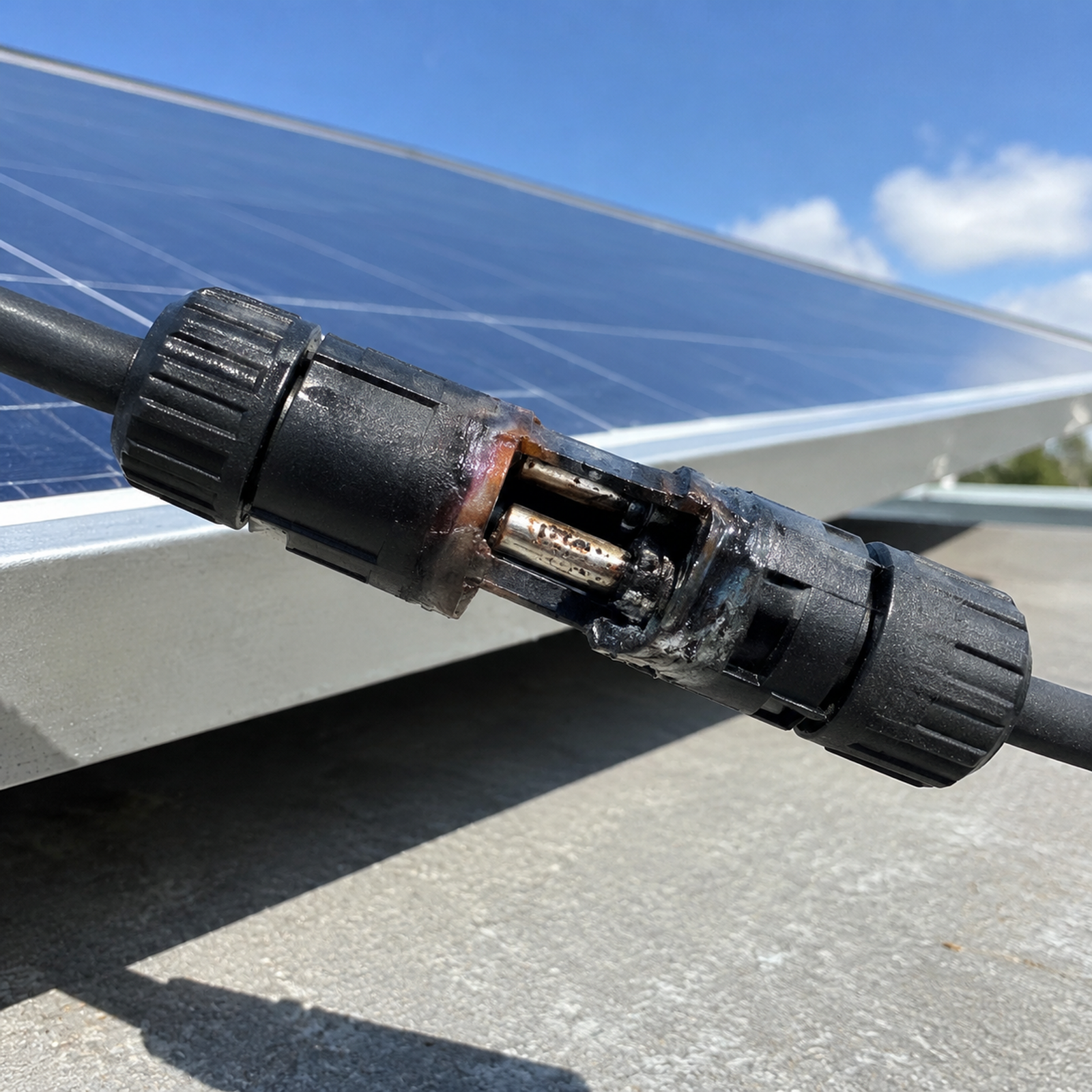
Cross-mating mismatched plugs can cause accelerated resistance buildup, localized thermal hotspots, moisture ingress, and arc faults5 over operating lifecycles. Major international codes, such as the US National Electrical Code (NEC 690.33(C)6) and Australian Standard AS/NZS 50337, explicitly prohibit intermating plugs from different manufacturers unless officially certified.
The Engineering Risks of Cross-Brand Mating
At our trading desk, we always advise clients to avoid intermating different connector brands. Even if two parts click together physically, their long-term electrical behavior remains unverified by independent standards bodies.
Mismatched Contact Pins -> Increased Contact Resistance -> Localized Heat Generation -> Housing Degradation -> Arc Fault Risk- Contact Resistance and Heating: A loose connection between mismatched internal pins creates resistance. Under full array current (often 10 A to 15 A or higher in modern high-power modules), micro-ohms of added resistance generate intense, localized heat8.
- Galvanic Corrosion: Different manufacturers use proprietary metal alloys and plating finishes (such as varied silver or tin compositions). When dissimilar metals press together in damp environments, galvanic corrosion can erode the contact surfaces9.
- Moisture Ingress: The rubber O-rings and internal sealing gaskets are engineered for specific housing inner diameters. A fraction of a millimeter difference can allow rainwater and condensation inside, tripping inverter ground-fault alarms.
Codes, Standards, and Commercial Liabilities
From an insurance and regulatory perspective, intermating brands creates immediate compliance issues. The table below outlines major regional installation requirements:
| Standard / Code Body | Region | Rule on Connector Intermating |
|---|---|---|
| NEC 690.33(C) | North America | Connectors must be mated only with identical, rated components from the same manufacturer unless explicitly tested and UL-listed together. |
| AS/NZS 5033 | Australia / New Zealand | Both halves of a DC connector pair must be of the same type from the same manufacturer. |
| IEC 6254810 | International | Prohibits plug-and-socket connectors of different designs or origins from being mated together unless proven compatible by documentation. |
If a rooftop system experiences an electrical fire or thermal shutdown, insurance investigators routinely check the DC string connections11. If they find an Amphenol plug connected to a Staubli MC4 or a Tonglin plug mated to a generic copy, they may decline property claims on the grounds of non-compliant assembly.
How can buyers verify which connectors their solar panels use?
Procurement errors frequently occur when buyers assume all panels in a single container feature identical hardware, only to discover split shipments at the port. Rushing a crew to the field without confirming hardware details causes downtime and re-ordering delays. Implementing a clear verification workflow before issuing purchase orders solves this completely.
Buyers can identify module connectors by checking the formal manufacturer datasheet, examining the connector housing for stamped branding logos, and reviewing factory bill-of-materials (BOM) documentation. If the datasheet lists multiple connector options, confirm the exact factory-installed batch model directly with your supplier before ordering matching components.
Reading Module Datasheets Accurately
When reviewing a solar panel datasheet, turn directly to the mechanical properties section. You will rarely see a single definitive connector listed. Instead, tier-1 datasheets often state:
"Connector Type: Genuine Staubli MC4 / MC4-Evo 2 / Tonglin TL-Cable01 / QC Solar QC4.10 (or equivalent)"
This multi-listing means the module factory maintains multiple certified component suppliers depending on production run timing and material availability. Therefore, reading the marketing datasheet is not enough. You must require your module supplier to state the precise connector model allocated to your specific container or pallet serial numbers.
Physical Identification on Site
If panels have already arrived at your warehouse or job site, I recommend that your quality control team inspect the physical plugs directly. Look for the following stamped markings:
- Authentic Staubli MC4: Look for the signature "MC" logo or "Staubli" lettering embossed on the plastic latch arms, accompanied by certified voltage ratings (e.g., 1000V or 1500V) and model numbers like "PV-KST4" (female) or "PV-KBT4" (male).
- Tonglin Connectors: Look for the stamped "TL" company emblem along with factory model identifiers like "TL-Cable01".
- Generic Copies: Plugs that display only polarity marks (
+and-) and a generic voltage rating, but lack any manufacturer logo or UL/TÜV registration markings, are typically unbranded copies.
Step-by-Step Connector Procurement Verification Checklist
Follow this checklist during product sourcing to protect your project schedule:
- Request the Factory Packing List and BOM: Verify the specific sub-supplier listed for DC connectors on your panel production run.
- Match Extension Cable Orders: If building field extension leads, source mating halves from the identical manufacturer and product line.
- Check Wire Gauge Compatibility: Confirm whether your field cables use 4 mm² (12 AWG) or 6 mm² (10 AWG) conductors, as internal pin barrels vary to match conductor sizes.
- Confirm Tooling Requirements: Different brands require dedicated crimping dies and disconnect tools. Never use generic pliers to assemble high-voltage DC terminals.
Can custom packaging help distributors manage authentic MC4 connectors?
Electrical wholesalers and regional installers frequently struggle with field crew inventory control when ordering high-volume connector components in bulk cartons. Loose pins, missing lock clips, and mixed components lead to wasted labor and accidental cross-brand assemblies on job sites. Tailored packaging bridges the gap between factory manufacturing and smooth field operations.
Custom packaging helps distributors prevent on-site inventory loss, simplify field distribution, and ensure crew compliance by grouping matched pairs into pre-labeled retail packs. Providing factory-direct components in custom quantities allows installers to purchase exact counts without paying for excess inventory or opening unsealed bulk master cartons.
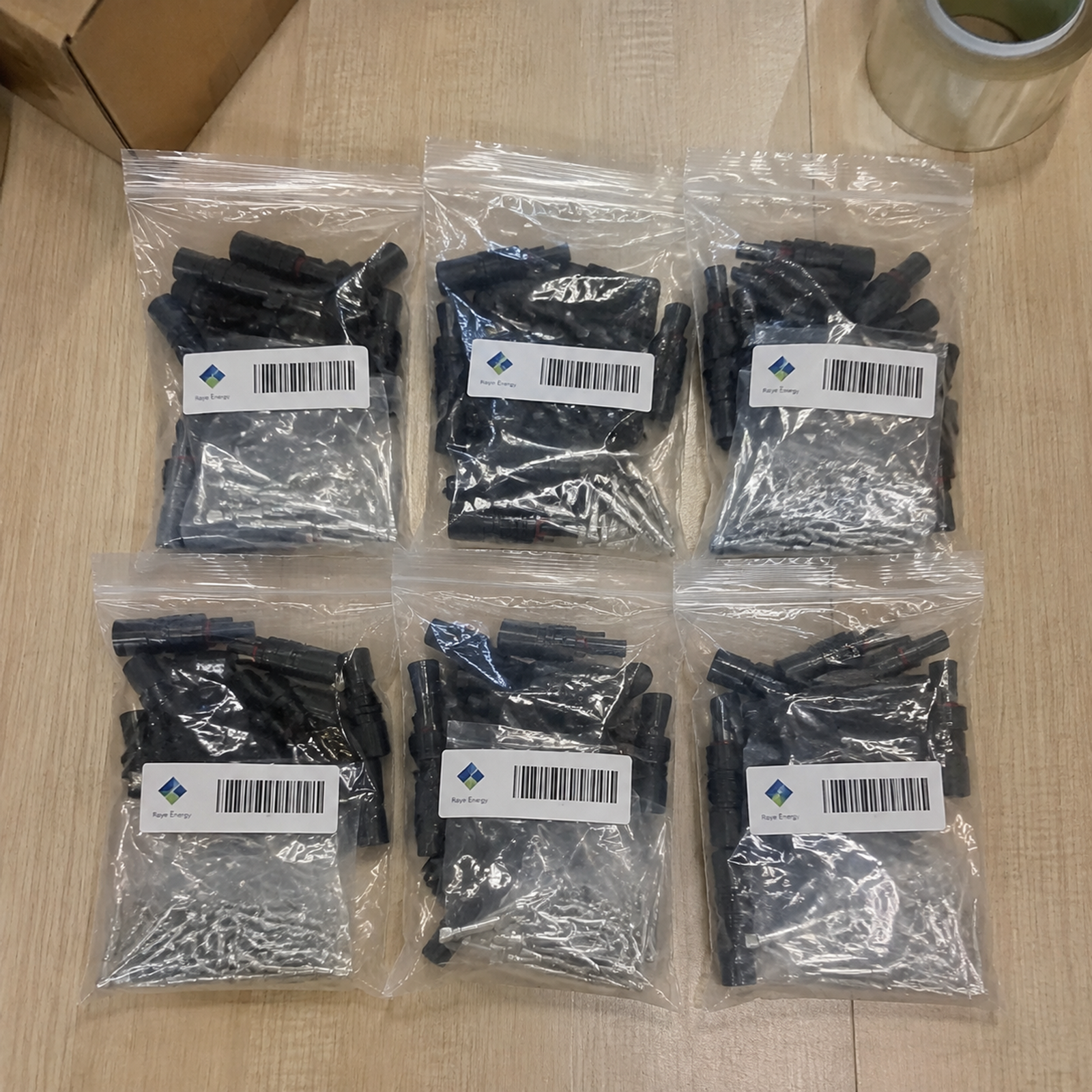
Execution Case: Meeting Australian Market Requirements
At Raye Energy, we recently handled an order for an Australian solar supply specialist seeking authentic Staubli MC4 connectors. The customer faced a classic commercial challenge: standard Staubli factory shipments typically arrive in industrial bulk packages of 100 or 1,000 units, with male and female housings packed in separate cartons.
This wholesale format works well for factory automated lines, but it creates logistical friction for retail branches servicing small contractor crews:
- Counter staff spent valuable time hand-counting loose male and female housings and crimp contacts.
- Pins occasionally went missing from opened master boxes, leading to mismatched components.
- Contractors had difficulty tracking inventory across work vans for small rooftop projects.
The Custom Fulfillment Workflow
Rather than requiring the customer to adapt to factory-standard shipping formats, we coordinated directly with the manufacturing supply chain to build a tailored packaging solution:
Direct Staubli Sourcing -> Quality Inspection -> 10-Set Retail Bagging -> Customer Barcode Labeling -> Consolidated Export- Component Verification: We verified and sourced genuine Staubli MC4 1000 V DC connector components directly from qualified channels.
- Precision Kitting: We separated and assembled the components into convenient 10-set retail packs (10 male housings, 10 female housings, and 20 corresponding crimp pins per bag).
- Private Labeling: Each pack was sealed with the customer's proprietary retail branding, part numbers, and scannable warehouse barcodes.
- Flexible MOQs: We accommodated their purchase schedule without forcing massive master-carton commitments, allowing them to balance working capital and warehouse shelf turnover.
While this commercial fulfillment demonstrated our execution capability, we always remind clients that packaging convenience does not replace technical diligence. Distributors must still verify that the genuine Staubli components they stock align with the specific module brands and local electrical standards preferred by their trade customers.
Frequently Asked Questions
Are MC4 connectors universal across all solar panel brands?
No. MC4 connectors are not universal. While many manufacturers design their connectors to mimic the external shape of Staubli MC4s, different brands use proprietary internal dimensions, pin alloys, and latching mechanisms that are not tested or certified for intermating.
Can you connect an MC4 to an MC4-Evo 2 connector?
Yes, Staubli officially certifies that their MC4 and MC4-Evo 2 product lines are intermateable within their documented engineering parameters12. Always consult Staubli's published technical product manuals to confirm permissible voltage and current ratings for mixed-series installations.
How do I know if my connector is a genuine Staubli MC4?
Genuine Staubli MC4 connectors have the distinct "MC" or "Stäubli" logo embossed on the plastic housing. They also feature clean, precise molding without rough plastic seams, along with clear specification marks including TÜV/UL certifications and model codes.
What should I do if my module uses a non-MC4 connector?
If your solar panels use another brand, such as Tonglin or Amphenol, you should source authentic mating halves from that same manufacturer for your string terminations. Alternatively, qualified electricians can cut off the factory plugs and install matched pairs of genuine MC4 connectors on both leads.
Conclusion
To answer the central question: no, not all solar panels use MC4 connectors. While the industry relies heavily on MC4 terminology as trade shorthand, modern modules arrive with diverse hardware from brands like Staubli, Tonglin, QC Solar, and Amphenol. Assuming all solar panels use MC4 connectors risks costly job-site rework, electrical degradation, and code compliance failures.
Success begins with verifying exact manufacturer part numbers, avoiding cross-brand intermating, and procuring genuine components through reliable supply channels. At Raye Energy, we help distributors, electrical wholesalers, and solar installers source authentic PV connectors with flexible quantities and custom retail packaging. Contact our team today to verify your connector specifications and streamline your solar procurement pipeline.
-
"PV Connectors – Energy - Sandia National Laboratories", https://energy.sandia.gov/programs/renewable-energy/photovoltaic-solar-energy/projects/pv-connectors/. Industry warranty guidelines and inspection compliance manuals document that uncertified cross-brand connector mating constitutes a deviation from manufacturer instructions, thereby invalidating module defect warranties. Evidence role: general_support; source type: institution. Supports: Major solar manufacturers explicitly condition warranty validity on adhering to mating rules, and electrical inspection checklists cite mismatched connectors as non-compliant.. Scope note: Enforcement stringency and warranty clause phrasing can vary across individual module manufacturers and regional inspection jurisdictions. ↩
-
"MC4 connector", https://en.wikipedia.org/wiki/MC4_connector. Engineering retrospectives on photovoltaic balance-of-system hardware trace the introduction of the latching MC4 by Multi-Contact to 2002–2004 to replace unlatched MC3 designs. Evidence role: historical_context; source type: encyclopedia. Supports: Multi-Contact developed the MC4 connector in the early 2000s featuring a positive latch to succeed the friction-fit MC3 model.. ↩
-
"MC4 connector", https://en.wikipedia.org/wiki/MC4_connector. Manufacturer technical datasheets define the MC4 as an electrical connector utilizing a contact pin with a nominal diameter of 4 mm. Evidence role: definition; source type: other. Supports: The technical designation MC4 specifies a Multi-Contact connector incorporating a 4 mm contact pin.. Scope note: This definition relates to nominal design dimension and does not account for proprietary pin tolerance variations across manufacturers. ↩
-
"Reliability Model Development for Photovoltaic Connector ...", https://www.osti.gov/servlets/purl/1083087. Studies on PV connector reliability demonstrate that differential thermal expansion across mismatched polymer housings distorts elastomeric gaskets, facilitating moisture ingress. Evidence role: mechanism; source type: paper. Supports: Mismatched polymers with divergent coefficients of thermal expansion lead to micro-gaps and seal failure during outdoor thermal cycling.. Scope note: Degradation rates depend significantly on the specific polymer grades mated and ambient temperature fluctuation ranges. ↩
-
"PV Connectors – Energy - Sandia National Laboratories", https://energy.sandia.gov/programs/renewable-energy/photovoltaic-solar-energy/projects/pv-connectors/. Reliability research by organizations such as NREL and TÜV Rheinland confirms that intermating cross-brand connectors creates inconsistent contact geometries that accelerate resistive heating and arc fault initiation. Evidence role: mechanism; source type: research. Supports: Intermating connectors from different manufacturers yields elevated contact resistance, excessive thermal dissipation, and an increased risk of DC arc faults.. ↩
-
"690.33 Mating Connectors - UpCodes", https://up.codes/s/mating-connectors. NFPA 70 (National Electrical Code), Section 690.33(C), explicitly requires that mating connectors be of the same manufacturer and model unless UL-listed for intermateability. Evidence role: definition; source type: government. Supports: NEC 690.33(C) specifies that plug-and-receptacle connectors must be mated only with identical components or those specifically evaluated and listed as compatible.. Scope note: The rule applies directly to jurisdictions that have enacted the corresponding NEC revision cycle. ↩
-
"Electrical safety - Identifying mismatched d.c. connectors in ...", https://worksafe.nt.gov.au/forms-and-resources/bulletins/electrical-safety-identifying-mismatched-d.c.-connectors-in-solar-pv-installations. Standards Australia / Standards New Zealand standard AS/NZS 5033 prescribes that male and female connectors in DC circuits must originate from the same manufacturer and share matching design specifications. Evidence role: definition; source type: institution. Supports: AS/NZS 5033 standards require DC plug connectors in photovoltaic arrays to be from the same manufacturer and of the same product type.. ↩
-
"PV Connectors – Energy - Sandia National Laboratories", https://energy.sandia.gov/programs/renewable-energy/photovoltaic-solar-energy/projects/pv-connectors/. Thermal characterization studies of PV connectors show that even fractional increases in contact resistance produce elevated junction temperatures under strings carrying 10 A or more. Evidence role: mechanism; source type: paper. Supports: Increases in junction contact resistance under typical PV operating currents generate localized resistive heating according to Joule's first law (P = I^2 * R).. ↩
-
"Corrosion of electrical connectors - Super Engineer", https://www.superengineer.net/blog/electronics-connector-corrosion. Electrical contact physics literature demonstrates that pairing tin and silver finishes promotes galvanic oxidation in humid environments, increasing inter-metallic contact resistance. Evidence role: mechanism; source type: paper. Supports: Coupling tin-plated and silver-plated contact surfaces in humid environments generates galvanic potential differentials that degrade contact interfaces.. Scope note: Corrosion kinetics vary based on local humidity, environmental airborne salinity, and the integrity of outer housing seals. ↩
-
"Standardized nomenclature for photovoltaic connectors", https://www.osti.gov/pages/servlets/purl/2587216. IEC 62548 stipulates that connectors of different types or manufacturers shall not be plugged together unless their compatibility has been verified and documented through rigorous testing. Evidence role: definition; source type: institution. Supports: IEC 62548 governs PV array design and restricts intermating connectors from different manufacturers without verified compatibility.. ↩
-
"Forensic Analysis of Failed Photovoltaic Connectors - ADS", https://ui.adsabs.harvard.edu/abs/2024pvsc.conf..556L/abstract. Reports by the Building Research Establishment (BRE) and forensic engineering agencies identify DC connectors as one of the leading failure locations investigated following rooftop solar thermal events. Evidence role: case_reference; source type: research. Supports: Connector faults and cross-mating are primary focus points in post-fire PV system forensic analyses and property loss investigations.. Scope note: Forensic outcomes depend on the degree of physical component destruction at the point of origin. ↩
-
"Photovoltaics DC connectors", https://www.staubli.com/us/en/electrical-connectors/products/renewable-energy-solutions/dc-connectors.html. Manufacturer technical documentation and third-party laboratory certifications confirm that Staubli MC4 and MC4-Evo 2 connectors are tested and approved for mutual intermating under defined operational limits. Evidence role: expert_consensus; source type: institution. Supports: Staubli publishes engineering guidelines and maintains UL/TÜV listings certifying intermating between standard MC4 and MC4-Evo 2 series within defined voltage and current ratings.. Scope note: Permissible system voltage ratings for mixed pairs may be limited to the lowest common denominator rating of the two series. ↩