

Are Portable Solar Traffic Lights Worth It? Cost vs. Benefits (2025)
Solar traffic lights are gaining popularity, but are they truly a cost-effective solution? Many wonder if the upfront investment is worth the long-term benefits.
Portable solar traffic lights can reduce electricity costs, require less maintenance, and offer reliable operation in most conditions. They provide a long-term financial and environmental advantage over traditional wired traffic lights.

Before making a decision, let's break down their cost, performance, and long-term savings.
How Much Do Portable Solar Traffic Lights Cost in 2025?
One of the biggest concerns for buyers is the initial cost of solar traffic lights1.
In 2025, the price of portable solar traffic lights2 ranges from $2,500 to $7,500 per unit, depending on size, battery capacity, and additional features.

Cost Breakdown of Solar Traffic Lights
| Component | Estimated Cost (USD) | Details |
|---|---|---|
| Solar Panels | $500 - $2,000 | High-efficiency monocrystalline panels last longer |
| Batteries | $800 - $2,500 | Lithium-ion batteries provide longer lifespan |
| LED Traffic Light System | $700 - $1,500 | Energy-efficient and durable lighting |
| Controller & Casing | $500 - $1,500 | Weatherproof, impact-resistant enclosures |
| Total Cost | $2,500 - $7,500 | Price varies based on system size and quality |
While the initial investment is higher than standard traffic lights, the long-term savings on energy and maintenance3 make them a smart choice.
How Do Solar Traffic Lights Compare to Traditional Traffic Lights?
Solar-powered traffic lights offer key advantages over traditional grid-connected systems.
Solar traffic lights4 require no underground wiring, reduce electricity costs5, and can be installed in remote locations where grid power is unavailable.
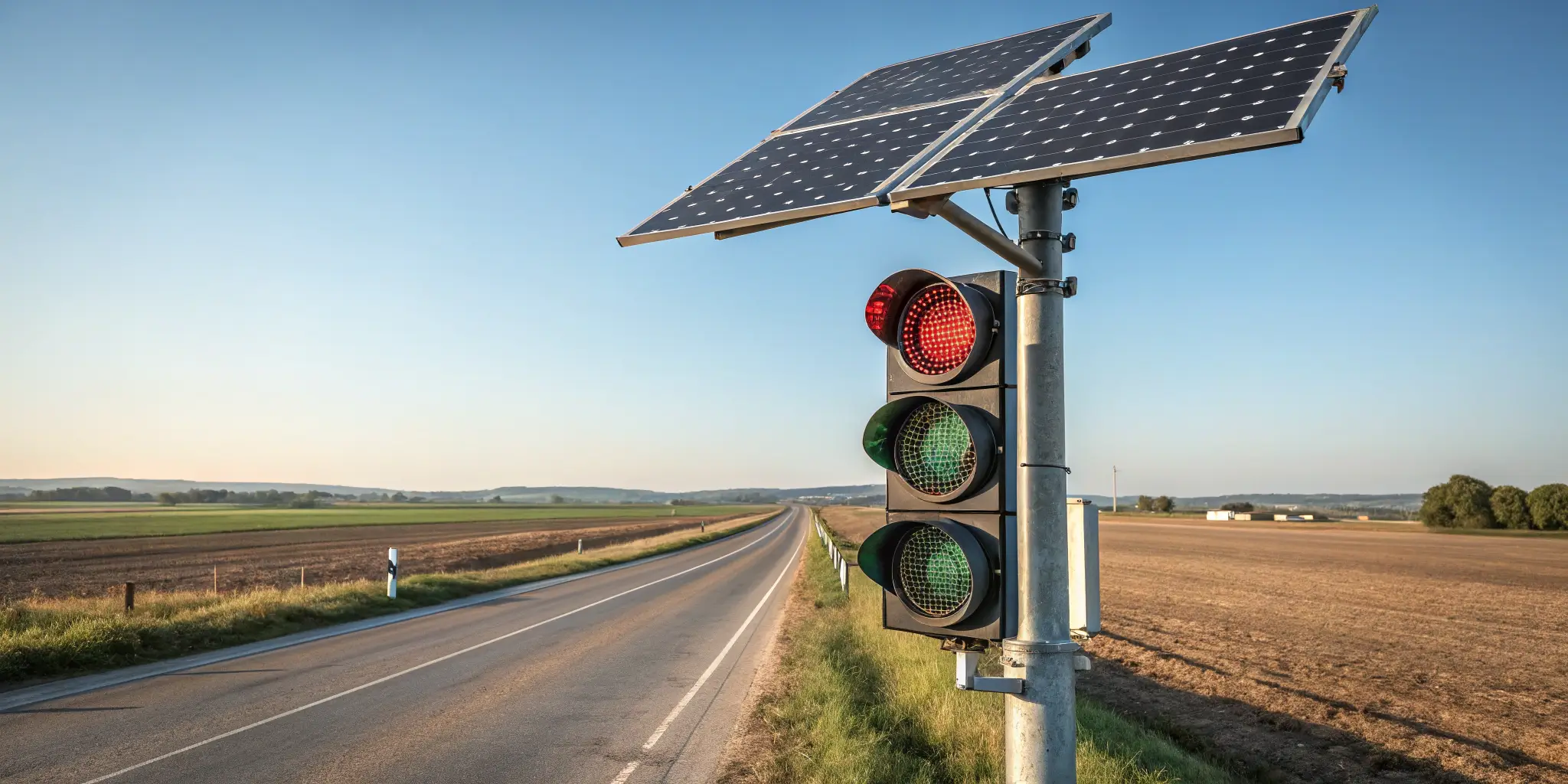
Key Differences
| Feature | Solar Traffic Lights | Traditional Traffic Lights |
|---|---|---|
| Installation Cost | Lower (no wiring needed) | Higher (requires trenching and cables) |
| Electricity Cost | Zero (uses solar power) | Ongoing electricity bills |
| Maintenance | Minimal (battery checks, panel cleaning) | Frequent repairs (wiring, bulbs, power supply) |
| Environmental Impact | Renewable energy, zero emissions | Uses grid power, may rely on fossil fuels |
| Reliability | Works in remote areas and during power outages | Dependent on grid power availability |
These advantages make solar traffic lights a preferred option in areas with unreliable electricity or high infrastructure costs.
Do Solar Traffic Lights Work Reliably in All Weather Conditions?
One concern with solar-powered systems is their performance during cloudy days or extreme weather conditions.
Solar traffic lights can work in various weather conditions by using energy-efficient panels6, smart charge controllers, and backup battery storage7.

How Weather Affects Performance
| Weather Condition | Impact on Solar Traffic Lights | Solution |
|---|---|---|
| Cloudy Days | 20-50% less power generation | Use larger panels and higher-capacity batteries |
| Rain & Snow | Reduced sunlight exposure | Install panels at an optimal tilt to shed water/snow |
| Extreme Heat | Can overheat batteries and reduce lifespan | Use heat-resistant lithium-ion batteries |
| Strong Winds | May affect panel stability | Secure mounting with reinforced brackets |
With proper design and maintenance, solar traffic lights can operate efficiently year-round.
What Are the Long-Term Savings of Using Solar Traffic Lights?
Although solar traffic lights have a higher upfront cost, they save money over time.
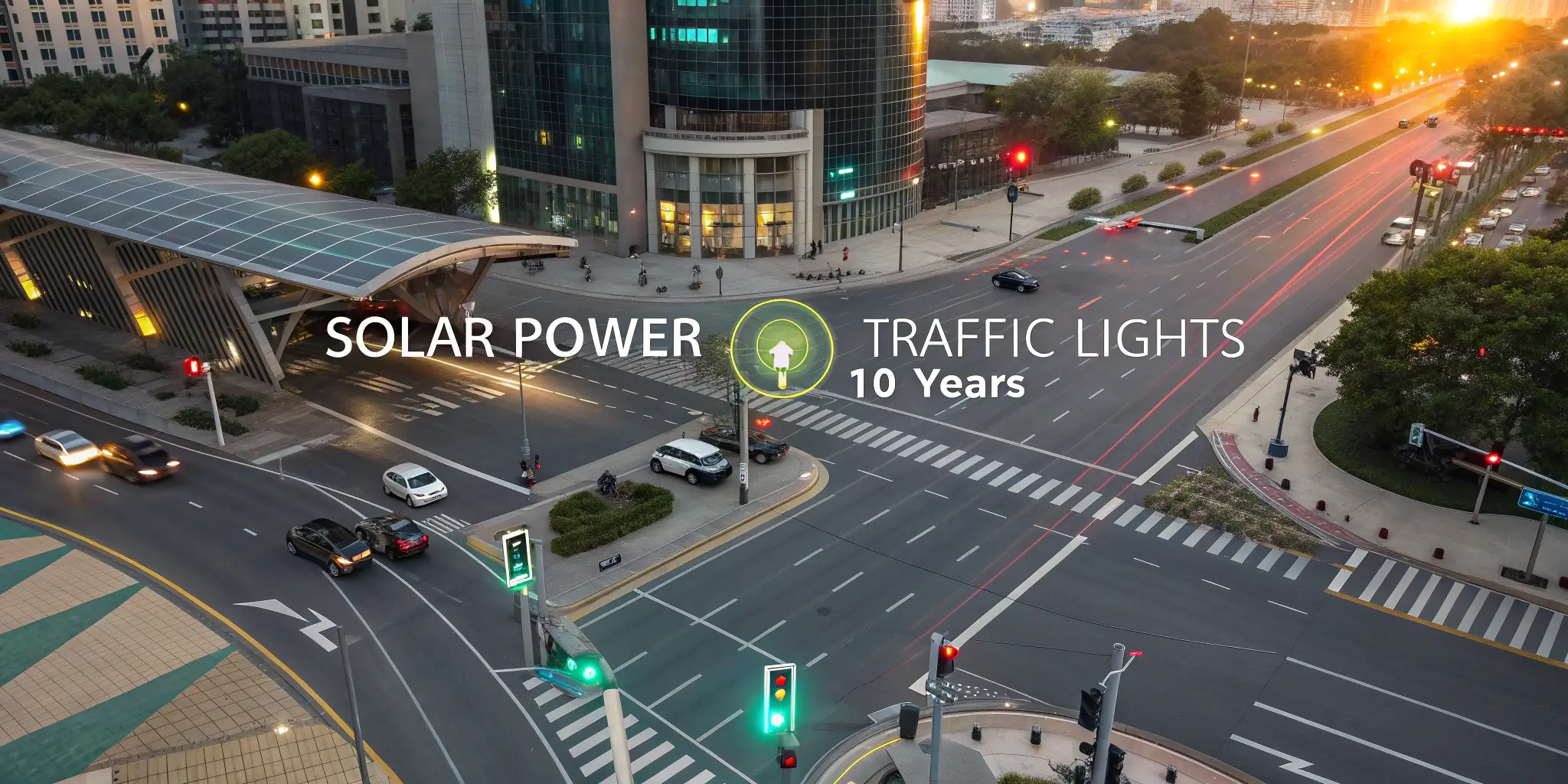
Over 10 years, solar traffic lights can save up to $10,000 per unit by eliminating electricity bills and reducing maintenance costs8.
%[Smart city solar traffic lights with dynamic ROI calculator display showing 10-year cost savings9 vs conventional signals](https://rayenrg.com/wp-content/uploads/2025/03/Solar-Traffic-Light-Savings.webp "sutainable traffic infrastructure ROI comparison)
Cost Comparison Over 10 Years
| Expense | Solar Traffic Lights | Traditional Traffic Lights |
|---|---|---|
| Installation Cost | $2,500 - $7,500 | $3,000 - $10,000 |
| Electricity Costs | $0 | $300 - $1,000 per year |
| Maintenance Costs | $100 - $500 per year | $500 - $2,000 per year |
| Total Cost Over 10 Years | $3,500 - $12,000 | $8,000 - $20,000+ |
By eliminating electricity costs and requiring less maintenance, solar traffic lights are a more cost-effective solution in the long run.
How Quickly Can Solar Traffic Lights Pay for Themselves?
For any investment, the return on investment (ROI)10 is crucial.
Most solar traffic lights pay for themselves in 3 to 7 years, depending on electricity costs and maintenance savings.
Factors That Affect Payback Period
- Electricity Savings – Areas with high electricity costs see faster payback.
- Maintenance Reduction – Lower maintenance costs improve savings over time.
- Usage Duration – The more hours a solar traffic light operates, the faster it recovers its cost.
- Battery Lifespan – High-quality batteries extend system longevity, reducing replacement costs.
By factoring in savings and efficiency, solar traffic lights prove to be a long-term smart investment.
Conclusion
Portable solar traffic lights offer long-term financial and operational benefits. While they have a higher upfront cost, they save money on electricity, require less maintenance, and operate reliably in most conditions. Over time, they pay for themselves, making them a cost-effective and sustainable solution.
-
Understanding the cost comparison can help you evaluate the long-term savings and benefits of solar traffic lights over traditional options. ↩
-
Explore the advantages of portable solar traffic lights, including cost savings and environmental benefits, to make an informed decision. ↩
-
Discover how solar traffic lights can lead to significant savings on energy and maintenance, making them a worthwhile investment. ↩
-
Explore the advantages of solar traffic lights, including cost savings and environmental benefits, to understand their growing popularity. ↩
-
Understanding the cost differences can help in making informed decisions about traffic light installations and sustainability. ↩
-
Learn about the technology behind energy-efficient panels and how they enhance solar traffic light performance. ↩
-
Discover the role of backup battery storage in ensuring solar traffic lights remain operational during adverse weather. ↩
-
Learn about the maintenance costs associated with solar traffic lights and how they compare to traditional options for better budgeting. ↩
-
Discover detailed comparisons of 10-year cost savings between solar and traditional traffic lights to make informed decisions. ↩
-
Learn how to effectively calculate ROI for solar projects to make informed investment decisions. ↩