 Skip to content

How can I prevent mixed or incorrect shipments when importing genuine Stäubli PV connectors from China?
I know how stressful it feels when I fear a shipment might contain the wrong Stäubli models, mixed batches, or mismatched connector types.
I can prevent mixed or incorrect shipments by verifying authenticity, confirming part numbers, demanding clear labeling, using pre-shipment checks, and applying strict QC controls during packing and receiving.
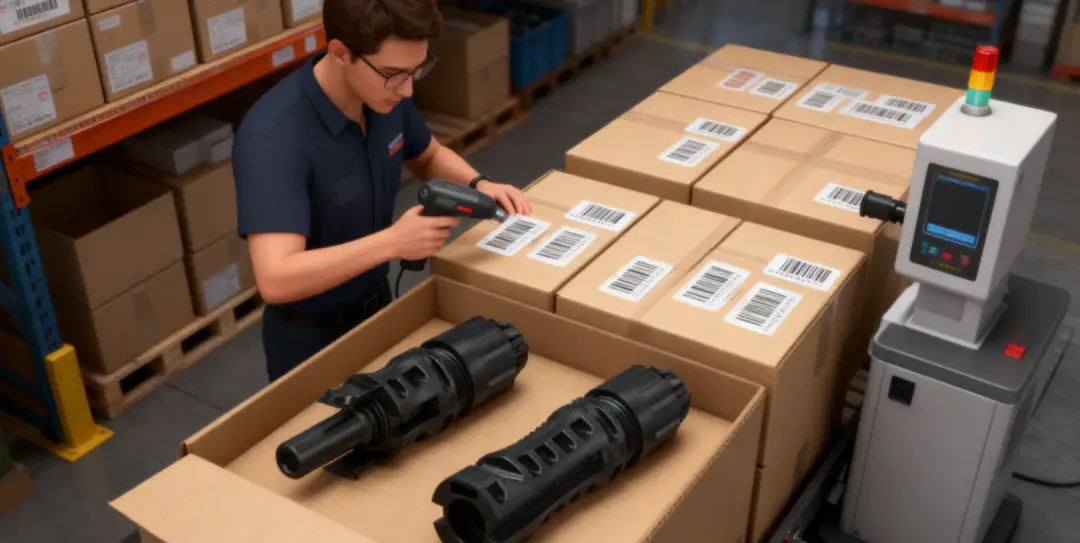
I want to guide the reader step by step, so they understand every practical way to reduce shipping mistakes and protect their supply chain.
Should I require product photos1 and packing list2s before dispatch?
I know shipments go wrong when I trust the process without checking details at the last minute.
Yes, I should ask for product photos and a detailed packing list before dispatch because these documents help me confirm the exact models, quantities, and labels before the goods leave the warehouse.
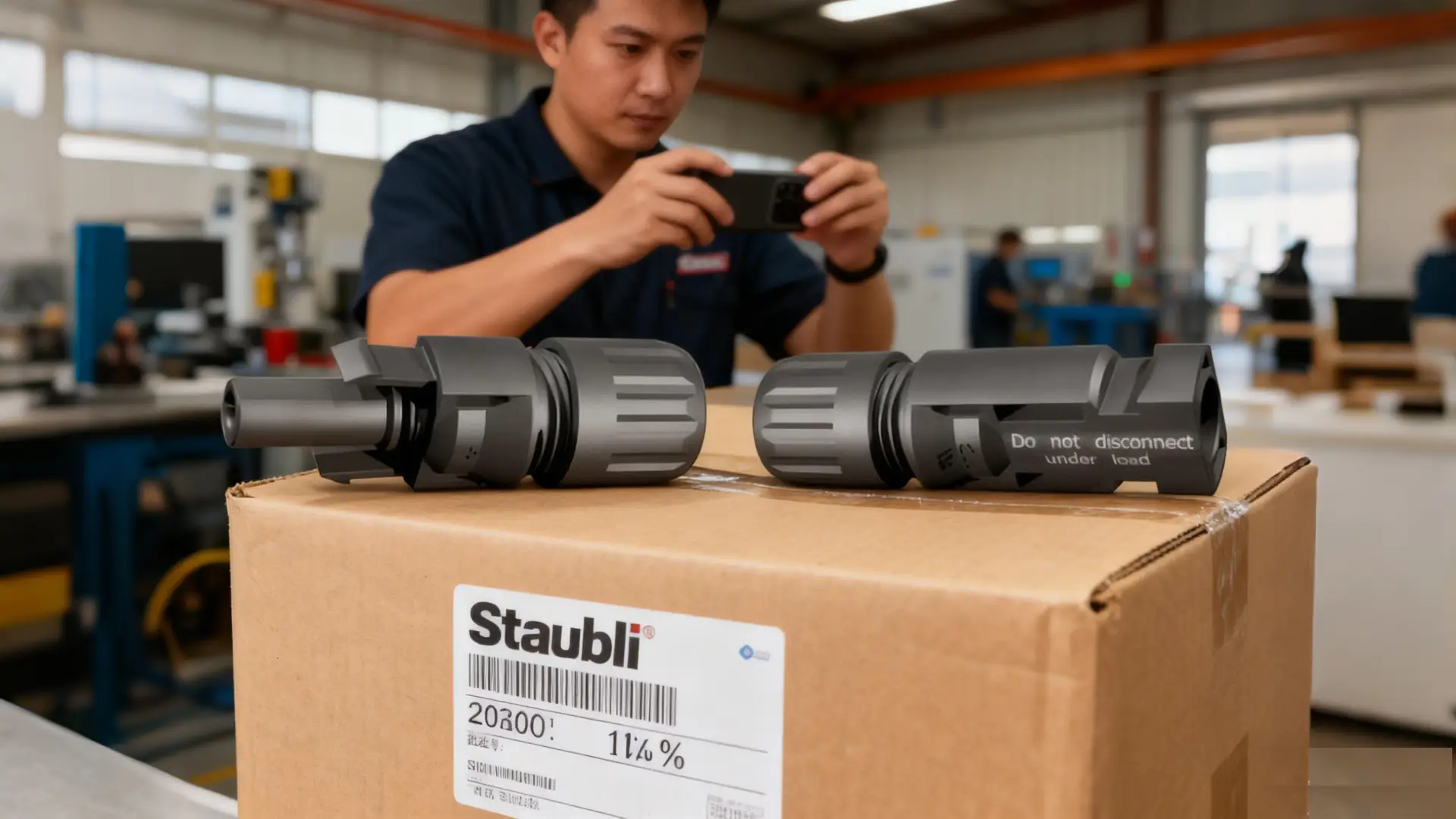
Why pre-shipment photos and packing lists matter
I depend on these checks because they help me avoid expensive delays and replacement costs. Stäubli connectors3 come in many variations, such as MC4, MC4-Evo2, different cable sizes, and different terminal types. Small mistakes in model selection can cause huge problems later in installation or inspection. Below are the ways I break this issue down and explain it to my buyers and partners.
1. The role of complete packing documentation
A packing list tells me the SKU, the part number, the quantity, and the batch number. I can match these details with my purchase order. When I see everything laid out clearly, I immediately know if something is missing or incorrect.
2. The importance of visual proof
Photos or videos allow me to check external labels, sealing tape, and the exact wording printed on Stäubli bags. I can also identify mismatches such as MC4 housings mixed with MC4-Evo2 pins. These mistakes happen more often than people think.
3. How product photos support authenticity checks
I can check if the supplier uses genuine Stäubli packaging. The font, the printing quality, and the label style can help me spot counterfeit or suspicious products early.
4. Risk reduction through last-minute confirmation
When I confirm everything before dispatch, I reduce the chance of receiving wrong goods by more than half. Most errors happen during packing because multiple models sit in the same warehouse.
Here is a simple table summarizing what I must check:
| Item to Verify | Why It Matters | What I Look For |
|---|---|---|
| Part number | Confirms correct model | Matches Stäubli spec sheet |
| Batch number | Traceability | Clear printed code |
| Label photo | Authenticity | Correct layout and font |
| Carton photo | Packaging integrity | Sealed, no mixing |
| Quantity | Prevent shortages | Matches packing list |
This structured approach keeps my supply chain safe and reduces misunderstandings with suppliers.
Can barcoding4 or labeling systems5 reduce shipping errors?
I often see mistakes happen when workers rely only on memory or handwritten tags.
Yes, barcoding and clear labeling reduce shipping errors because they force workers to scan and match each model before packing, which prevents mixing and mismatching of Stäubli connector types.
How labeling and barcoding keep shipments correct
I use these systems because real warehouses deal with thousands of small parts. Stäubli connectors look similar on the outside, and small differences such as pin type or cable OD rating can be easy to overlook. I break down the logic here.
1. Barcoding improves part identification6
When suppliers use barcodes, they scan each item before placing it into a carton. This reduces human error. Even a tired worker cannot skip the step, because the system alerts them if the scanned part does not match the packing order.
2. Standardized labeling reduces confusion
Clear labels with part number, batch code, and quantity help both sides. I can cross-check the cartons easily. I can also instruct my warehouse to store batches separately.
3. Batch segregation becomes stronger
Barcoding helps suppliers keep MC4 and MC4-Evo2 models separate. Mixing these two series is dangerous because they cannot be cross-mated.
4. Better records for later audits
When everything is labeled properly, I can trace issues back to a specific batch. This helps me make claims with the supplier if something goes wrong.
Here is a table showing how barcoding helps prevent errors:
| Problem Type | Without Barcoding | With Barcoding |
|---|---|---|
| Mixed models | High probability | Very low probability |
| Wrong packing | Common in busy warehouses | System prevents mismatch |
| Fake labels | Hard to detect | Barcode traceable |
| Batch confusion | Frequent | Traceable by code |
| Audit difficulty | High workload | Simple scan records |
This system is simple, but it helps me avoid costly mistakes.
How do I handle wrong model deliveries effectively?
I understand how frustrating it is when a shipment arrives and the models do not match my order.
I handle wrong model deliveries by isolating the incorrect batch, documenting all evidence, notifying the supplier immediately, requesting replacements, and updating my QC process to prevent future issues.
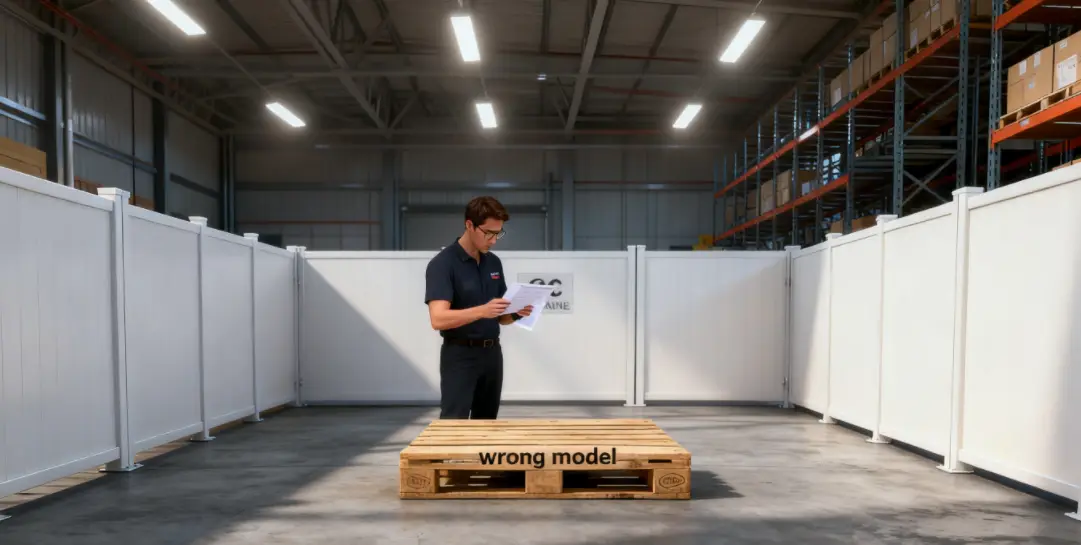
How I manage wrong deliveries step by step
I treat this issue seriously because incorrect Stäubli connectors can delay entire solar projects. Installers depend on these components. Any delay affects construction schedules.
1. I isolate and label all incorrect cartons
I do not mix them with my existing inventory. I quarantine them to avoid confusion.
2. I collect clear evidence
I take photos of the cartons, labels, items, and any mismatched models. Evidence protects me in discussions with the supplier.
3. I contact the supplier with detailed notes
Clear communication helps both sides resolve the issue. Most good suppliers respond quickly and arrange replacements.
4. I request urgent re-shipment or credit
I choose the method depending on the project deadline.
5. I update my QC checklist7
Every wrong delivery teaches me something new. I add the mistake to my checklist so it does not happen again.
Here is a table summarizing the actions I take:
| Step | Action | Purpose |
|---|---|---|
| 1 | Isolate the goods | Prevent further mixing |
| 2 | Collect evidence | Support claims |
| 3 | Inform supplier | Start resolution |
| 4 | Request replacement | Keep project timeline |
| 5 | Update QC | Reduce future risk |
This system helps me stay calm even when mistakes happen.
Can I include packaging verification8 in my QC checklist?
I know packaging problems often lead to mixed batches or wrong shipments.
Yes, I should include packaging verification in my QC checklist because packaging is the easiest place to detect mixing, fake labels, and model errors before the shipment leaves China.

Why packaging verification is essential in my QC workflow
I treat packaging as the first checkpoint for quality and accuracy. Many issues reveal themselves in the packaging step, especially when multiple models sit in the same warehouse.
1. Packaging shows authenticity
Genuine Stäubli packaging has specific printing quality, label layout, and sealing style. I can detect suspicious patterns quickly.
2. Packaging tells me if models are mixed
If I see a carton with multiple label types inside, I know something is wrong.
3. Packaging reveals poor handling
Damaged or unsealed cartons may indicate carelessness or internal mixing during handling.
4. Packaging helps me verify exact quantities
Cartons must match the packing list. Quantity errors often signal deeper problems.
5. Packaging verification supports batch traceability
Batch codes appear on every bag. If codes do not match, I stop the shipment.
Below is a simple QC checklist I often use:
| Packaging Check Item | What I Verify |
|---|---|
| External label | Matches purchase order |
| Batch code | Consistent across cartons |
| Seal condition | Fully sealed, no tampering |
| Inside packing | No mixing across models |
| Quantity | Matches packing list |
| Brand integrity | Genuine Stäubli print quality |
This checklist helps me reduce risk and improves the accuracy of every shipment.
Conclusion
I prevent mixed or incorrect shipments by checking authenticity, confirming specifications, enforcing clear labeling, and applying strict QC controls from ordering to receiving.
-
Exploring the role of product photos can enhance your quality control processes and reduce mistakes. ↩
-
Understanding packing lists can help ensure accuracy in shipments and prevent costly errors. ↩
-
Learning about Stäubli connectors can help you choose the right products for your needs. ↩
-
Explore how barcoding enhances accuracy in shipping and minimizes errors, ensuring efficient logistics. ↩
-
Learn about the advantages of labeling systems in warehouses and how they streamline operations and reduce confusion. ↩
-
Discover the significance of accurate part identification in shipping processes and its impact on reducing errors. ↩
-
Learn how to design a QC checklist that minimizes errors and improves delivery accuracy. ↩
-
Understanding packaging verification can enhance your QC processes, ensuring accuracy and authenticity in shipments. ↩
