 Skip to content
How to Import Solar Panels From China & Prevent Cable Meltdown?
Ignoring temperature effects on cables can lead to power loss, insulation damage, and fire risks. I have seen systems fail early due to overheating and poor cable selection.
I control high-temperature risks by selecting heat-resistant cables, applying derating rules, verifying insulation materials, and optimizing installation layout for airflow and durability.
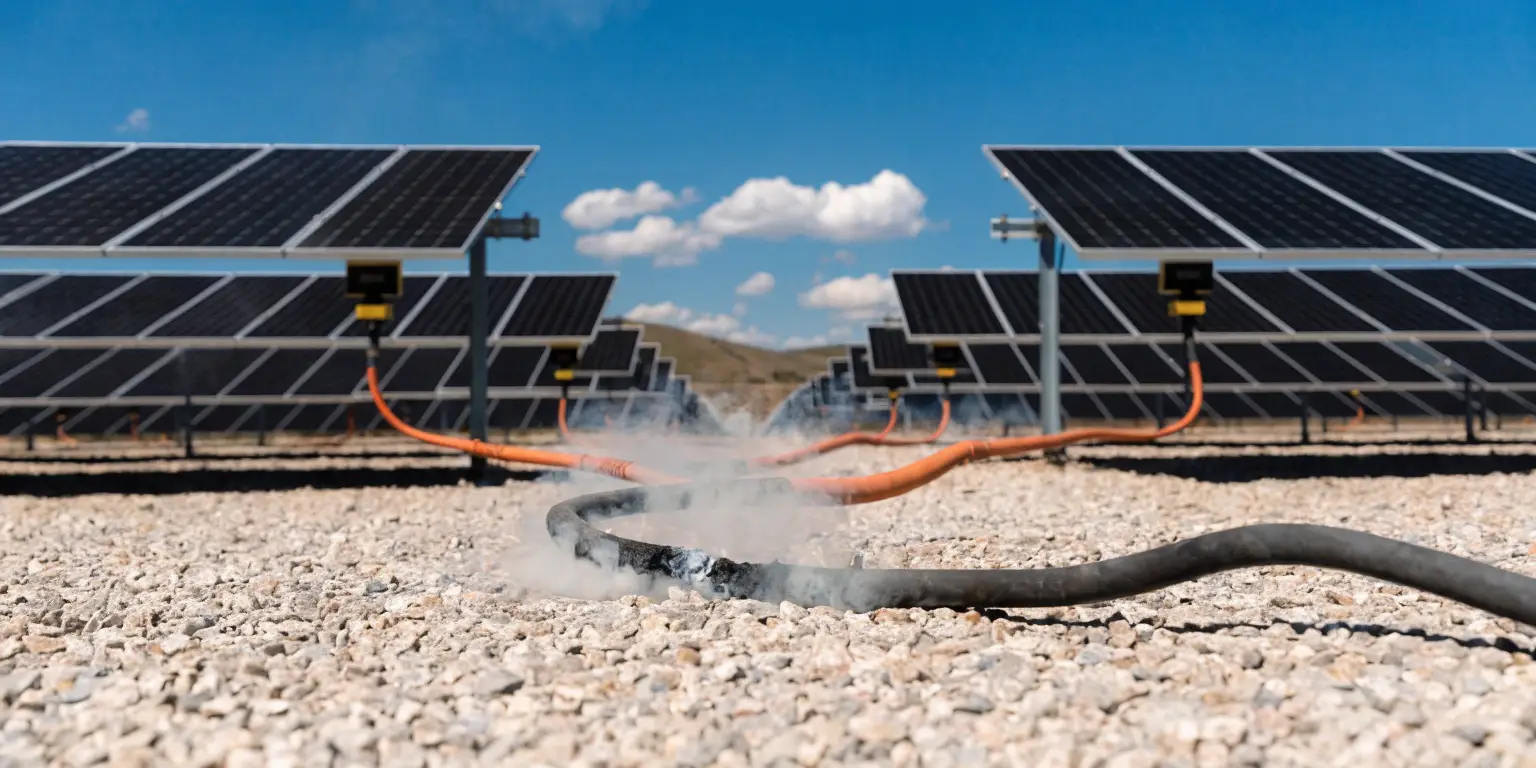
I have worked on projects where panels performed well, but cables became the weak point. I learned that cable design is not just an accessory decision. It is a core reliability factor. So I will explain how I handle high-temperature effects when importing custom solar panels.
How do I choose heat-resistant wires1?
Choosing the wrong cable type can lead to overheating, insulation failure, and system inefficiency. I have seen projects lose performance because cable selection was based on price instead of temperature rating.
I choose heat-resistant wires by checking insulation material2, temperature class3, certification standards, and matching cable size4 to real operating conditions.
Understanding Cable Temperature Ratings
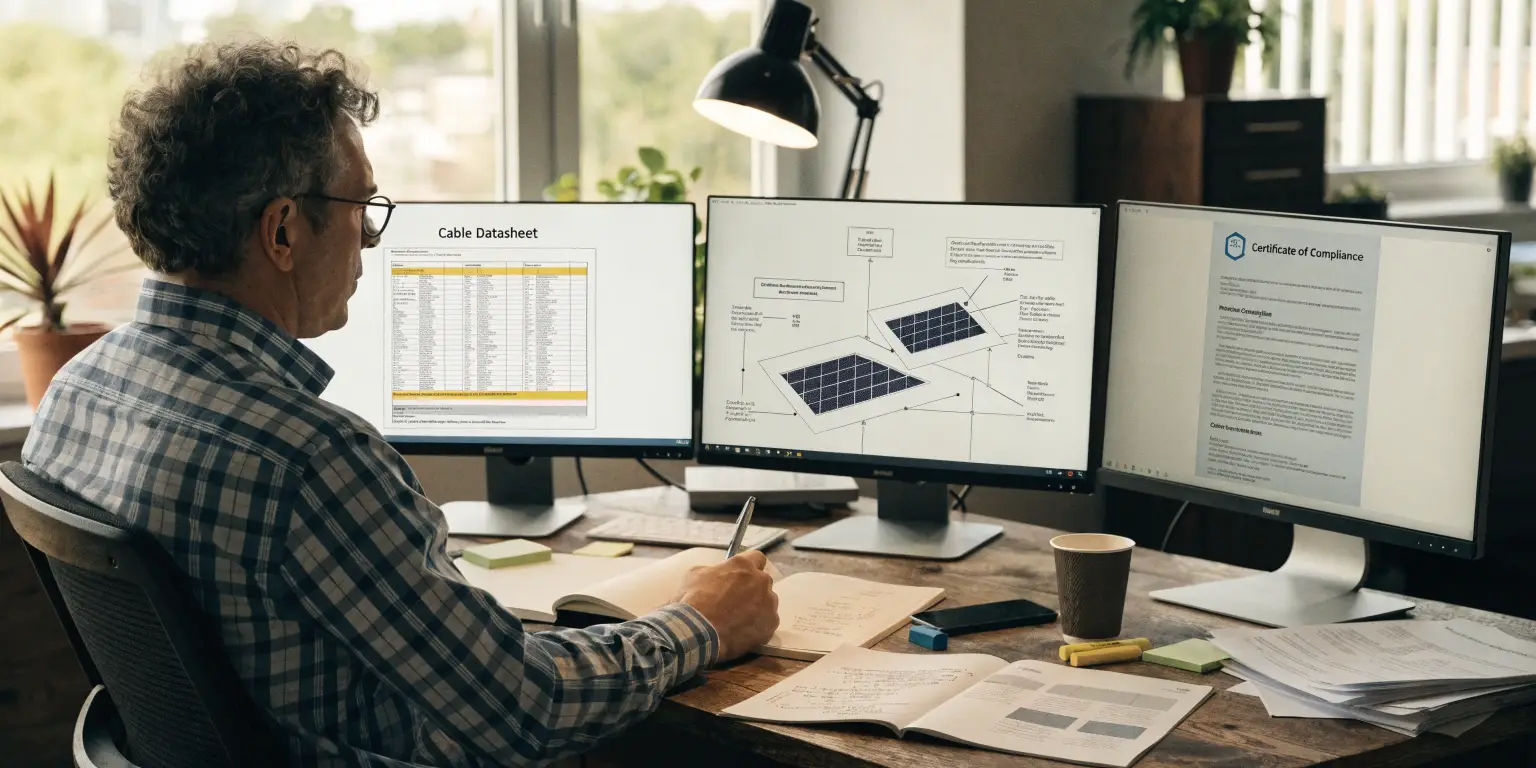
I always start with temperature class. Most PV cables follow industry standards for thermal performance.
| Cable Type | Continuous Temp | Short-Term Temp | Standard |
|---|---|---|---|
| Standard PV Cable | 90°C | 120°C | IEC 62930 |
| High-temp PV Cable | 105°C+ | 140°C | Enhanced spec |
| Industrial Cable | varies | varies | Custom |
I do not rely on catalog labels only. I check datasheets and certification scope. I confirm whether ratings apply to conductor or ambient temperature.
Selecting Insulation Materials
Insulation material plays a key role in heat resistance. I compare different options before making a decision.
| Material | Advantage | Risk |
|---|---|---|
| XLPE | High heat resistance | Cost |
| PVC | Low cost | Poor heat aging |
| Halogen-free | Safer and stable | Slightly higher cost |
I usually prefer cross-linked polyethylene (XLPE). It handles heat and UV exposure better. I avoid basic PVC for outdoor solar use.
Matching Cable Size to Real Conditions
Cable size affects heat buildup. Smaller cables heat up faster under load.
I calculate current based on system design. Then I apply safety margins. I consider ambient temperature and installation method.
I also think about routing. Long cable runs increase resistance and heat. I try to optimize layout early in design.
This approach helps me choose cables that perform well over time, not just on paper.
How do temperature ratings affect performance?
Temperature directly affects electrical performance and long-term stability. I have seen systems lose efficiency just because cable temperature was ignored.
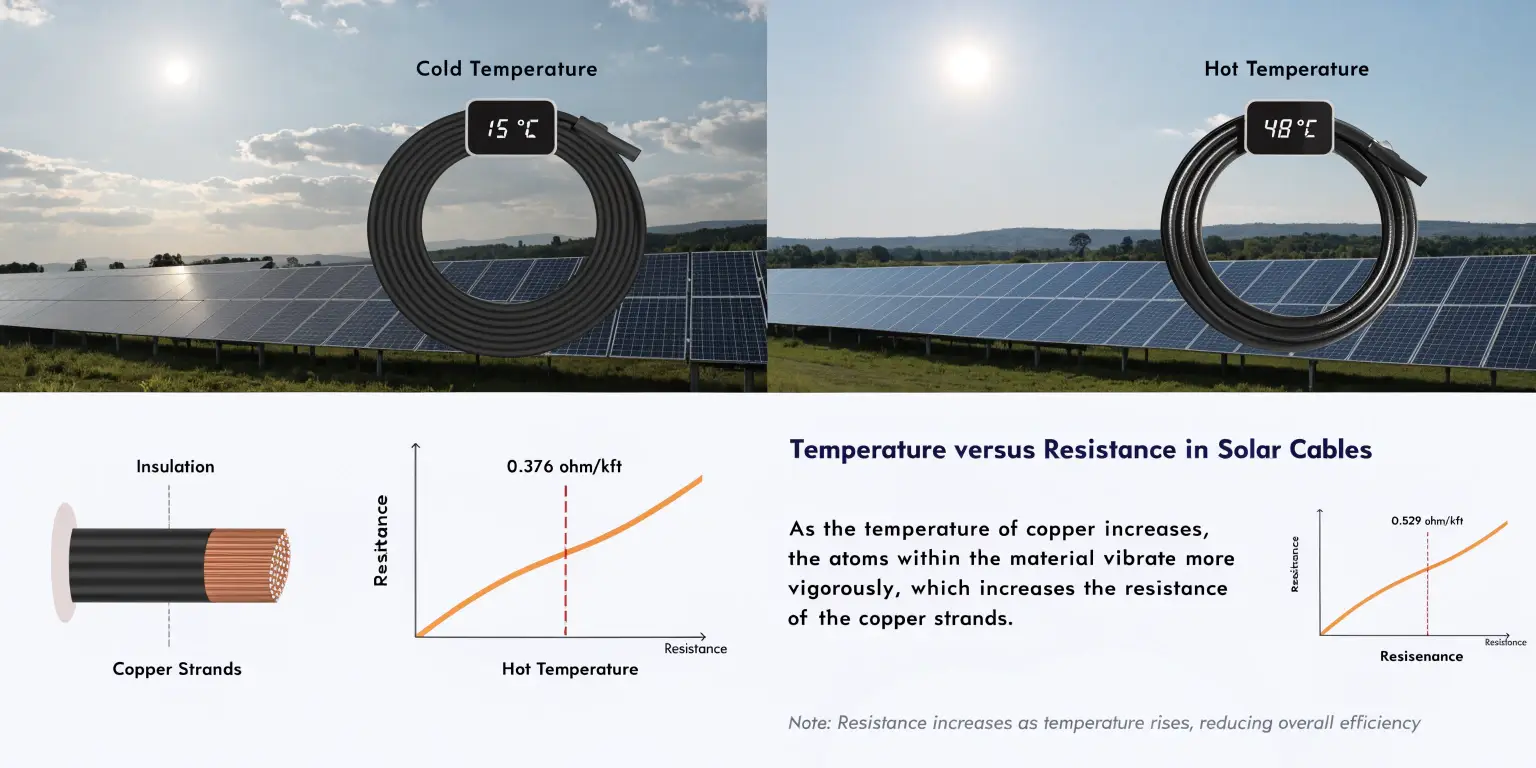
Higher temperatures increase resistance, reduce efficiency, and accelerate material degradation, which leads to long-term performance loss and higher failure risk.5
Resistance and Power Loss
As temperature increases, conductor resistance increases. This leads to higher voltage drop.
| Temperature | Resistance Impact |
|---|---|
| 25°C | Baseline |
| 60°C | Moderate increase |
| 90°C | Significant increase |
I always calculate voltage drop using worst-case temperature.6 This gives me a more realistic performance estimate.
Impact on System Efficiency
Higher resistance means more energy loss. This reduces overall system output.
In large systems, even small losses matter. Over time, these losses affect project returns.
I have seen projects where cable losses were underestimated. Fixing them later was costly.
Long-Term Material Degradation
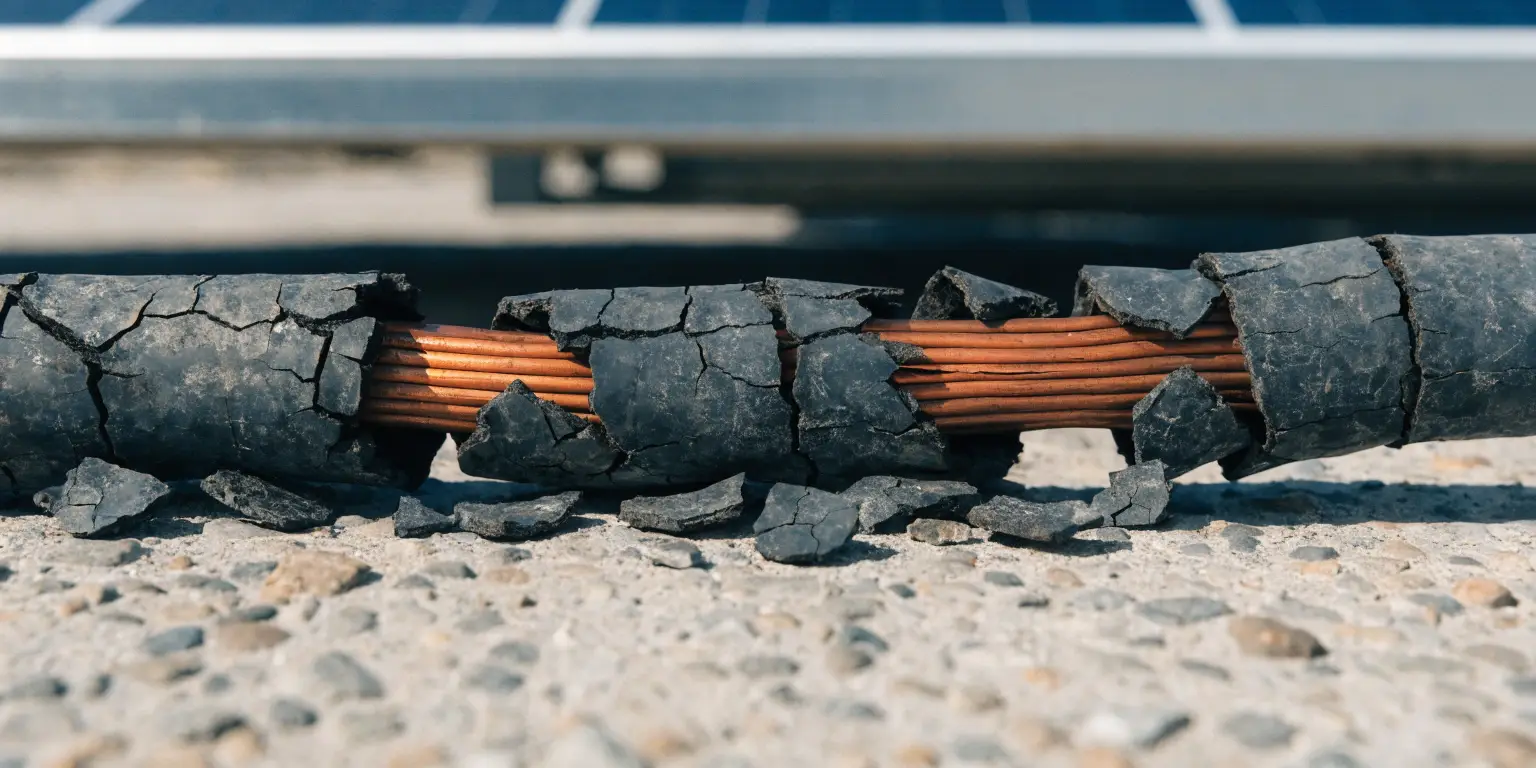
Heat accelerates aging. Insulation becomes brittle over time.
I consider lifetime performance, not just initial operation. I check aging test reports from suppliers.
I also ask about expected lifespan under high temperature conditions. This helps me compare suppliers more effectively.
This method allows me to evaluate performance beyond short-term testing.
How do I avoid insulation damage7?
Insulation damage is a hidden risk that can lead to short circuits and safety issues. I have seen cables fail after only a few years due to poor thermal management8.
I avoid insulation damage by selecting proper materials, controlling installation conditions, reducing heat buildup, and ensuring correct cable handling.
Controlling Installation Conditions
Installation has a strong impact on cable temperature.
| Factor | Impact |
|---|---|
| Cable bundling | Traps heat |
| Poor ventilation | Increases temperature |
| Direct sunlight | Adds thermal stress |
I avoid tight bundling whenever possible. I design spacing between cables. I also consider shading or routing under panels.
Protecting Connection Points
Connection points are weak areas. Heat and resistance often concentrate here.
I check crimp quality and connector compatibility. Poor crimping increases resistance and heat.
I also ensure proper tools are used. This reduces long-term risk.
Verifying Cable Handling and Storage
Improper handling can damage insulation before installation.
I check packaging and transport conditions. I ensure cables are not bent excessively or exposed to sharp edges.
I also inspect samples before installation. This step helps detect early defects.
These practices reduce the chance of hidden damage that appears later.
How do I prevent failures in hot climates?
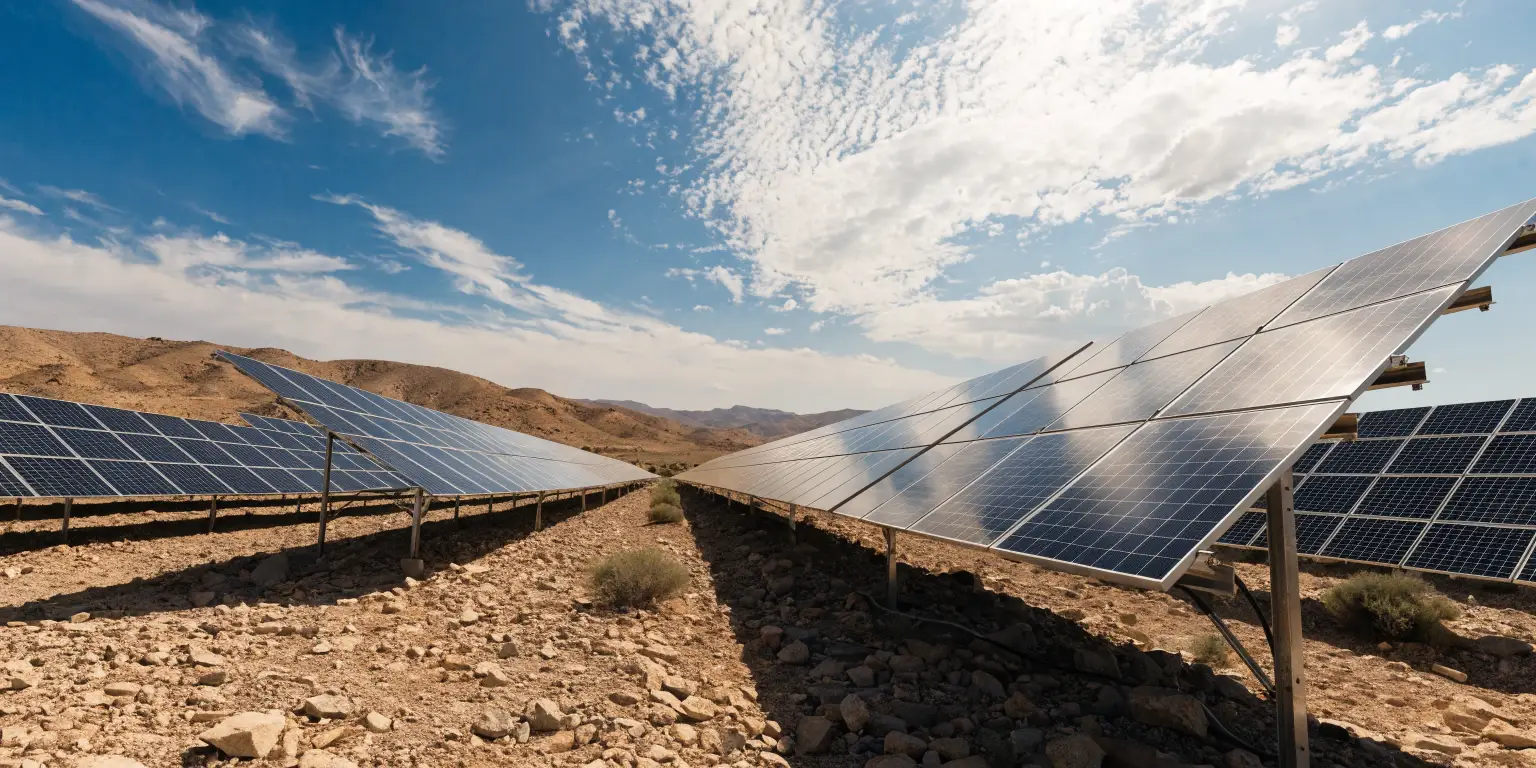
Hot climates create extreme stress on solar cables. I have seen systems in desert and tropical regions fail much faster than expected.
I prevent failures by applying derating rules9, improving ventilation, selecting high-grade materials, and designing systems for worst-case temperature conditions.
Applying Derating Factors
Cable capacity decreases as temperature increases. I always apply derating.
| Condition | Adjustment |
|---|---|
| High ambient temp | Reduce current capacity |
| Cable grouping | Additional derating |
| Poor airflow | Further reduction |
I use conservative values. This ensures cables do not operate near limits.
Improving Thermal Management
I design installations to reduce heat buildup.
I avoid enclosed spaces when possible. I allow airflow around cables. I use elevated routing if needed.
In some cases, I add protective conduits with ventilation features.
Selecting Premium Materials
In hot climates, material quality matters more.
I choose UV-resistant and heat-stabilized insulation. I verify long-term testing data.
I also prefer trusted manufacturers. Consistency is critical in harsh environments.
Designing for Worst-Case Scenarios
I always think about extreme conditions. Not just average temperature.
I consider peak summer temperatures. I also consider combined effects of heat and load.
This mindset helps me build systems that last longer and perform reliably.
Conclusion
I manage high-temperature risks by selecting proper cables, applying derating, controlling installation, and designing for extreme conditions to ensure long-term solar system reliability.
-
Explore this resource to understand the critical factors in choosing heat-resistant wires for optimal performance. ↩
-
Learn about various insulation materials and their heat resistance properties to make informed decisions. ↩
-
Discover how temperature class impacts cable performance and safety in different applications. ↩
-
Understand the significance of cable size in preventing overheating and ensuring system efficiency. ↩
-
Understanding the impact of temperature on performance can help in selecting the right materials and improving system efficiency. ↩
-
Calculating voltage drop accurately is crucial for ensuring system reliability and efficiency, especially in large installations. ↩
-
Understanding insulation damage prevention is crucial for safety and longevity of electrical systems. Explore expert insights. ↩
-
Learn how effective thermal management can enhance cable performance and prevent insulation failure. ↩
-
Understanding derating rules is crucial for optimizing solar cable performance in extreme heat, ensuring longevity and reliability. ↩
