 Skip to content

Future Solar Panels & Billboards: How Tech Will Redesign Outdoor Ads by 2025
The outdoor advertising industry is evolving fast—and solar technology is right at the center of it.
Solar-powered billboards are redefining energy efficiency, cost savings, and sustainability in outdoor advertising across global markets.
Brands are no longer just battling for attention. They're also being held to higher environmental and financial standards. In this article, I’ll break down how new solar panel innovations are transforming billboard advertising in 2025—and what businesses need to know to stay ahead.
What Are the Latest Innovations in Solar Panels for Outdoor Advertising?
New tech is pushing solar billboards to be smarter, smaller, and more efficient.
In 2025, solar panels for billboards are lighter, generate more energy per square meter, and come integrated with smart monitoring tools.
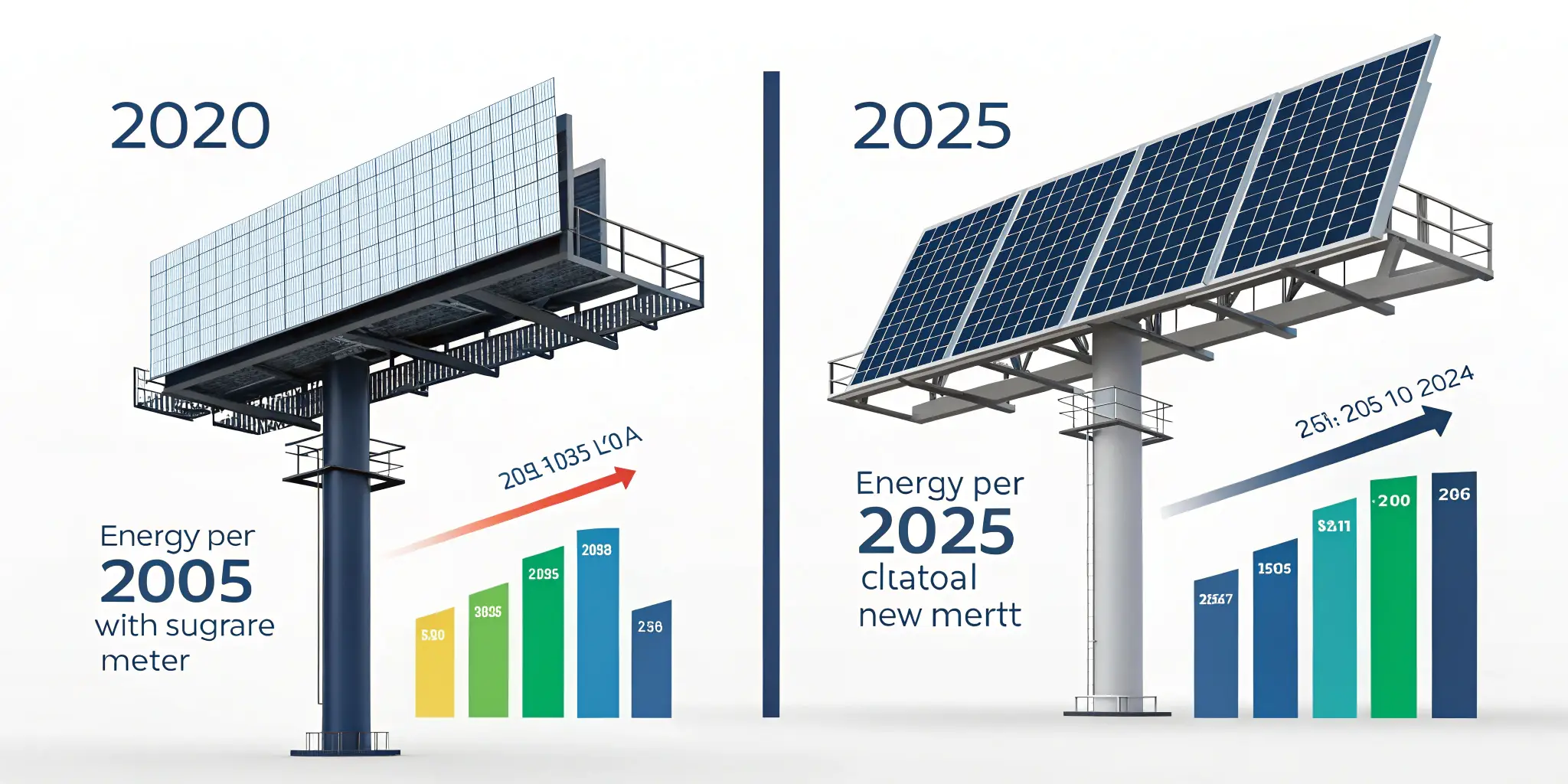
Advancements Redefining Solar Billboard Efficiency
Let’s look at a few key innovations changing the game:
| Innovation | Description | Impact |
|---|---|---|
| Bifacial Solar Panels1 | Capture sunlight from both front and back surfaces | Higher yield, especially in reflective environments |
| Flexible & Thin-Film Panels2 | Lightweight, bendable solar panels | Easy integration into billboard surfaces |
| MPPT Controllers with AI | Maximum Power Point Tracking paired with predictive algorithms | Real-time efficiency boosts, self-adjusting energy flows |
| Integrated Solar Skins | Panels designed to blend in with billboard designs | Seamless aesthetics + solar generation |
| IoT Monitoring3 | Cloud-based performance analytics and fault alerts | Fast troubleshooting, longer uptime |
These updates are helping businesses maximize power from limited surface areas, especially on mobile and urban installations. I’ve seen small advertising trucks using only two 350W bifacial panels now able to run bright LED displays all day without issue.
Are Solar-Powered Billboards Cheaper to Operate Than Traditional Ones?
Yes—especially when you look beyond upfront costs.
While solar-powered billboards4 can cost more initially, they eliminate monthly electricity or fuel bills5 and reduce maintenance costs.

Breaking Down Operational Cost Differences
Here’s a basic cost comparison from recent installs I worked on:
| Cost Area | Traditional Billboard (Grid) | Solar Billboard |
|---|---|---|
| Energy bills | $100–$250/month | $0/month |
| Maintenance | Regular servicing, outages | Minimal |
| Installation | Simpler wiring, less upfront | Solar gear costs more upfront |
| ROI timeline | Slower | 12–18 months payback |
With rising electricity rates in Australia and Southeast Asia, I’ve seen clients cut operating costs6 by over 40% annually. For mobile LED billboards, the savings are even bigger—no diesel, fewer breakdowns, and smoother deployments.
Can Solar Billboards Really Reduce Carbon Footprint for Advertisers?
Absolutely. Clean energy means cleaner branding.
A solar-powered billboard can offset hundreds of kilograms of CO₂ annually compared to grid-powered or diesel-powered ones.
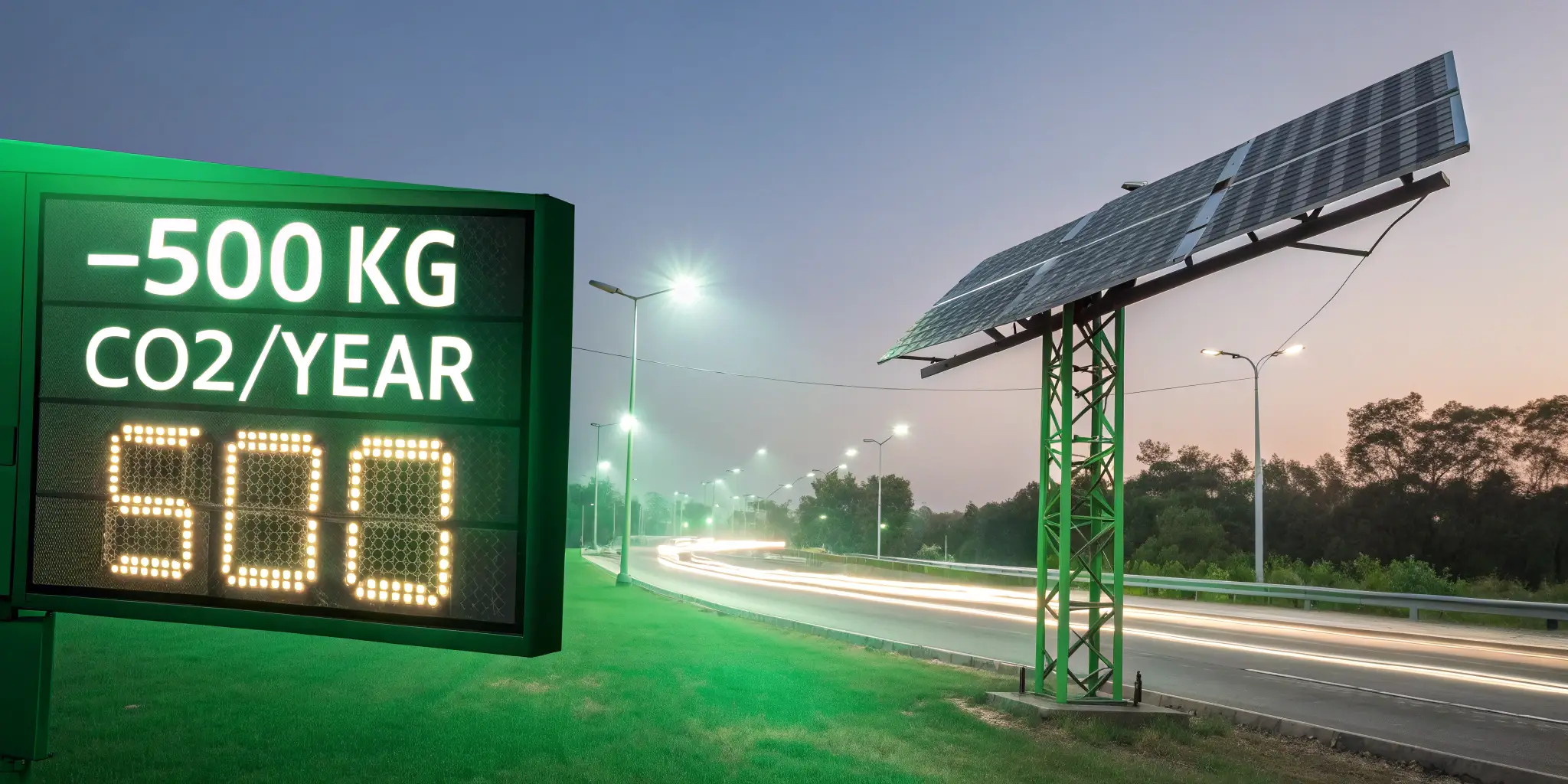
Environmental Impact Breakdown
- Grid electricity often comes from coal or gas-fired plants.
- Diesel generators, used in mobile setups, are carbon-heavy.
- Solar panels, by contrast, produce energy with zero emissions during use.
Let’s say a 1000W LED billboard runs 12 hours daily:
| Power Source | Annual Emissions (Approx.) |
|---|---|
| Grid (AU average) | ~2,000 kg CO₂ |
| Diesel Generator | ~3,500 kg CO₂ |
| Solar | ~0 kg CO₂ during use |
Plus, when paired with recyclable or low-impact materials, these solar billboards align with the ESG goals7 many brands are now held accountable for.
Which Brands Are Already Using Solar Billboards Successfully in 2024?
Several top brands have already embraced this tech in creative campaigns.
From Coca-Cola8 to local councils, solar billboards9 are gaining traction among brands aiming to showcase both innovation and environmental responsibility.

Real-World Examples
Here are some successful solar billboard case studies from 2024:
-
Coca-Cola (Philippines)
Installed solar-powered LED billboards along highways as part of a sustainability push. Reduced grid dependency and earned massive green PR value. -
Nike10 (Australia)
Used solar digital displays for pop-up ads in rural towns, powered entirely by the sun and equipped with motion-triggered animations. -
Samsung (Vietnam)
Featured solar-powered mobile billboards during tech expos—displaying new Galaxy phone launches on LED screens charged via roof-mounted solar panels. -
Local Governments
In Queensland and Victoria, councils now mandate solar-powered signage for construction zones and temporary road closures.
Brands are using this move to solar not just to save money—but to connect with eco-conscious consumers in a visual, public way.
What Are the Biggest Challenges of Installing Solar Billboards in Cities?
Urban installs face unique problems—but solutions are emerging.
The biggest obstacles are space limitations, shading from buildings11, and permitting issues for solar panels in public zones.

City Installation Issues & Fixes
| Challenge | Why It Matters | Solutions |
|---|---|---|
| Shading from buildings | Blocks solar energy | Use higher-efficiency panels, adjust angles, elevate placement |
| Limited surface space | Reduces panel size | Use bifacial or higher-Watt panels; add battery backup |
| Permitting & zoning rules | May delay projects | Work with local solar-friendly policies; use mobile units to avoid zoning limits |
| Theft or vandalism | Solar gear is valuable | Add tamper-proof mounts and GPS trackers for mobile units |
| Urban air pollution | Can reduce panel efficiency | Schedule regular cleanings; use anti-dust coatings |
From my own installs in metro Manila and Sydney, I recommend planning for hybrid energy (solar + battery + optional grid backup) to ensure stability when space or weather limits solar collection.
Conclusion
Solar panel tech is giving outdoor advertising a major upgrade—cutting costs, boosting reliability, and making green marketing more than just a buzzword.
-
Explore how bifacial solar panels can enhance energy efficiency and yield for outdoor advertising, making them a smart investment. ↩
-
Learn about the advantages of flexible and thin-film panels for seamless integration into advertising spaces, maximizing visibility and efficiency. ↩
-
Discover how IoT monitoring can optimize solar panel performance in advertising, ensuring reliability and reducing downtime. ↩
-
Explore the advantages of solar-powered billboards, including cost savings and environmental benefits, to make informed advertising choices. ↩
-
Understanding the impact of monthly bills on advertising can help businesses optimize their budgets and choose cost-effective solutions. ↩
-
Learn about the various factors that affect billboard operating costs to make better financial decisions for your advertising strategy. ↩
-
Discover the importance of ESG goals and how companies can align their practices for better sustainability and social responsibility. ↩
-
Discover Coca-Cola's innovative use of solar technology in advertising, showcasing their commitment to sustainability and creativity. ↩
-
Explore how solar billboards can enhance brand visibility while promoting sustainability, making them a smart choice for eco-conscious marketing. ↩
-
Learn about Nike's unique approach to solar-powered advertising and how it connects with consumers in rural areas. ↩
-
Understanding shading effects can help optimize solar installations and improve energy output. ↩
