 Skip to content
What are the global market trends for Stäubli PV connectors?
I see many investors and EPCs worry that the PV connector market is changing too fast, and they fear choosing the wrong component will affect long-term safety and ROI.
Stäubli PV connectors continue to dominate the global market because their reliability and performance strongly match the growth of utility-scale and high-power solar plants worldwide.
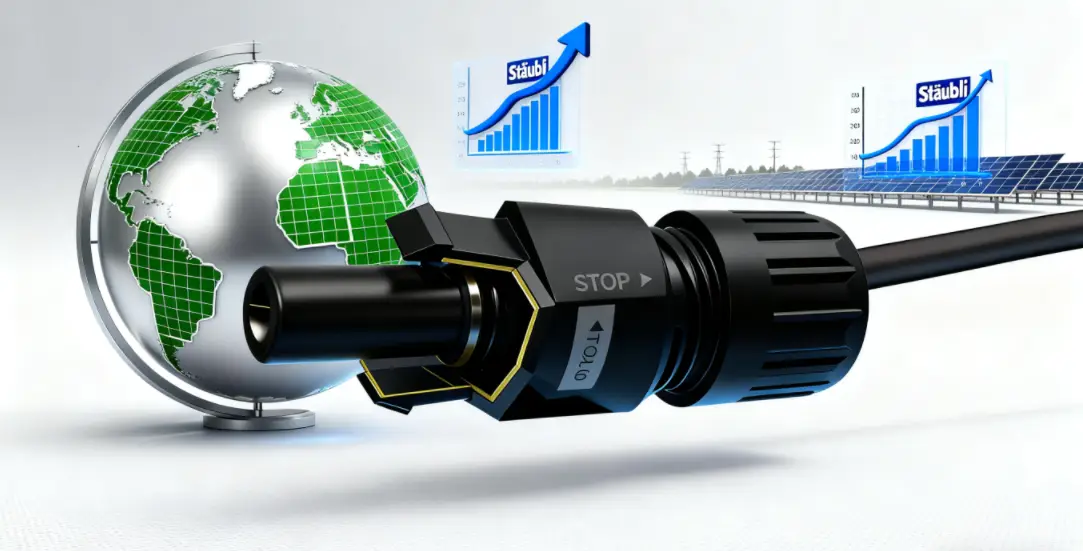
I want to explain what is really happening in the global market and why many project owners are upgrading to premium connectors instead of cost-cutting. I will break down demand, fast-growing regions, renewable energy drivers, and innovation trends.
Is Stäubli demand rising in 2026?
Many people assume connector demand will slow down when installation markets stabilize, but the opposite is happening because the new generation of high-power modules needs stronger and more efficient connectors.
Global demand for Stäubli connectors1 will continue rising in 2026 due to expanding solar adoption, stricter safety requirements, and the industry shift toward premium long-lifespan components2.
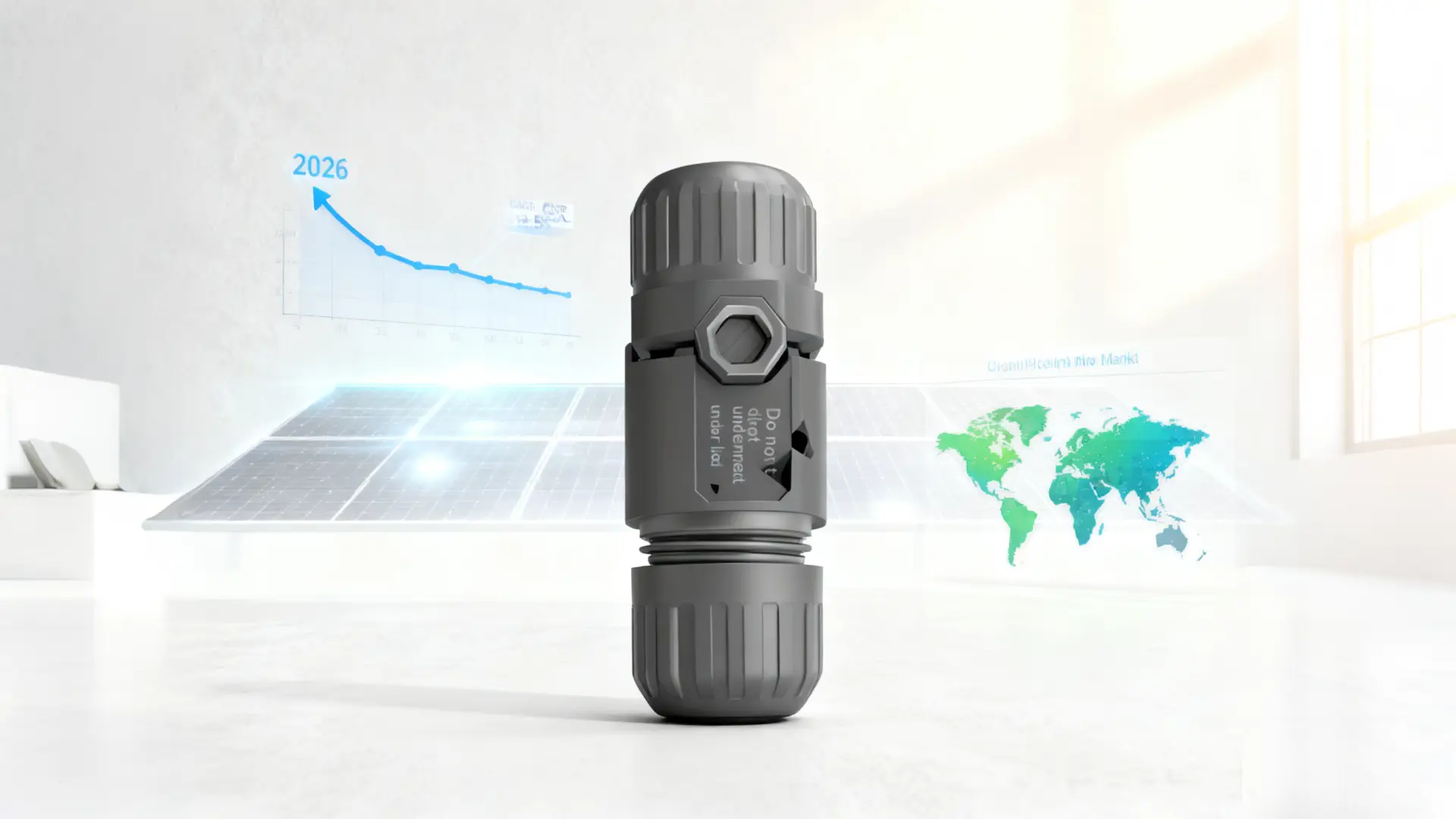
Deeper look at why demand keeps rising
I observe that more EPCs avoid generic MC4-type connectors because the risk of overheating, fire, warranty disputes, and insurance rejection is increasing. Stäubli has become the “gold standard” for bankability across utility-scale and commercial projects. The industry is entering a period where reliability has more financial value than low cost.
High demand in 2026 is driven by four strong factors:
| Core Driver | Reason demand rises |
|---|---|
| Larger system voltages | 1500V systems need high-performance connectors |
| Higher current outputs | New bifacial modules require low-resistance contact design |
| Project bankability | Investors prefer Tier-1 certified components |
| Safety regulations | Authorities push for anti-arcing and long-term stability |
Why this matters to buyers
I notice more procurement teams switching from short-term cost thinking to lifecycle cost thinking. If a connector fails, the shutdown and repairs cost more than the price difference of premium components. This mindset shift increases Stäubli adoption at all scales — even residential installers now specify original Stäubli MC4 to avoid callbacks.
Based on these market signals, I believe 2026 will be a year when premium connector demand grows faster than module demand, because the industry understands the hidden risks of low-quality parts. Many suppliers plan to expand their inventory of Stäubli connectors because they expect long-term growth rather than a temporary spike.
Which regions are expanding fastest?
When I look at the global map of installations, I notice a strong pattern: fast growth often appears where solar energy pricing becomes cheaper than fossil fuels.
The fastest expanding markets3 for Stäubli PV connectors are Asia-Pacific, North America, and the Middle East due to rapid large-scale solar deployment4 and strong policy support.
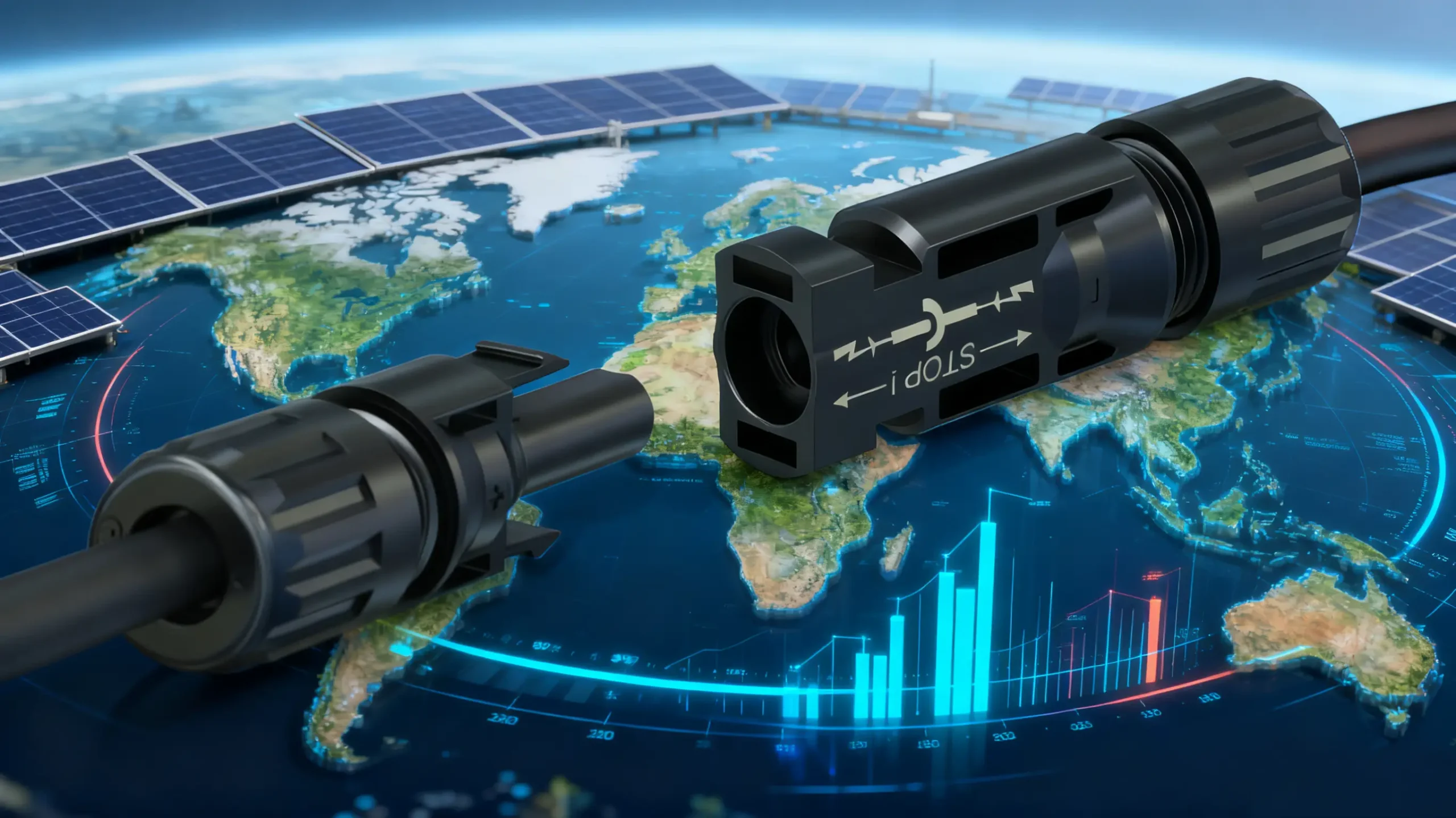
Regional expansion breakdown with deeper insight
PV connector demand follows the path of solar investment. Countries scaling up massively tend to fully adopt Stäubli because they want long-term certainty. Below is how the top regions compare:
| Region | Growth Pattern | Key Project Types Driving Surge |
|---|---|---|
| Asia-Pacific | Largest and fastest | Utility scale + commercial + floating solar |
| North America | Strong momentum | Utility scale + rooftop distributors |
| Middle East | Emerging high growth | Desert and high-temperature solar farms |
| Europe | Stable and steady | Retrofit upgrades + energy transition |
| South America | Rising niche | Agri-solar + hybrid renewable projects |
Across these regions, I also see regional procurement trends:
- Asia prefers mass deployment at scale
- North America prioritizes safety, certification, and liability
- Middle East needs desert-resistant and high-temperature products5
- Europe focuses on system efficiency and long warranties
This gives Stäubli a unique advantage because their Multilam contact technology6 performs well across all these environmental scenarios.
From market conversations, I can feel developers are tired of connector failures. They want solutions that last 25 years without melting, burning, or losing contact resistance. Where solar grows fast, the need for reliability grows even faster — and this keeps pushing Stäubli into new markets.
How does renewable energy growth affect connector sales?
Solar capacity addition is not just increasing — it is accelerating every year. Each new panel installed anywhere in the world requires a connector, so the relationship between solar expansion and connector volume is direct.
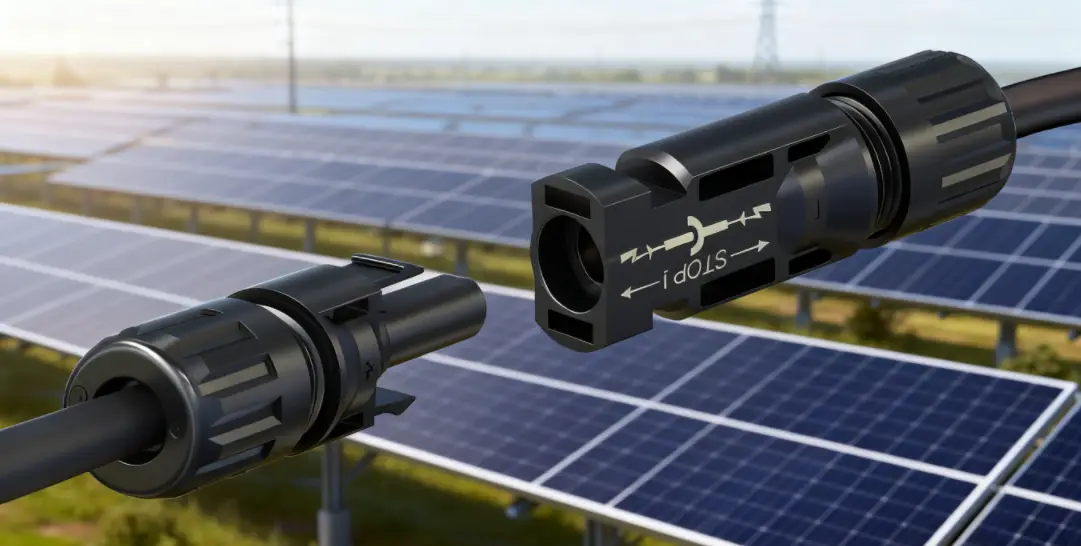
Solar growth is the main engine of the connector market because every new PV installation multiplies demand for safe, durable interconnection systems.
A deeper explanation of the growth chain
The rapid energy transition is reshaping the connector industry in three ways that I personally feel more EPCs should notice:
| Renewable Energy Trend | Impact on Connector Market |
|---|---|
| Utility-scale expansion | Higher demand for premium connectors to reduce downtime risk |
| Adoption of bifacial and TOPCon modules | Need for high-current connectors with ultra-low resistance |
| Climate-stress installations | Requirements for heat, humidity, and salt mist durability |
Solar growth does not only increase connector volume. It increases connector performance expectations7. In many utility-scale farms, connectors are now the smallest component but the largest reliability risk. A single failure can shut down an entire string.
Another very real change: insurance companies and banks demand certified, traceable components8 to approve financing. This naturally favors Stäubli because third-party audits prove measurable long-term reliability. Energy transition is not just pushing more solar. It is forcing higher-quality solar.
So renewable energy growth does not just fuel sales. It raises the performance barrier and accelerates the replacement of low-cost alternatives.
What trends are shaping PV connector innovation?
Many people assume connectors are simple components that will not change, but the market is entering a new era driven by high-power modules and extreme installation conditions.
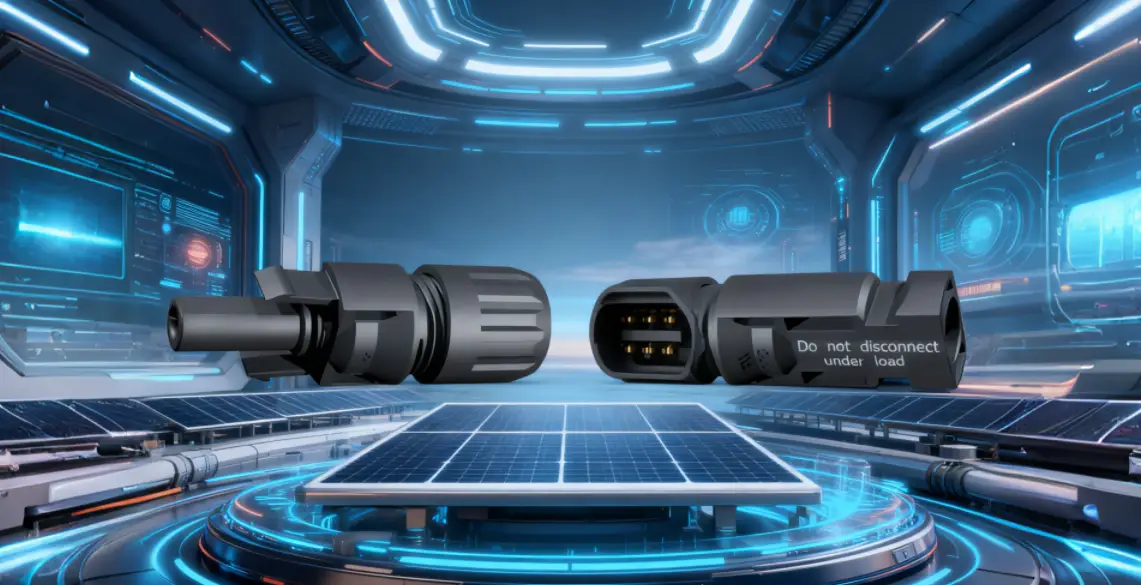
Connector innovation is shaped by the demand for higher current capacity9, longer durability, smart connectivity10, and improved safety under mechanical and thermal stress.
Innovation trends shaping the future
I see that Stäubli and other top manufacturers are investing in engineering because connectors are no longer passive accessories. They are becoming part of system optimization.
The innovation landscape is moving in four clear directions:
| Innovation Trend | Description | Purpose |
|---|---|---|
| Higher current and voltage rating | Low-resistance contact and heat control | Match new high-power modules |
| Smart monitoring | Data and operating status integrated into connectors | Predictive maintenance |
| Durability for harsh environments | Salt, ammonia, sand, and humidity resistance | Extended real-world lifespan |
| Mechanical-load performance | Better resistance to trackers and moving structures | Reduce fatigue failures |
I find this evolution very logical: when the weakest link becomes the biggest financial risk, the industry reinforces it. That is why Stäubli invests heavily in R&D rather than following the low-cost race.
In many global projects, I notice innovation is no longer optional. For floating plants, desert installations, and snow-load regions, the connector becomes a survival component. This is why Stäubli designs new models for solar trackers and dynamic fields — because mechanical stress will destroy normal connectors long before electrical stress does.
As solar becomes more intelligent, modular, and ultra-efficient, the connector grows from a simple plug into a critical technology layer. This shift will define the next decade of PV electrical design.
Conclusion
Stäubli will keep leading the connector market because global solar growth rewards long-term reliability more than low initial cost.
-
Explore the advantages of Stäubli connectors, known for their reliability and efficiency, crucial for modern solar projects. ↩
-
Learn why investing in premium components can save costs and enhance performance in solar energy systems. ↩
-
Explore this link to understand the dynamics of solar energy growth in key regions, crucial for investment decisions. ↩
-
Learn about large-scale solar deployment and its transformative effects on energy markets, essential for industry insights. ↩
-
Discover the importance of specialized solar products for extreme environments, vital for sustainable energy solutions. ↩
-
Find out how Multilam contact technology enhances solar connector performance, ensuring reliability in diverse conditions. ↩
-
Understanding connector performance expectations is crucial for ensuring reliability in solar installations, making this resource invaluable. ↩
-
Exploring the importance of certified components can help you grasp their role in securing financing and ensuring project success. ↩
-
Explore how higher current capacity enhances performance and efficiency in solar energy systems. ↩
-
Learn about the advantages of smart connectivity in optimizing solar energy management. ↩
