 Skip to content
Why Do Most Tier-1 Solar Farms Use 6mm² MC4 Connectors?
Solar developers often overlook connector sizing—but choosing the wrong one can trigger voltage drops, fire risks, and warranty voids.
Most Tier-1 solar farms now use 6mm² MC4 connectors because they offer the best balance of current capacity, heat resistance, and long-term reliability.
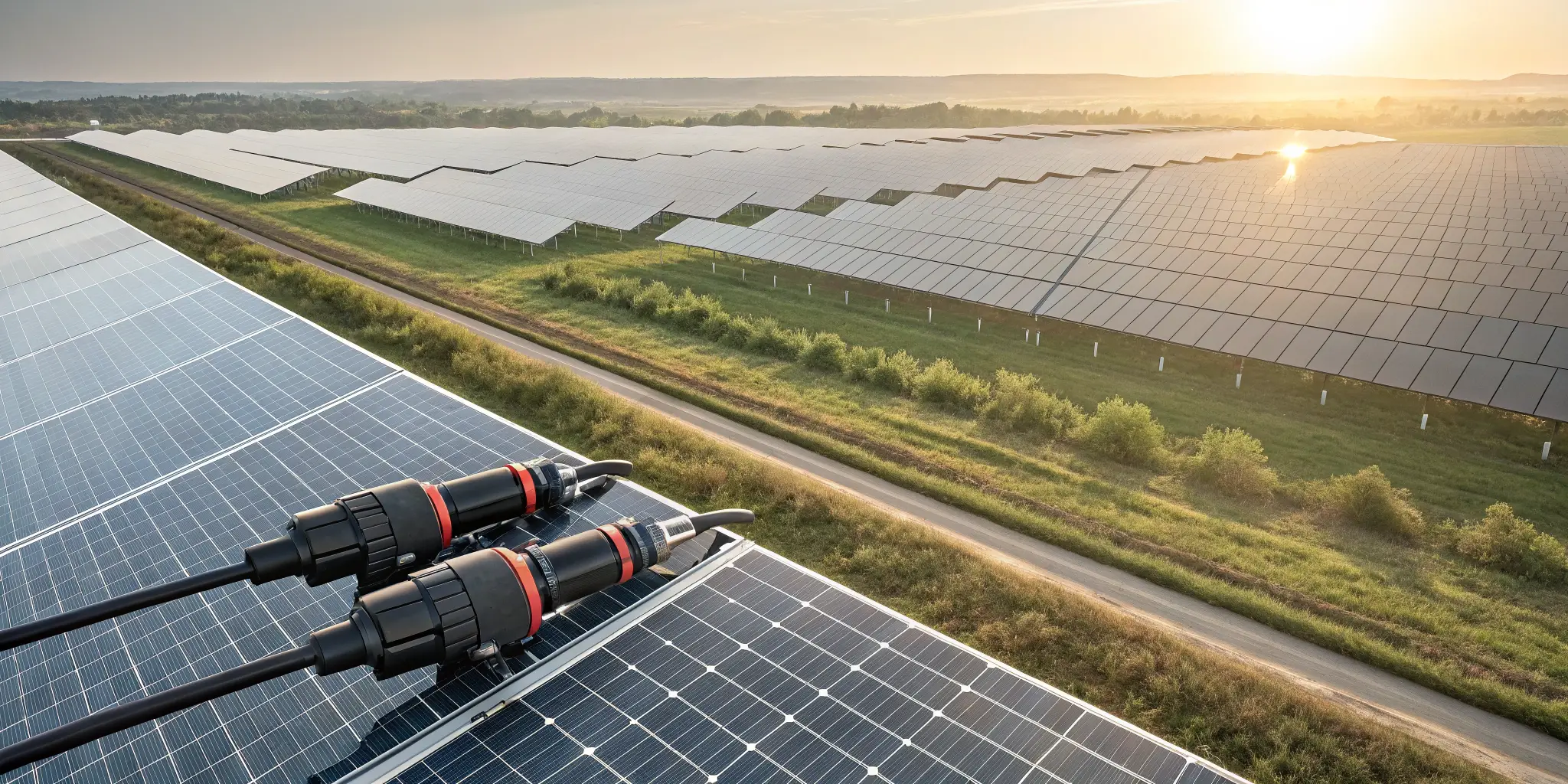
If you're sourcing connectors or cables for a utility-scale PV farm, using 6mm² MC4 connectors isn't just a trend—it's a proven industry standard backed by technical and financial reasons.
Why Is 6mm² the Most Common Cable Size in Utility-Scale Solar Projects?
Fires, losses, and low efficiency often come down to mismatched cable sizing1 in large PV installations.
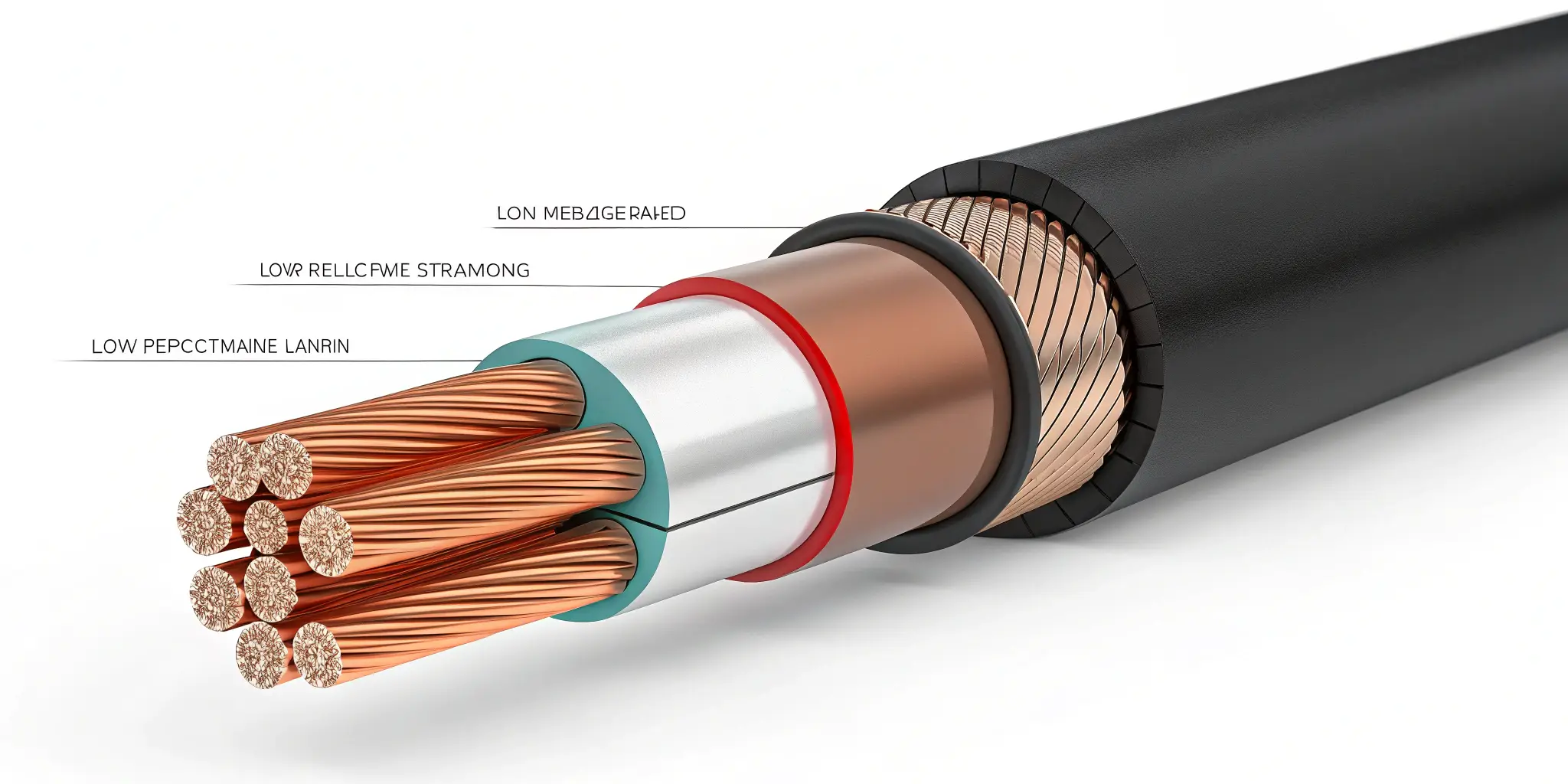
6mm² solar cables2 are common because they offer low resistance over long distances and handle higher currents without overheating.
Why 6mm² Became the Utility Norm
Utility-scale farms cover hundreds of meters between modules, combiner boxes, and inverters. Cable sizing is critical to avoid voltage drops and heat losses.
| Cable Size | Max Current (Amps) | Max Distance (30A, 2% loss, 1000V) | Common Use Case |
|---|---|---|---|
| 4mm² | 35A | ~35m | Rooftop or small systems |
| 6mm² | 50A | ~50m | Utility-scale string arrays |
| 10mm² | 70A | ~70m | Trunk lines or special cases |
With 6mm² cables, most string-level currents (10–20A) stay well within the safe range. That’s why they’re the go-to choice for fields like solar farms in Australia, Spain, and the Middle East.
What Are the Key Electrical Advantages of 6mm² MC4 Connectors?
Poor connections cause arcing, energy loss, and early failure—especially under high current or sunlight.
6mm² MC4 connectors3 deliver better current flow, stronger crimping, and lower contact resistance under continuous load.
Electrical Performance Highlights
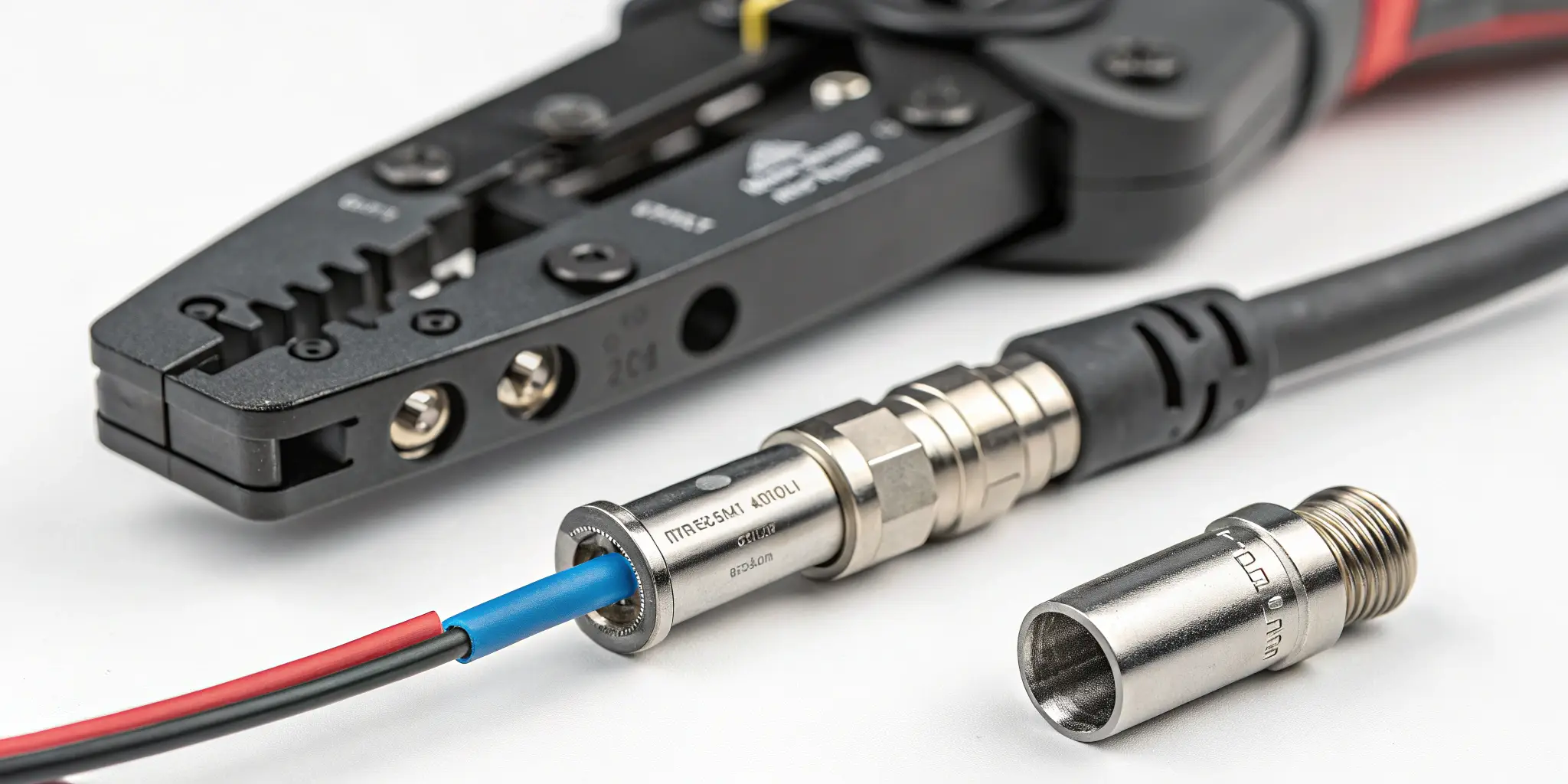
6mm² MC4 connectors are designed with higher-rated contact springs and more copper cross-section area than 4mm². This ensures:
- Lower contact resistance4 (≤ 0.5 mΩ)
- Stable thermal performance up to 85°C operating temperature
- Stronger mechanical crimp5 for outdoor wind and vibration
Many certified MC4 models from brands like Stäubli or Amphenol specifically mention 6mm² as their primary design specification—because that’s where they test for TÜV and UL.
Is 6mm²6 Better Than 4mm² or 10mm² for Large-Scale PV Installations?
Choosing the wrong cable size can either waste money or risk project failure.
Yes, 6mm² is the best middle ground for Tier-1 PV farms7—it balances cost, safety, and performance.
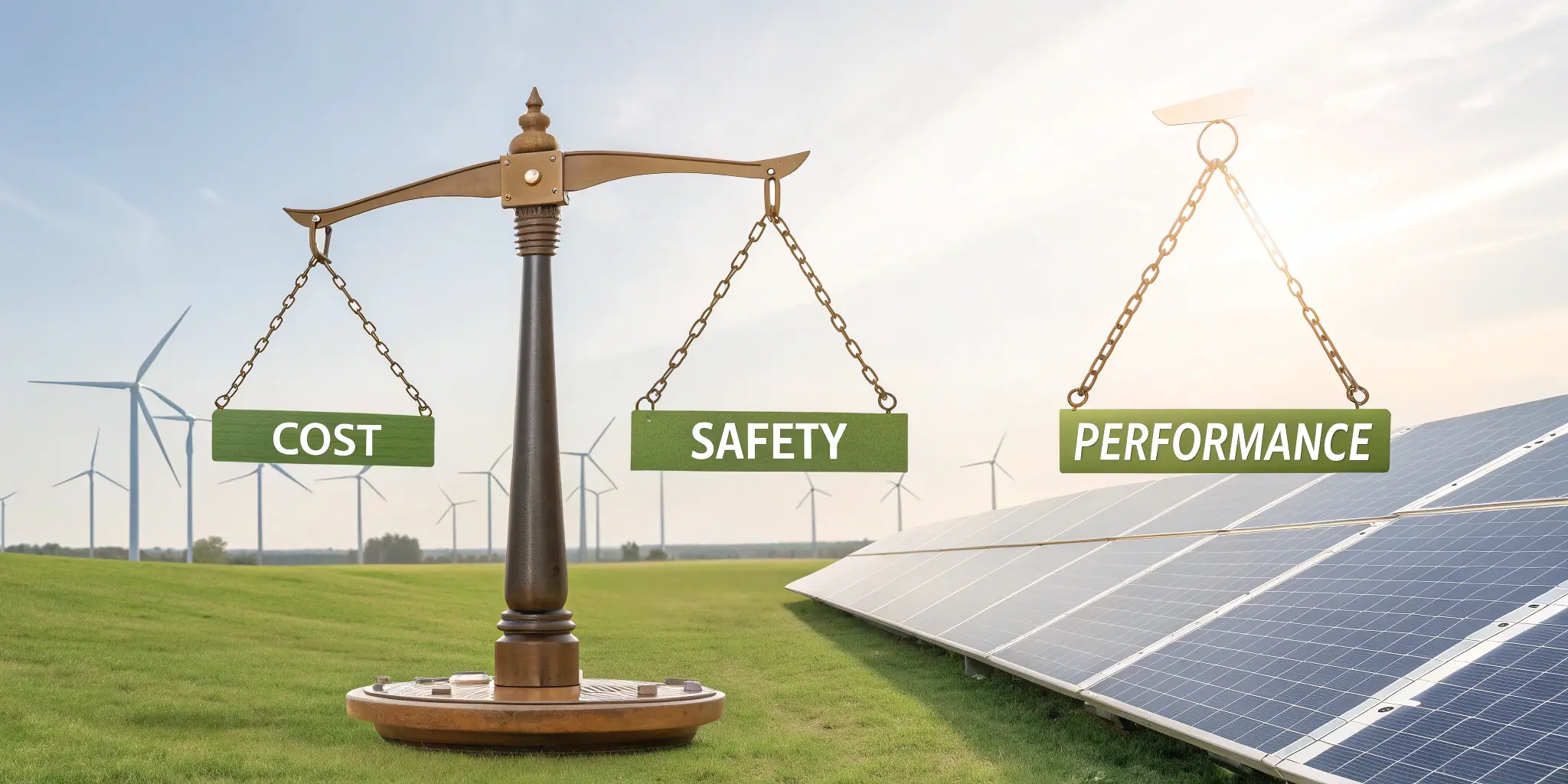
Let’s Compare Them Side-by-Side:
| Metric | 4mm² | 6mm² | 10mm² |
|---|---|---|---|
| Cable Cost (per km) | Low | Moderate | High |
| Connector Price | Lower | Standard | Higher |
| Ampacity8 | ~35A | ~50A | ~70A |
| Heat Dissipation | Medium | Good | Excellent |
| Installation Flexibility | High | Good | Stiff |
| Utility-Scale Compatibility | Poor | Best choice | Overkill in most cases |
Unless your project involves extra-long strings (70m+), 6mm² usually offers the best return on investment without sacrificing durability.
How Do Tier-1 Solar Farms Optimize Costs with 6mm² MC4 Connectors?
Cable sizing is one of the top cost drivers in utility-scale BOS9 (Balance of System) expenses.
6mm² connectors help reduce both material and labor costs while meeting Tier-1 safety benchmarks.
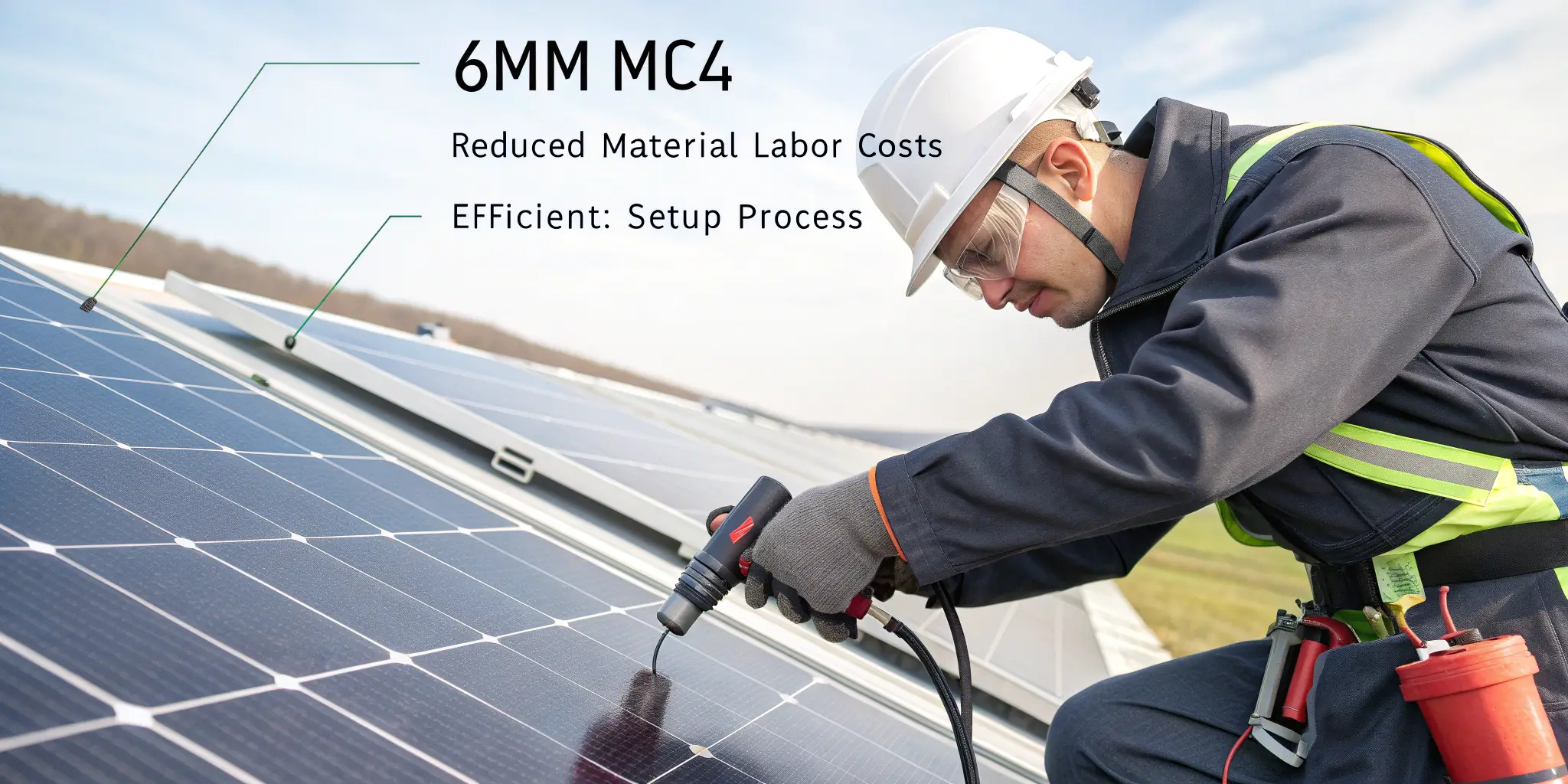
Here’s Where They Save
- Cable runs are shorter and more efficient. You don’t need expensive 10mm².
- Fewer combiner boxes. The current rating of 6mm² allows more strings per box.
- Standard tools, standard crimps. No need for large dies or custom tooling.
- Simplified logistics. Most preassembled PV cables come with 6mm² Stäubli MC4 heads.
The net result? A 2–3% BOS cost reduction, which is huge at utility scale.
Do 6mm² MC4 Connectors Meet Tier-1 Solar Project Certification Standards?
In solar, certifications mean everything. A failed audit or insurance claim can ruin your profit margin.
Yes, 6mm² MC4 connectors—when TÜV/UL listed10—fully comply with IEC 6285211, UL 6703, and EN 50618 for Tier-1 utility projects.
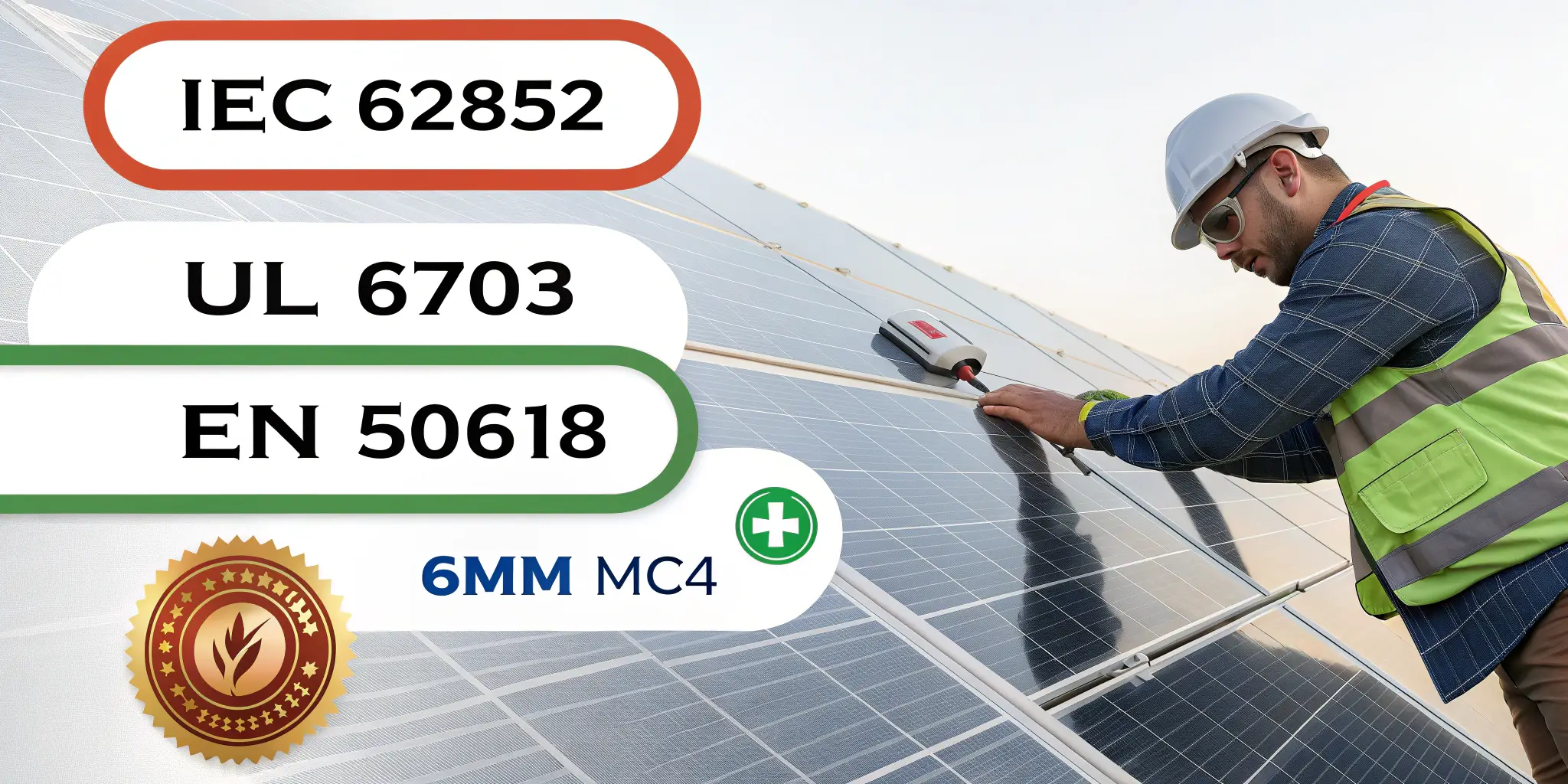
What Standards Do They Meet?
| Standard | Description | 6mm² MC4 Compatibility |
|---|---|---|
| IEC 62852 | PV connector requirements (Europe/global) | Fully compliant (with Stäubli, Bizlink) |
| UL 6703 | U.S. standard for PV connectors | Certified versions available |
| EN 50618 | Cable & connector integration for PV systems | Meets all specs |
| IP68/IP67 | Dust and water ingress protection | Yes, when fully mated |
| TÜV/CSA | Fire and mechanical stress tests | Passed for most Tier-1 brands |
That’s why Trina, LONGi, Jinko, and Canadian Solar all ship modules with MC4-compatible 6mm² junctions or pre-terminated leads.
Conclusion
6mm² MC4 connectors offer the perfect mix of efficiency, safety, and global compliance for large-scale PV systems.
-
Understanding cable sizing is crucial for optimizing performance and preventing losses in solar energy systems. ↩
-
Explore the advantages of 6mm² solar cables, including efficiency and safety in large solar installations. ↩
-
Explore the advantages of 6mm² MC4 connectors for improved energy efficiency and reliability in solar systems. ↩
-
Understanding lower contact resistance can help you enhance the performance and longevity of electrical systems. ↩
-
Learn why a stronger mechanical crimp is crucial for ensuring durability and reliability in outdoor electrical applications. ↩
-
Explore why 6mm² cables are considered the optimal choice for balancing cost, safety, and performance in solar projects. ↩
-
Learn about Tier-1 PV farms and why they are recognized for their quality and reliability in solar energy production. ↩
-
Understanding ampacity is crucial for ensuring safe and efficient electrical installations, especially in renewable energy systems. ↩
-
Understanding utility-scale BOS can help you grasp the financial aspects of solar projects and their optimization strategies. ↩
-
Discover the meaning of TÜV/UL listing and its impact on the quality and safety of solar products, crucial for project success. ↩
-
Learn about IEC 62852 to grasp its role in setting standards for solar connectors, ensuring safety and efficiency in installations. ↩
